Yangiabad: The Soviet Uranium Ghost Town Hiding in Uzbekistan's Pine Forests (2026 Guide)
· 9 min read · Off-Beat
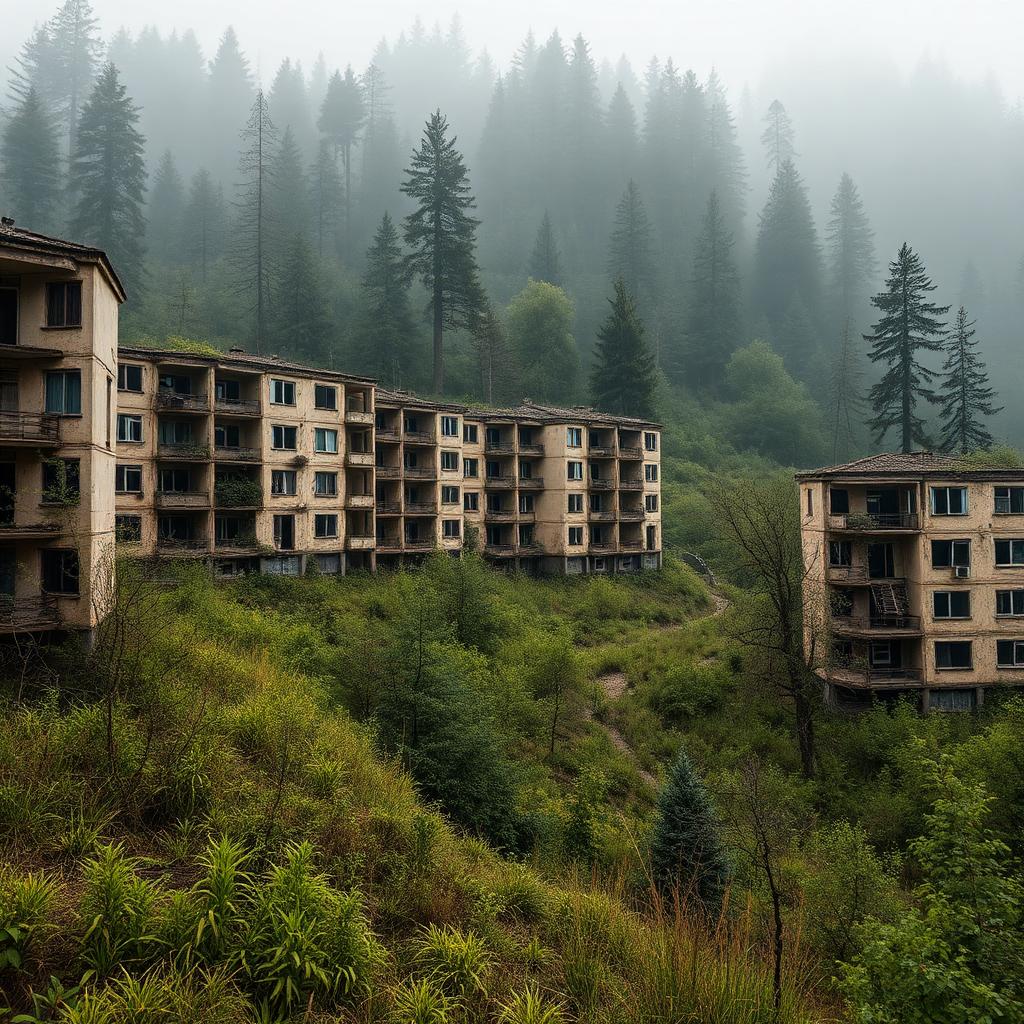
Two hours east of Tashkent, hidden in a pine-forest valley at 1,500 metres, sits a half-abandoned Soviet town built in secret to mine uranium for the USSR's first atomic bomb. In 2026 you can walk it freely — and almost nobody does.
In the summer of 1946, a Beria-signed decree created a 'closed city' called Yangiabad in a hidden valley of the Chatkal mountains 130 km east of Tashkent. Its purpose was one thing: mine uranium ore for the Soviet atomic project. The mines closed in 1994; most residents left; the town's five-storey Khrushchyovka blocks, cinema, sanatorium and 'Palace of Culture' were left to the pine forest. In 2026 you can drive there on a normal day, walk into the buildings, and see a piece of Cold War history no tourism office promotes.
The story
The uranium ore veins in the Chatkal mountains fed the plutonium reactor at Chelyabinsk-40 that produced the core of RDS-1, the first Soviet nuclear bomb tested in Kazakhstan in August 1949. Yangiabad was one of half a dozen 'closed cities' built above the mines — sealed off from the rest of the USSR, missing from Soviet maps, populated by miners and their families with special access permits, top-tier salaries, imported goods, and secret schools. At its peak in the 1970s it held 12,000 people. Today: about 800.
What you actually see
- Abandoned five-storey apartment blocks with birch trees growing out of the windows.
- The Palace of Culture — mosaics of miners and cosmonauts still on the facade.
- The old cinema Kosmos — chairs and screen gone, but the projection room intact.
- The former sanatorium — a Stalin-era health resort now half-ruined.
- The mine entrances (fenced, do NOT enter — radon and structural risk).
- A small operating village where the last families still live — a shop, a mosque, a bakery.
Is it safe?
Yes for a day visit. Background radiation in the town is at natural levels — the ore itself was carted out of the valley 40 years ago and the tailings dumps are fenced. Do not enter the mine adits (radon gas). Do not eat wild berries or mushrooms from the immediate mine slopes. Stick to the town and forest paths. Any handheld Geiger counter will read 0.10–0.20 μSv/h in town — same as anywhere else in Uzbekistan.
How to get there in 2026
- From Tashkent: 130 km via Angren. Yandex Go quotes 350,000 UZS one way; better to hire a driver for the day (~$50).
- Public transport: marshrutka from Tashkent to Angren (2h), then a second shared taxi to Yangiabad village (1h).
- The road is paved until Angren, then a good but winding mountain road climbs to 1,500 m.
- In winter (Dec–Mar) the road can close for snow — call ahead.
- No formal entry ticket. No guards. Be a respectful visitor.
Where to sleep
There is one simple guesthouse in Yangiabad village (~200,000 UZS a night, book by phone via the Tashkent tourism office). Most people visit as a day trip. Cooler alternative: continue 40 km further into the mountains and sleep at Chimgan or Beldersay ski villages.
Combine with these
- Angren city — the coal mining town in the plain below, worth a 30-min stop.
- Ahangaran reservoir — a good picnic spot en route.
- Chimgan and Charvak — 90 km further north for a two-day mountain loop.
Honest verdict
Yangiabad is not a pretty destination. It is a haunting one. If you have any interest in the 20th century — Cold War, Soviet architecture, atomic history — a day here in the pine-forest ruins is more memorable than another palace in Bukhara. Bring good shoes, water, a torch, and respect for the families who still call this town home.