Uzbekistan Hit 7.7 Million Tourists by July 2026 — Is It Too Crowded Now?
· 10 min read · Practical
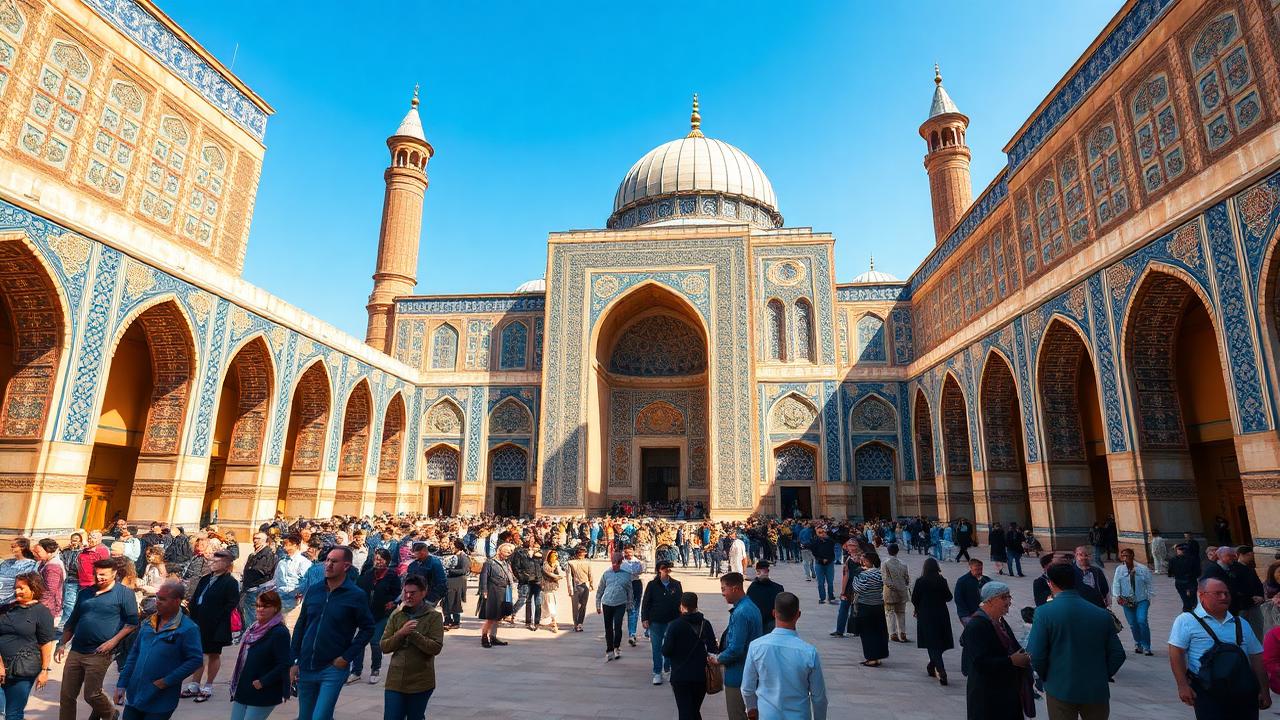
The numbers are extraordinary: 7,749,307 foreign tourists between January and July 2026. But 'crowded' in Uzbekistan is not what crowded means in Rome or Kyoto. Here's the honest picture, hour by hour and city by city.
Uzbekistan's tourism authority reported 7,749,307 foreign visitors between January and July 2026 — a 22.6% jump on the same period a year earlier, and part of a run that took the country from 6.6 million arrivals in 2023 to well over 11 million in 2025. Tourism service exports are now measured in billions of dollars. The reasonable traveller question follows immediately: has the place been ruined?
The short answer
No — but the golden-hour, empty-courtyard version of Uzbekistan now takes planning rather than luck. Two things make the raw number less alarming than it sounds. First, a large share of arrivals are regional visitors from neighbouring Central Asian countries crossing for family, trade, shopping and medical care; they are not standing in front of the Registan at 11am. Second, the country is physically big and the monuments are spread across four cities plus a whole autonomous republic.
Where the crowds actually are
- Registan Square, Samarkand, 10am–4pm in April–May and September–October. This is the single most congested spot in the country. Coach groups arrive in waves.
- Shah-i-Zinda's stairway and tiled corridor, mid-morning. It is narrow, which multiplies the feeling of crowding.
- Poi Kalyan and Lyabi-Hauz in Bukhara at sunset in high season.
- The Itchan Kala main axis in Khiva between roughly 11am and 3pm, when day-trippers from Urgench are in town.
- Chorsu Bazaar in Tashkent on Saturday and Sunday mornings — though that crowd is mostly locals shopping, which is the point of going.
Where it is still genuinely quiet
- Karakalpakstan: Nukus, the Savitsky Museum, Mizdakhan, Chilpyk and the Moynaq ship graveyard. World-class, and often near-empty.
- The Fergana Valley: Kokand, Margilan's silk workshops, Rishtan ceramics, Chust knife makers.
- Shahrisabz, Termez and the Buddhist south.
- Nuratau mountain homestays and Aydarkul yurt camps.
- Any of the big four cities before 8am or after 6pm.
The 2026 crowd-avoidance playbook
1. Reverse the standard clock
Almost every group itinerary runs Tashkent → Samarkand → Bukhara → Khiva and sightsees between 10am and 4pm. Get up early. The Registan at 7am and Poi Kalyan at 7:30am are close to deserted, the light is better, and the heat has not arrived. Nap in the afternoon like locals do, then go out again after 6pm.
2. Travel in the shoulder-shoulder season
April–May and September–October are the peak. Late March, early June, and the first half of November are still comfortable and noticeably quieter. Winter — December to February — is cold, sometimes snowy, and the tiled cities under snow are extraordinary with almost nobody there. See our best time to visit guide for month-by-month detail.
3. Sleep inside the old towns
Day-trippers leave. If you stay inside the Itchan Kala in Khiva or in the Bukhara old town, you get the two best hours of every day — dusk and dawn — largely to yourself.
4. Book the moving parts early
Crowding in Uzbekistan is felt less at monuments than at bottlenecks: high-speed train seats, the limited Khiva services, popular guesthouses in peak weeks, and the Registan sound-and-light show. High-speed tickets typically release around 45 days ahead and popular dates can sell out the same day.
5. Add a fifth stop
Adding Nukus, Shahrisabz or the Fergana Valley to the classic four instantly changes the trip's feel and costs very little extra time now that rail links have improved.
What the boom has actually improved
- Hotel supply and quality: government incentives extended to 2030 and a $50 million hotel modernisation fund mean more mid-range rooms, not just budget guesthouses and five-star towers.
- Air links: new and resumed direct routes keep being added, cutting the number of trips that have to connect through Istanbul or Dubai.
- Rail: the high-speed spine now reaches Khiva, and services have been added on the busiest corridors.
- Payments and connectivity: near-universal QR payments, cheap data, and a tourist e-SIM platform.
- English: far more widely spoken in the tourism trade than five years ago.
And what has got worse
- Peak-season prices in Samarkand and Bukhara have risen fastest; book accommodation earlier than you would have in 2022.
- Some monument courtyards now have more souvenir stalls than they did, particularly in Khiva.
- Guide availability in less-common languages is tight in peak weeks.
- The most photogenic spots have queues of people waiting for the same shot; go early or accept people in frame.
The honest verdict
Compared with Europe's over-touristed cities, Uzbekistan in 2026 is still remarkably uncrowded. You can stand alone in a 15th-century madrasa courtyard on a Tuesday morning, and you can drive two hours from Samarkand and be the only foreigner in a town. The country is busier than it was — that is what makes the trains, hotels and flights good now — but 'ruined' is not close to true. Plan around mornings, sleep in the old towns, add one off-list city, and you will have the version of Uzbekistan people posted about five years ago.
Visitor statistics are published periodically by Uzbekistan's Tourism Committee and are revised over time; treat the figures here as the July 2026 published position.