Tashkent's Best Parks (2026): The Japanese Garden, Botanical Garden and Where Locals Actually Go
· 9 min read · Tashkent
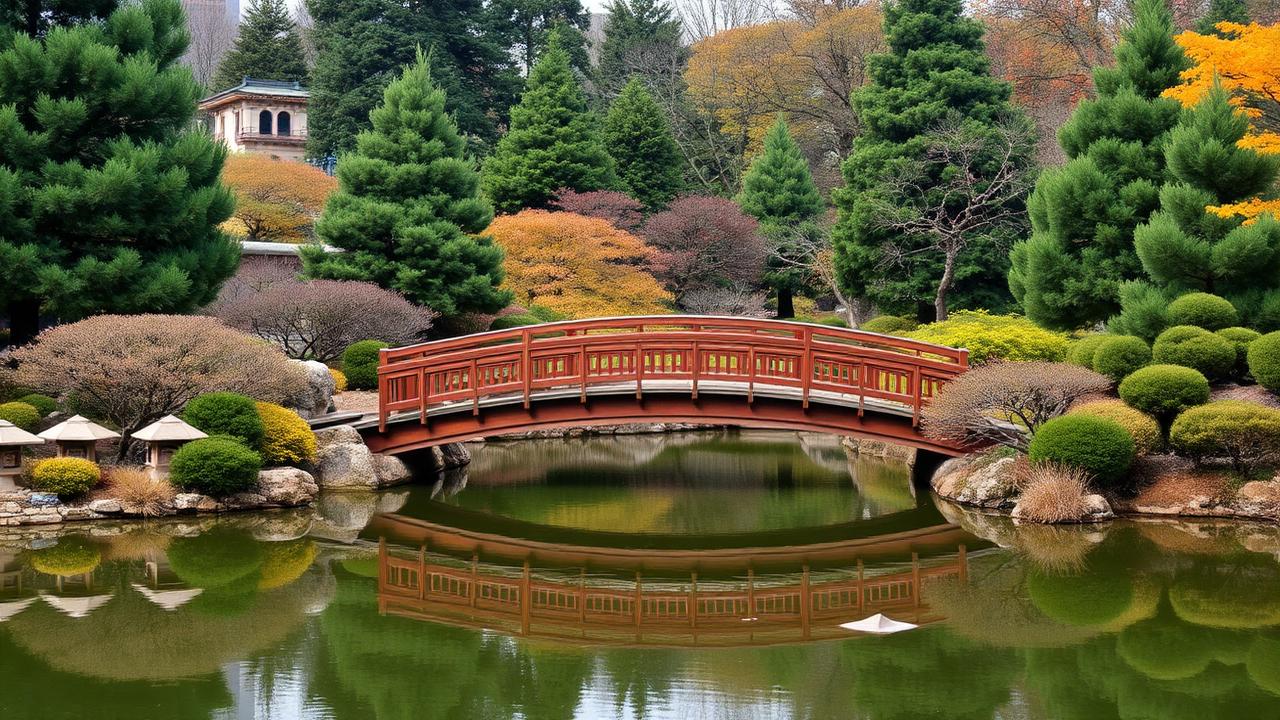
Tashkent is one of the greenest capitals in Asia and almost nobody visits its parks. The Japanese Garden alone is worth an afternoon, and the Botanical Garden in October is the best-value ticket in the city.
Tashkent was rebuilt after the 1966 earthquake by planners who took shade seriously: wide boulevards lined with plane trees, canals running through the middle of the city, and enormous public parks that still do the heavy lifting of urban cooling every summer. Most visitors see none of it because the itinerary is madrasas and metro stations. Here is the green half of the city, and when each part of it is at its best.
The Japanese Garden
Built with Japanese design input beside the Tashkent Botanical Garden, this is a properly composed garden rather than a park with a pagoda in it: a large pond with koi, arched wooden bridges, stone lanterns, a tea house and carefully pruned pines. It is small enough to walk in forty minutes and calm enough to sit in for two hours. Entry is a modest ticket, paid at the gate.
- Best season: late April to May for blossom and fresh green; October for the maple and ginkgo colour, which is the photographic peak.
- Go on a weekday morning. Weekends bring wedding photographers in numbers.
- It is a favourite spot for engagement shoots — be considerate about walking through someone's photo.
- Nearest access is the same area as the Botanical Garden; combine the two in one outing.
Tashkent Botanical Garden
Officially the Academician Rusanov Botanical Garden, this is one of the largest in Central Asia — hundreds of hectares organised into geographic zones for East Asia, North America, Europe and the Far East. It is more woodland than manicured display, which is exactly its charm: broad avenues of mature trees, a lake, and enough space to lose the crowd entirely. In autumn the North American section turns spectacular colours and half of Tashkent turns up to photograph it.
- Allow two to three hours minimum. It is far bigger than it looks from the entrance.
- Peak visit: mid-October to early November for foliage; April for blossom.
- It is also the best urban birdwatching in the country during spring and autumn passage.
- Wear real shoes. The paths are long and partly unpaved.
Tashkent Ecopark
A newer, deliberately naturalistic park in the north of the city built around water channels and open lawn, popular with families, runners and cyclists. It has none of the historic weight of the older parks and all of the practicality: shade, benches, cafés, space for children to run. On a hot evening in July it is where the city actually goes.
The classic city parks
- Amir Timur Square — not a park so much as the ceremonial green heart of the city, ringed by the Hotel Uzbekistan and the forum buildings. Best after dark when it is lit.
- Anhor Park — along the Anhor canal, with the Tashkent Land amusement area beside it and pedal boats on the water.
- Navruz Park and the Alisher Navoi National Park — large, Soviet-planned, full of families at weekends and near-empty on weekday mornings.
- Independence Square (Mustaqillik Maydoni) — fountains, monumental architecture and the Arch of Good and Noble Aspirations.
- Magic City — a park in name, a themed entertainment complex in reality, and covered separately at /blog/tashkent-magic-city-amusement-parks-guide-2026
How to plan a green day
A workable route: start early at the Botanical Garden while the light is low and the temperature is bearable, walk across to the Japanese Garden mid-morning, take the metro back into the centre for lunch, then spend the late afternoon along the Anhor canal as the city comes back outside. In summer the middle of the day is unusable outdoors — locals disappear indoors from roughly noon to four and so should you.
Practical details
- Most parks are free; the Japanese and Botanical Gardens charge small entry fees, cash or card at the gate.
- Opening hours are roughly dawn to dusk and shorten in winter. Ticketed gardens close earlier.
- Drinking fountains are not a thing. Carry water, especially between June and September.
- Public toilets in parks vary from good to grim — see /blog/uzbekistan-public-toilets-metro-guide-2026
- Almost every park is within a short walk of a metro station, and the metro itself is a sight: /blog/tashkent-metro-stations-soviet-art-guide-2026
Why this belongs on your itinerary
Tashkent gets criticised for having no old town to speak of, which is true and beside the point. What it has instead is a modernist city built around shade, water and public space, still used exactly as intended sixty years later. Sitting in the Japanese Garden on an October afternoon while a wedding party photographs itself on the bridge tells you more about how this city lives than another mosque courtyard will.