Sanatoriums and Hot Springs: Uzbekistan's Soviet Wellness Culture, Explained (2026)
· 9 min read · Wellness
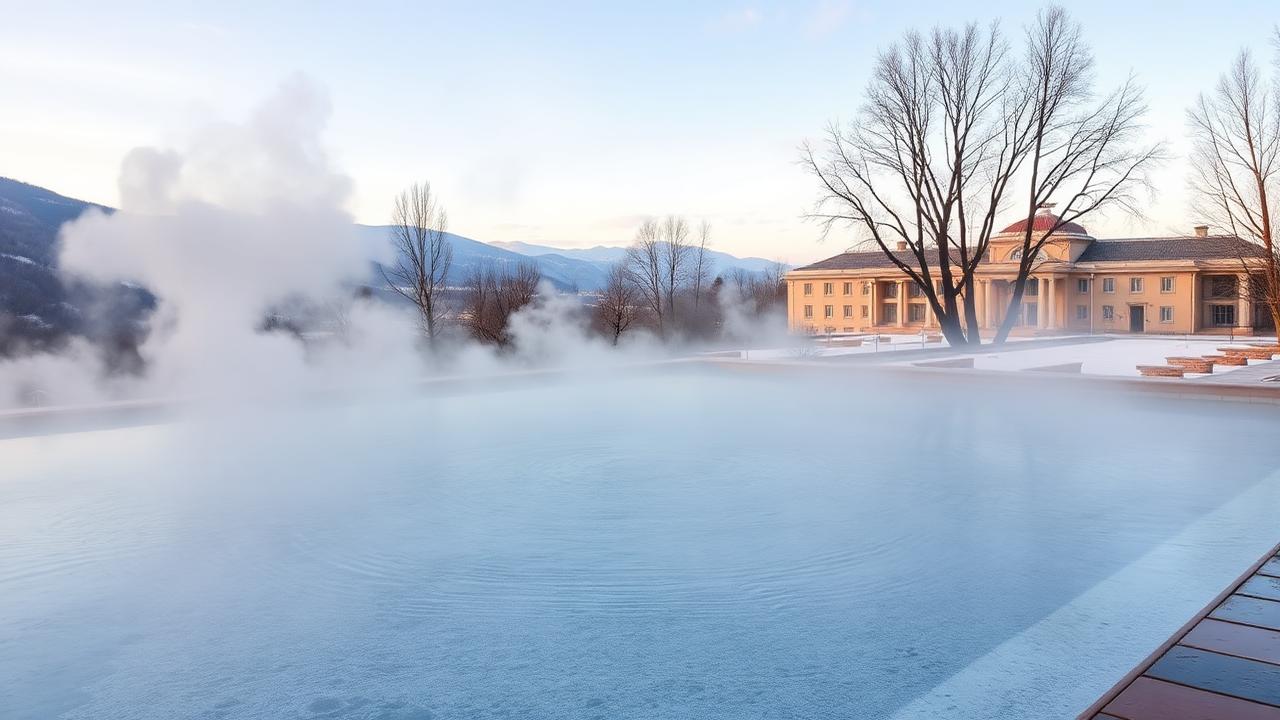
Book a room, get a doctor. Uzbekistan inherited the Soviet sanatorium system — mineral water, mud wraps, salt caves and a physician who writes your daily schedule — and it costs less than a European spa day for a week.
There is a category of Uzbek travel that almost no foreign guidebook covers, because it does not translate: the sanatorium. Not a spa, not a hospital, but a Soviet-designed health resort where you check in for seven to twenty-one days, a doctor examines you on arrival, and you receive a personal timetable of mineral baths, inhalations, physiotherapy and mud. Millions of people across the former USSR still do this every year. In Uzbekistan it is cheap, serious, and genuinely fascinating.
What a sanatorium stay actually involves
You arrive with, ideally, some medical paperwork. A resident physician does an intake consultation and prescribes a course — that is the operative word. Your day is then structured: a morning mineral-water drink at a specific temperature, a therapy block, lunch on a prescribed diet, rest, a second therapy block, an evening walk in the grounds. Full board is included. The buildings are frequently late-Soviet, the corridors are long, and the culture is somewhere between a health retreat and a boarding school.
Typical treatments on the schedule
- Balneotherapy — baths in mineral or thermal water, sometimes radon or hydrogen-sulphide sources.
- Mud wraps (peloid therapy), often using lake or spring-source mud.
- Halotherapy — sessions in an artificial salt cave for respiratory issues.
- Inhalations, electrophoresis, magnet therapy and other physiotherapy carried over from Soviet clinical practice.
- Massage, therapeutic exercise and a supervised diet.
Where to go in Uzbekistan
Chartak, Namangan region
The Fergana Valley's best-known mineral-water resort, built around iodine-bromine springs and long popular for musculoskeletal and skin complaints. Easy to combine with Namangan, Chust and the wider valley.
Zaamin, Jizzakh region
Mountain air rather than mineral water — juniper forest at altitude, historically prescribed for respiratory and cardiovascular recovery. Adjacent to Zaamin National Park, so it doubles as a hiking base and it is the most scenic option.
Kyzylkum and Khorezm thermal springs
Deep artesian bores in the desert regions feed hot mineral pools — the surreal experience of steaming open-air water in the middle of flat semi-desert, popular in winter with local families.
Tashkent region
A cluster of sanatoriums and modern wellness hotels in the Chirchik valley and toward Charvak, offering shorter three-to-five-day programmes aimed at city residents — the easiest option if you only have a weekend.
Prices and booking in 2026
- Full board plus a treatment programme commonly runs roughly $30–70 per person per night depending on the resort and room class.
- Shorter 'wellness weekend' packages exist and skip the full medical intake.
- Booking is usually by phone or Telegram, in Russian or Uzbek — a hotel concierge or local agency will do it for you in five minutes.
- Bring any relevant medical records; without them you will get a generic programme.
- Peak season is late spring and autumn; winter is quieter, cheaper, and the best time for thermal pools.
Should a foreign traveller actually do this?
If you want a mainstream luxury spa, no — go to a five-star hotel in Tashkent or Samarkand. If you want something authentically Central Asian that has nothing to do with the Silk Road tourist circuit, three nights in a sanatorium is one of the most interesting things you can do in the country. You will eat what everyone else eats, be shepherded between treatment rooms by formidable nurses, and end up in long conversations over tea with retirees who have been coming for thirty years.
Practical cautions
- This is not regulated the way a Western clinic is. Treat therapies as traditional wellness, not medicine, and skip anything that conflicts with your own doctor's advice.
- Pregnant travellers and people with heart conditions should avoid hot mineral baths and radon sources entirely.
- English is rare. A translation app and a few Russian phrases go a long way.
- Rooms vary wildly between renovated and defiantly 1978. Ask for photos before booking.