Public Toilets in Uzbekistan (2026): Metro, Bazaars, Restaurants and What to Carry
· 10 min read · Practical
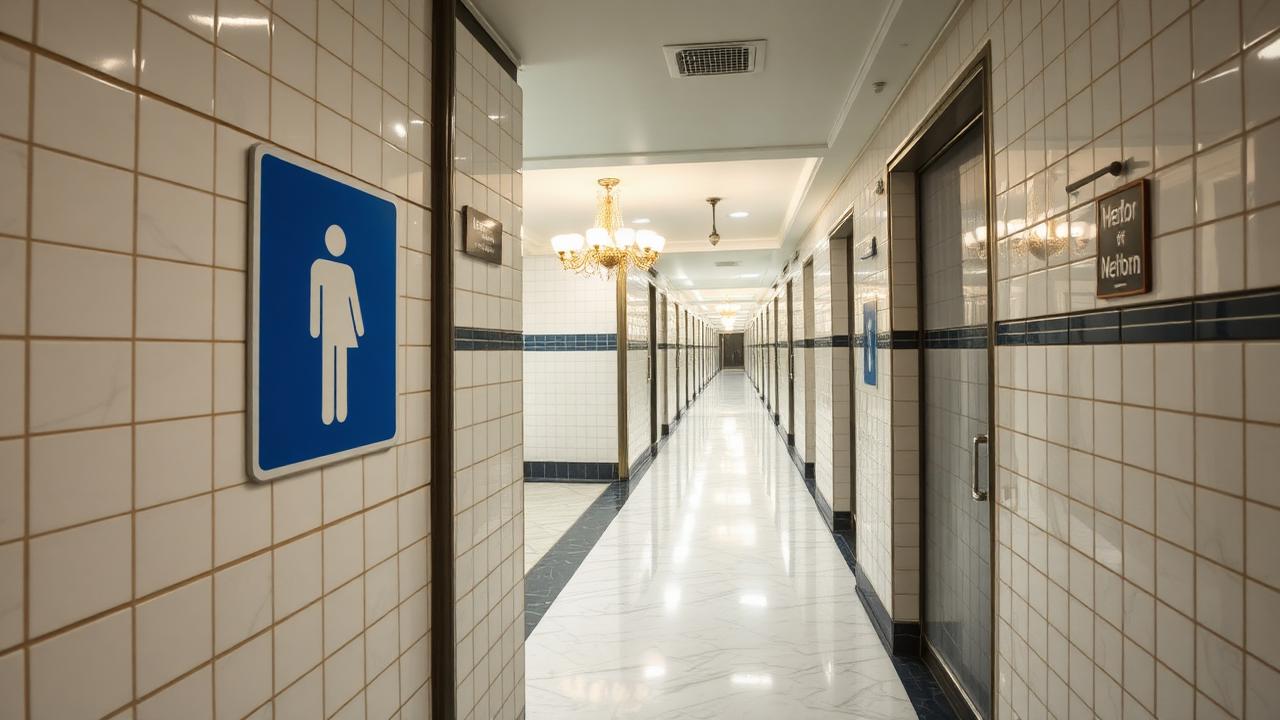
Nobody writes about it, everybody worries about it. Here is the unglamorous, useful truth about finding a toilet in Uzbekistan — in the metro, at bazaars, on desert highways and in the old towns of Bukhara and Khiva.
Toilets are the single most common thing travellers to Uzbekistan quietly worry about and the thing guidebooks skip fastest. It matters more here than in Western Europe: distances between towns are long, summer heat means you drink constantly, and the honest quality range runs from spotless modern facilities in a Tashkent mall to a hole in a concrete floor at a desert petrol station. None of it is difficult once you know the rules.
The 60-second version
- Most public toilets cost roughly 2,000–5,000 som (about 15–40 US cents). Carry coins and small notes; attendants rarely have change and often do not take cards.
- Bring your own paper. Assume there is none, and you will never be caught out.
- Paper goes in the bin beside the toilet, not down the pan. Plumbing in older buildings genuinely cannot cope.
- Squat toilets still exist, mostly at bazaars, older stations, mosques and roadside stops. Seated toilets are standard in hotels, malls, chain cafés and newer buildings.
- Tashkent metro stations have toilets, but not all of them, and quality varies station by station.
- Your reliable free fallback anywhere: a modern shopping mall, a chain coffee shop, a museum you have a ticket for, or your own hotel before heading out.
How much it costs and how payment works
Paid public toilets are normal and not a scam. There is usually a small booth or a seated attendant near the entrance who takes the fee and hands you a short strip of paper. Prices are typically posted on the wall in som. Expect around 2,000 som at a bazaar or bus station and up to about 5,000 som at busier tourist sites or highway service stops.
Uzbekistan is heavily cashless with QR payments, but toilet attendants are the exception — this is one of the last genuinely cash-only corners of daily life. Keep a small stash of 1,000, 2,000 and 5,000 som notes in an outside pocket specifically for this. Trying to pay a 2,000 som fee with a 100,000 som note will not work.
Toilets in the Tashkent metro
The metro is the fastest, cheapest and most beautiful way to cross Tashkent, and it is where most visitors first need to find a facility. The realistic picture:
- Toilets exist at many but not all stations, usually inside the paid zone or near the vestibule at the top of the escalators. Look for the pictogram signs; staff at the ticket booth will point you if you say the word.
- Major interchange and terminus stations, and stations attached to malls or railway stations, are your best bets. Small mid-line stations are the least likely to have anything open.
- Cleanliness is variable. Newer stations on the Yunusobod and ring lines are generally in better shape than the oldest 1970s stations.
- Cleaning staff are present at busy stations and facilities are usually closed briefly for cleaning rather than left in a bad state.
- Mobile signal underground is patchy, so do not rely on looking up a nearby café while standing on a platform.
A practical trick that never fails in Tashkent: exit the metro and walk into the nearest shopping centre. Most of the city's big stations sit near a mall, a chain café or a fast-food outlet, and their toilets are free, seated, well lit and stocked. For getting around the network itself, see our metro map and transport pages.
Squat toilets: what to actually expect
The squat toilet — a porcelain or concrete pan set into the floor with two footplates — is still common outside of hotels and modern buildings. It is not dirty by definition; in many ways it is more hygienic because you touch nothing. If you have never used one, the technique is simple: face the door, feet on the plates, squat low with weight on your heels, and keep your pockets empty of phones and keys before you begin.
Beside the pan you will usually find either a hose (a bidet sprayer, sometimes called a shattaf) or a jug of water. In Uzbekistan, as across the Muslim world, water is the primary method of cleaning and paper is secondary or absent. Using both is completely normal and nobody will think anything of it.
Where you will meet them most
- Bazaars: Chorsu in Tashkent, Siyob in Samarkand, Bukhara's market rows.
- Older intercity bus stations and shared-taxi ranks.
- Mosque and madrasa complexes, and some monument sites in Khiva and Shahrisabz.
- Petrol stations and roadside cafés on long highway stretches.
- Village guesthouses, homestays and yurt camps.
The paper-in-the-bin rule
This is the one piece of etiquette worth memorising. Across most of Uzbekistan, used paper goes into the lidded bin next to the toilet, not into the bowl. Drainage pipes in older buildings are narrow and blockages are common and expensive. You will see the bin in nearly every cubicle, including in decent hotels. Newer international-standard hotels in Tashkent and Samarkand often accept paper in the pan and will say so with a small sign — if there is no sign, use the bin.
Bazaars, mosques and monuments
Every major bazaar has facilities, usually at the edge of the market rather than in the middle, and usually paid. They are functional rather than pleasant, most often squat, and busiest in the late morning. At the big monument complexes — the Registan in Samarkand, Poi Kalyan in Bukhara, the Itchan Kala in Khiva — there are toilets near the ticket gates and inside the larger courtyards. Because these serve tour groups, they get cleaned frequently but can have queues when several coaches arrive together.
Inside working mosques you will find ablution areas for ritual washing. These are for worshippers preparing to pray, not general-purpose visitor toilets; use the public facilities nearby instead. Our religion and etiquette guide covers the wider dos and don'ts of visiting religious sites.
Restaurants, cafés and hotels
Sit-down restaurants, chain cafés, coffee shops and hotels are the easy tier. Almost all are seated, most have soap and paper, many have hand dryers, and there is no charge for customers. In practice nobody in Uzbekistan will chase you out for using a café toilet without buying anything, but ordering a tea or a bottle of water is the polite move and costs very little.
Traditional plov centres and open-air chaikhanas are a step down — clean enough, often squat, sometimes outside in a side yard. Guesthouses in the old towns of Bukhara and Khiva are typically converted courtyard houses with modern seated bathrooms, though water pressure can be modest and hot water sometimes runs on a timer.
On the road: trains, buses and desert highways
- Afrosiyob and other fast trains have toilets in every carriage. They are Western-style, kept reasonably clean by attendants, and busiest right after departure and just before arrival.
- Overnight sleeper trains have one or two toilets per carriage at the ends. Bring paper, wet wipes and hand gel — these are the least pleasant part of an otherwise charming journey.
- Long-distance buses and shared taxis stop at roadside cafés roughly every two to three hours. That stop is your toilet break; take it even if you do not think you need it.
- The Bukhara–Khiva desert crossing and the road to Moynaq and the Aral Sea have long empty stretches. Facilities there are basic at best, so plan around the café stops rather than hoping.
- Airports in Tashkent, Samarkand, Bukhara and Urgench all have free, modern, seated facilities.
What to carry
- A pack of pocket tissues, restocked whenever you see a shop — they are sold everywhere for a few thousand som.
- Hand sanitiser; soap is not guaranteed even where water is.
- Wet wipes for train and desert days.
- Small som notes and coins, kept separately from your main wallet.
- A small quick-dry towel or handkerchief, since hand dryers and paper towels are inconsistent.
Hygiene, water and staying well
Wash hands properly whenever you can and use sanitiser when you cannot — most travel stomach upsets are transmitted by hands rather than by anything exotic. Tap water is not recommended for drinking; bottled water is cheap and universal. If you do get an upset stomach, being able to find a toilet quickly is exactly why the mall-and-café fallback strategy matters. Our water and food safety guide goes into detail on avoiding trouble in the first place.
Accessibility and travelling with children
Wheelchair-accessible toilets exist in Tashkent's newer malls, the international airport terminals, some modern hotels and a handful of recently renovated museums. They are rare elsewhere, and old-town streets in Bukhara and Khiva have uneven cobbles and steps. Travellers with reduced mobility should plan facilities stops around modern buildings and expect assistance rather than infrastructure.
Baby-changing tables are uncommon outside modern malls and airports. Families usually manage with a changing mat in a quiet corner or the back seat of a car, and Uzbek people are famously warm towards children — staff will almost always find you somewhere private if you ask.
Useful words
- Uzbek: hojatxona (toilet), or the widely understood tualet. 'Hojatxona qayerda?' — where is the toilet?
- Russian: туалет (tualet). 'Где туалет?' — where is the toilet? Russian is widely understood in cities.
- Signs: Э / Erkaklar / М / Мужской = men. А / Ayollar / Ж / Женский = women. Learn these two pairs and you will never guess wrong.
- 'Bepul' means free; 'pullik' means paid.
The honest verdict
Toilets in Uzbekistan are not a reason to hesitate about the trip. In Tashkent, Samarkand and the tourist core of Bukhara and Khiva, the standard is comparable to much of southern and eastern Europe. Away from those hubs it becomes basic quickly — squat pans, no paper, a small fee — but it is functional, it is normal, and locals handle it every day. Carry tissues, small notes and hand gel, use hotels and malls when they present themselves, and this stops being a problem within about two days of arriving.