Uzbekistan Just Passed 38 Million: The Demographic Boom Reshaping Central Asia in 2026
· 9 min read · Culture
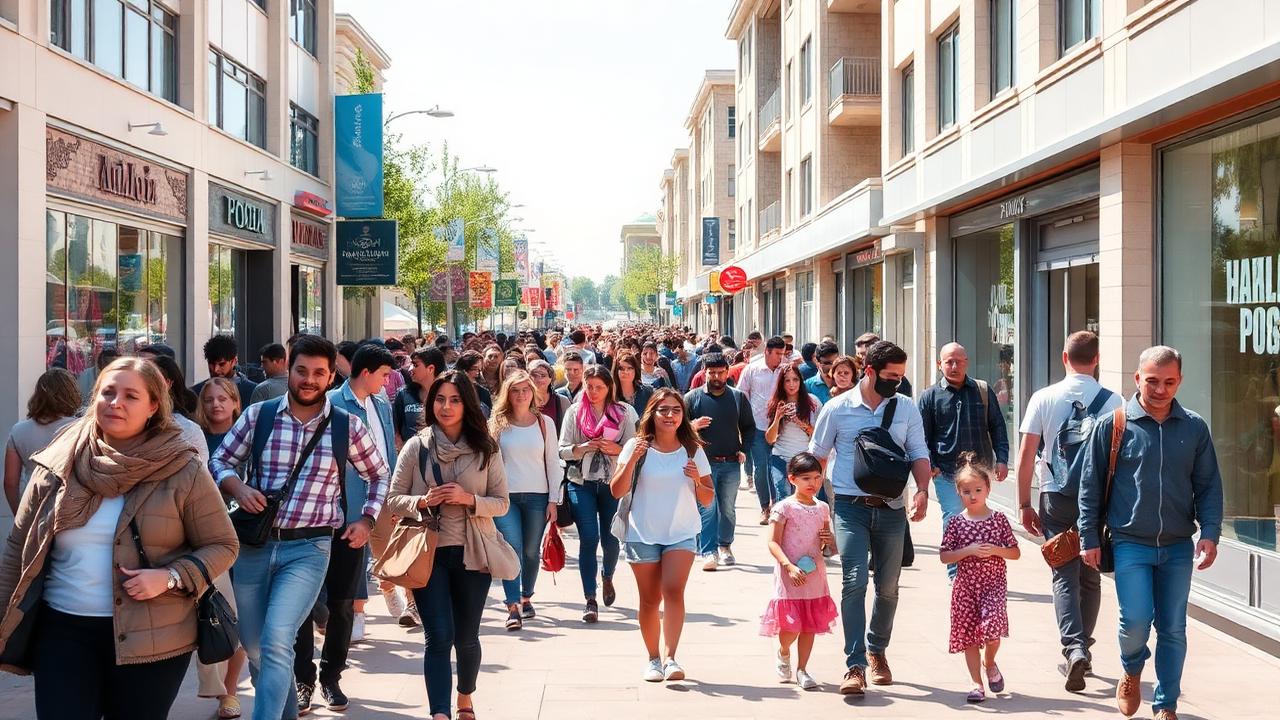
Half the people in Uzbekistan are under thirty. That single number explains the queues, the construction cranes, the new universities, and why the country feels nothing like the ageing Europe most visitors fly in from.
Uzbekistan is the most populous country in Central Asia by a wide margin, and in the mid-2020s it crossed the 37 and then 38 million mark — a threshold it reached far faster than projections written in the 2000s expected. Population figures are published by the national statistics agency and updated continuously; the direction of travel is unambiguous even where the exact monthly figure is not. For visitors this is not trivia. It is the single fact that explains most of what surprises people about the country.
The numbers, roughly
- Population: above 38 million, growing by several hundred thousand people a year.
- Median age: under 30 — decades younger than Western Europe, Japan or Russia.
- Roughly half the population lives in urban areas, with the Fergana Valley the densest region in Central Asia.
- Tashkent city holds around three million people, with the greater agglomeration considerably larger.
- Uzbekistan alone accounts for close to half of Central Asia's total population.
Why it is growing
Three forces stack. First, a fertility rate that recovered after the 1990s and has stayed comfortably above replacement, supported by a strong cultural emphasis on family and relatively early marriage. Second, falling infant mortality and rising life expectancy through the 2010s and 2020s. Third — and often forgotten — the echo effect: a large cohort born in the 1980s reached childbearing age together, and their children are now filling schools.
Migration cuts the other way
Labour migration, historically to Russia and increasingly to Turkey, South Korea, the Gulf and Europe, removes a meaningful share of working-age men for parts of the year, and remittances are a serious component of household income in rural regions. This is why some villages feel quiet on a weekday while the cities feel like they are bursting: the demographic weight and the working population are not in the same place at the same time.
What a young country feels like on the ground
- Queues everywhere at weekends — parks, cafés, amusement parks, wedding halls. The leisure infrastructure is chasing the population, not leading it.
- Unusual openness to foreigners. A young population that grew up with smartphones and English classes will approach you to practise.
- Vast school and university construction, plus a genuinely fierce competition for university places and IELTS scores.
- Enormous domestic tourism. Uzbeks travel inside their own country in numbers that dominate the summer high season.
- Wedding season saturating the calendar. Read the etiquette before you get invited: /blog/inside-uzbek-wedding-scale-customs-guide
The economic bet: dividend or pressure?
A young population is an asset if the economy creates jobs faster than school leavers arrive, and a serious problem if it does not. Uzbekistan's policy response is visible: the IT Park outsourcing push, aggressive foreign investment courting, the tourism build-out, and industrial expansion in mining and energy. Whether that adds up to enough jobs is the central open question of the next decade, and it is why so much of the national conversation is about employment and emigration rather than heritage.
What this means if you are doing business
- A large, cheap, young and increasingly multilingual labour pool — the basis of the outsourcing pitch at /blog/uzbekistan-it-park-tech-outsourcing-boom-guide-2026
- A consumer market that is growing in absolute size every single year, which is why global retail brands are arriving now: /blog/uzbekistan-global-brands-arriving-retail-boom-guide-2026
- Serious pressure on water, electricity and housing — the constraints that shape policy debates.
How it compares regionally
Kazakhstan has more land and more oil but roughly half the people. Tajikistan and Kyrgyzstan are younger still in places but far smaller. Turkmenistan is closed. The result is that Uzbekistan's demographic weight increasingly determines what Central Asia looks like as a market: any regional strategy — transport corridors, energy grids, retail rollouts — starts with the 38 million people in the middle of the map.
The traveller's takeaway
Book ahead in summer, because domestic tourism fills hotels in Samarkand and Bukhara that foreign visitors assume are theirs. Expect to be talked to. Expect children everywhere. Expect the country you visit in 2030 to be visibly different from the one you visit now, because a population growing by the size of a small city each year does not stand still.
The Soviet-era image of Central Asia as empty steppe is dead. The reality in 2026 is a dense, young, fast-urbanising country that happens to have some very old buildings in it.