Uzbekistan's Airline Boom (2026): Centrum Air, Air Samarkand and Why Flying Here Suddenly Got Cheap
· 10 min read · Transport
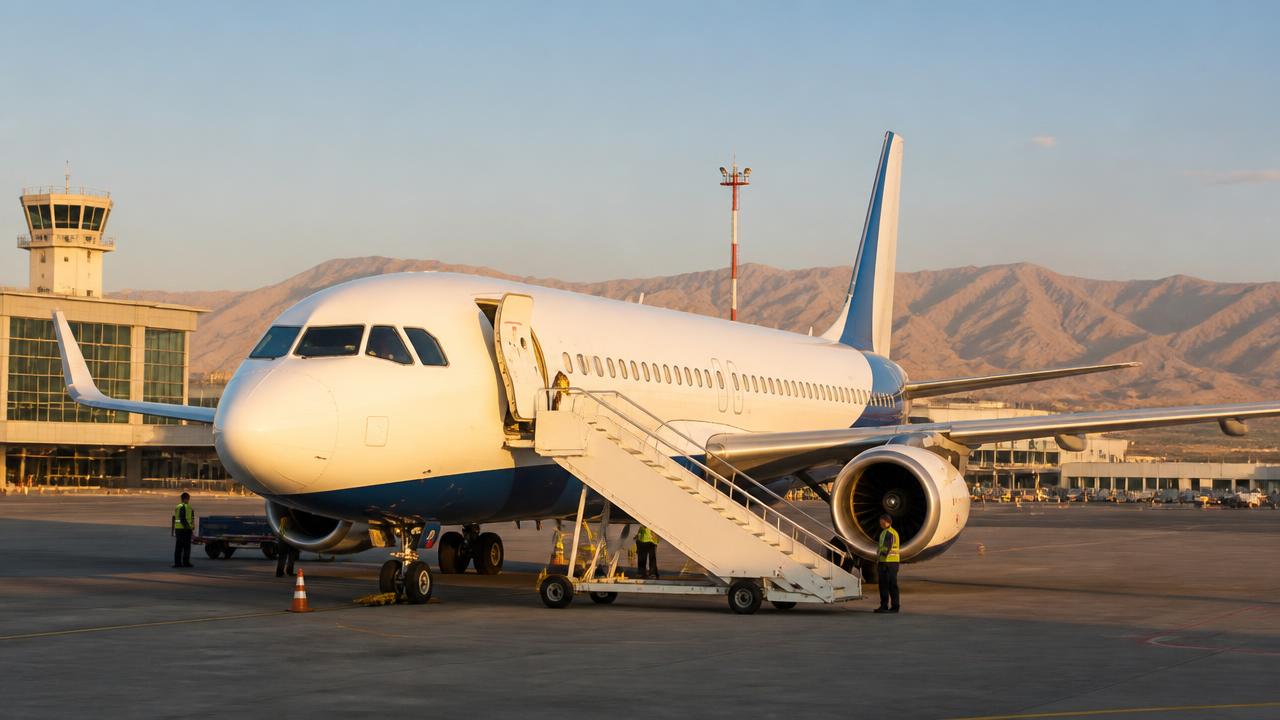
For decades flying to Uzbekistan meant one national carrier and one price. In 2026 there are private Uzbek airlines competing on the same routes, and the fares finally show it.
The most underrated change in Uzbek travel is not a new monument or a new train. It is that the country stopped treating air travel as a state monopoly. Liberalisation opened domestic and international routes to private carriers, and the result in 2026 is a genuinely competitive market: several Uzbek airlines, a fast-growing Tashkent hub, and fares on some routes that undercut what the same journey cost three years ago.
Who is actually flying in 2026
- Uzbekistan Airways — the national carrier, still the biggest network, with the widest long-haul reach and most of the intercontinental connections.
- Centrum Air — the fastest-moving private carrier, expanding aggressively from Tashkent. It announced a batch of new international routes for the summer 2026 season and, from February 2026, consolidated much of its flying at Tashkent rather than Samarkand to strengthen the capital as its hub.
- Air Samarkand — a younger carrier built around Samarkand's international airport, focused on charter and scheduled leisure traffic.
- Qanot Sharq — a long-established private operator running scheduled and charter services.
- Silk Avia — the domestic regional operator flying smaller turboprops to secondary cities, aimed squarely at internal connectivity.
Networks move fast in a young market. Routes get announced, launched, moved between airports and quietly dropped inside a single season — Centrum Air's Samarkand-to-Tashkent basing shift in early 2026 is a good example. Treat any route list, including this one, as a snapshot and check the airline's own schedule before you plan around it.
What this means for your fares
Three things changed at once. Competition on Tashkent routes to Russia, Turkey, the Gulf and increasingly to Asia pushed prices down. Second airports — Samarkand, Bukhara, Urgench, Fergana, Namangan, Nukus, Termez — get more direct international service, so you no longer have to route everything through the capital. And Tashkent itself is being built up deliberately as a Central Asian connecting hub, which means more onward options rather than just point-to-point flights.
The practical rule
Price the flight and the train together. On the classic Silk Road corridor the high-speed rail usually wins on total time and hassle. Off that corridor — anything to Nukus, Termez, Urgench or the Fergana Valley in winter — flying is often the sane choice.
Fly or take the train? A route-by-route answer
- Tashkent–Samarkand: take the train. Roughly two hours city centre to city centre on the Afrosiyob; flying cannot beat it once you add airports.
- Tashkent–Bukhara: train, unless the schedule fails you. About four hours on the fast service.
- Tashkent–Khiva/Urgench: genuinely close. The Jaloliddin Manguberdi direct train runs only a few days a week, so a flight to Urgench is often the faster and more available option.
- Tashkent–Nukus: fly. The overland alternative is very long, and Nukus is the gateway to the Aral Sea and the Savitsky Museum.
- Tashkent–Termez: fly, or take the overnight sleeper if you want the experience rather than the speed.
- Tashkent–Fergana Valley: the Kamchik Pass road is scenic but can close in bad winter weather; the short flight is the reliable version.
Booking without surprises
- Book direct with the airline where you can. Uzbek carriers' own sites now handle foreign cards far better than they did, and third-party agencies are the usual source of ticketing problems.
- Check which airport a route uses. Some services have moved between Tashkent and Samarkand at short notice.
- Watch baggage. The new private carriers price like low-cost airlines, which means the cheap fare may carry hand luggage only.
- Your passport details must match exactly. Uzbek carriers and border control both check.
- Domestic flights on small turboprops have tight baggage limits — a problem if you are carrying a rolled carpet.
- Leave a buffer on the day you fly home internationally, especially if you plan to claim a Tax Free VAT refund at the airport.
The bigger picture
Uzbekistan is trying to become the aviation crossroads of Central Asia, the way it once was a crossroads on the ground. More carriers, a modernised Tashkent terminal and international flights into second cities all point the same direction: it is getting cheaper and easier to arrive somewhere other than the capital, and to build an itinerary that does not double back.
Schedules, carriers and airports change every season — confirm on the airline's official channels before booking. For arriving from abroad, see /blog/direct-flights-to-uzbekistan-2026, and for the rail alternative see /blog/afrosiyob-high-speed-train-tashkent-samarkand-bukhara-khiva-2026-guide