Uzbekistan for Muslim Travellers: The Honest 2026 Halal & Ziyarah Guide
· 9 min read · Religion
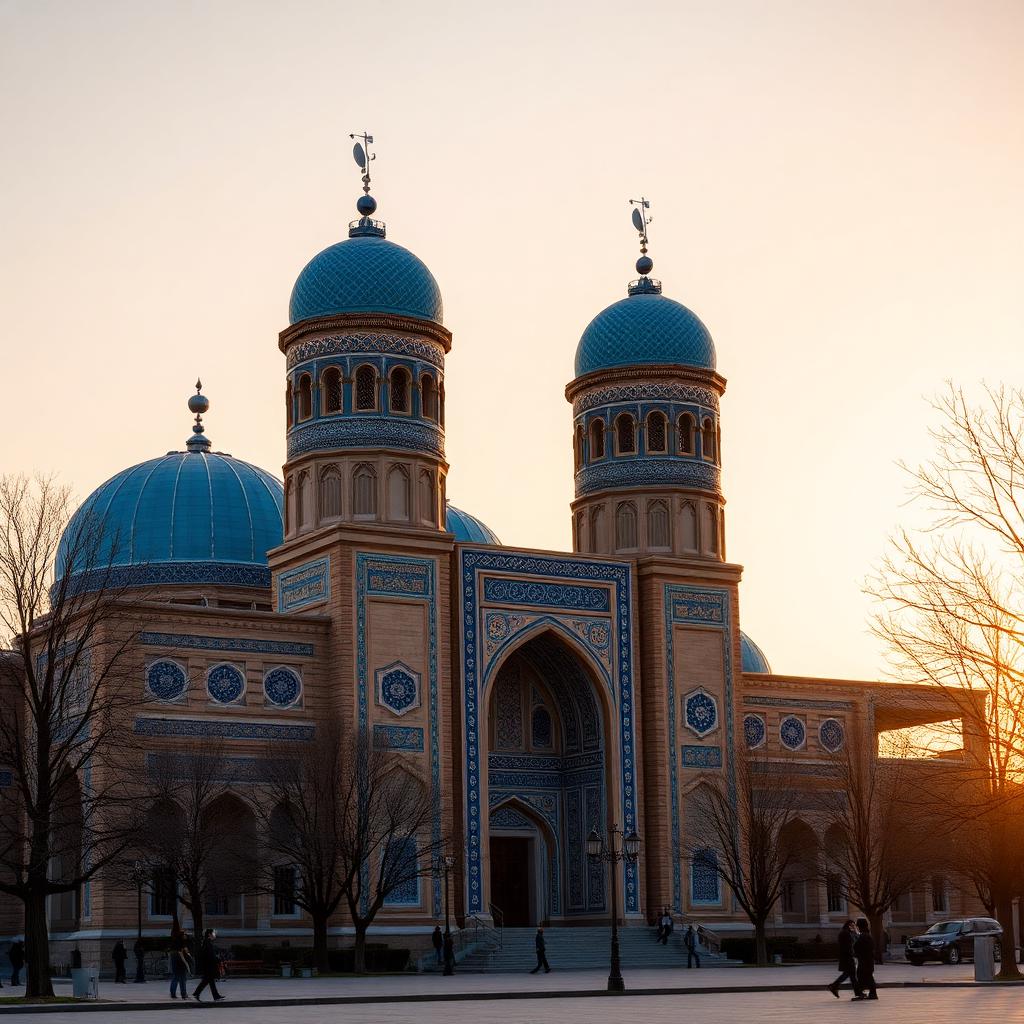
Halal by default, mosques on every corner, and the graves of the scholars whose books you've read — plus the caveats no tour operator mentions. The independent guide for Muslim travellers in 2026.
Uzbekistan is one of the easiest countries in the world to travel as a Muslim visitor — and one of the most meaningful, because this is where much of Islamic scholarship was actually written. With Gulf states now enjoying visa-free entry and two major Islamic heritage sites opening in 2026, more Muslim travellers are coming than ever. Almost everything written for them, though, is a tour-operator sales page. This is the independent version.
The basics: how Muslim-friendly is it really?
Uzbekistan is overwhelmingly Muslim — estimates run from around 88% to 96% of the population — so the fundamentals are built into daily life rather than provided specially for tourists. Halal food is the default, not a category you hunt for. Mosques are everywhere: Tashkent alone has over 150.
The honest caveat: Uzbekistan is a secular state with a Soviet century behind it. Practice is often quieter and more private than in the Gulf or Southeast Asia. Alcohol is sold openly in shops and served in many restaurants, including hotels. This surprises some first-time Gulf visitors. It doesn't make the country less welcoming — it just isn't Saudi Arabia or Malaysia.
Food: easier than almost anywhere
Uzbek cuisine is built on lamb and beef with heavy use of vegetables and herbs — plov, shashlik, samsa, lagman, shurpa. In ordinary restaurants across the country, meat is halal by default. Pork exists but is confined to specific Russian and Korean establishments and is clearly recognisable.
- Many hotels serve halal-only food; some have entirely alcohol-free restaurants.
- In Tashkent's international restaurants and hotel dining rooms, ask — that's where the exceptions live.
- Street food (samsa stands, plov centres, bazaar kitchens) is reliably fine.
Prayer: what to expect, including for women
Mosques are plentiful and open for daily prayers. Some to know:
- Bibi Khanym Mosque, Samarkand — the famous one, open for daily prayers and Jumu'ah.
- Minor Mosque, Tashkent — modern, white marble, on the Ankhor river, large capacity.
- Hazrati Imam (Hast-Imam) complex, Tashkent — the spiritual heart of the capital, now beside the new Center of Islamic Civilization.
For women, read this part
Historically, Uzbek women have largely prayed at home, a legacy of the Soviet period, which meant many mosques had little or no women's prayer space. That is changing specifically because of the rise in Muslim tourism — women's areas have become far more common, and travellers report finding beautiful, well-kept prayer spaces. Still: don't assume every mosque has one. Check ahead for the mosques on your route, and carry a prayer mat so you're never dependent.
Many hotels used by Muslim travellers now provide prayer mats in rooms and a qibla direction marked on the ceiling; some have dedicated prayer rooms. Worth asking when you book.
A practical courtesy that works in your favour: at major monuments, tourists are typically asked to leave before prayer time — which means if you're there to pray, you get these extraordinary spaces quiet and nearly empty. It's one of the best experiences available in the country.
Ziyarah: the sites that make this trip different
- Imam al-Bukhari Complex, near Samarkand — the compiler of Sahih al-Bukhari. A vastly expanded complex opened in March 2026, about 25 km north of Samarkand. If you make one pilgrimage stop, make it this one (see our full guide at /blog/imam-al-bukhari-complex-samarkand-guide-2026).
- Shah-i-Zinda, Samarkand — the necropolis associated with a cousin of the Prophet who came to Central Asia to spread the message.
- Bahauddin Naqshband Mausoleum, Bukhara — founder of the Naqshbandi order, one of the most significant Sufi sites anywhere.
- Samanid Mausoleum, Bukhara — the oldest surviving example of Islamic architecture in Central Asia.
- Center of Islamic Civilization, Tashkent — opened March 2026, home to the Uthman Quran, one of the oldest Qurans in existence.
Practical planning notes
- Entry: GCC citizens — Saudi Arabia, UAE, Qatar, Kuwait, Oman, Bahrain — plus Jordan now enter visa-free. Check your allowance before booking.
- Dress: modest dress is normal and appreciated at religious sites; a headscarf for women at mosques and mausoleums. Shoulders and knees covered is the practical rule everywhere, and it is the same advice we give on our safety pages.
- Ramadan: the country observes it, but as a secular state, restaurants stay open and daily life continues — different from the Gulf.
- Language: Uzbek and Russian dominate; Arabic is not widely spoken outside specialist guides. Arabic-speaking guides exist but book ahead.
- You don't need a group tour. Every site above is reachable independently by high-speed train and taxi. Tours add convenience and prayer-timed itineraries, not access.
Bottom line
For a Muslim traveller, Uzbekistan offers something rare: world-class Islamic heritage, effortless halal food, mosques on every corner — and the graves of the scholars whose books you've read. Come knowing it's a secular country where practice is quieter than the Gulf, plan women's prayer spaces slightly ahead, and it may be the most rewarding trip you take.