Uzbek Mountain Honey (2026): How to Buy the Real Thing and Not Flavoured Syrup
· 9 min read · Food
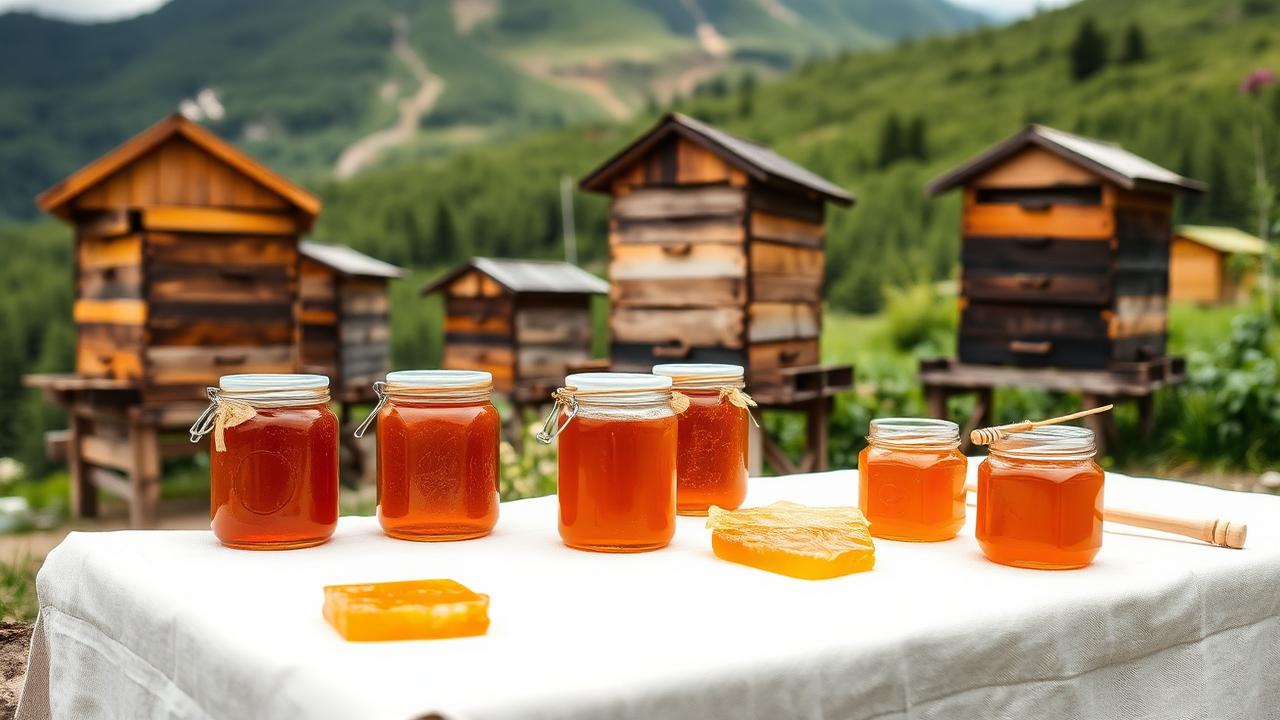
The jars glowing in every bazaar are not all honey. Some are sugar syrup with a spoon of the real thing stirred in. Here is how Uzbeks tell the difference, and what mountain honey should actually cost.
Beekeeping in Uzbekistan is old, widespread and quietly serious. In the mountain belts — Surxondaryo around Boysun, the Nuratau ridges, the Tien Shan foothills above Tashkent, the Zaamin highlands — families move hives up the slopes as the flowering line climbs through spring and summer. The result is a set of distinct regional honeys that most visitors walk straight past because every bazaar jar looks the same. This guide is about telling them apart and not overpaying for syrup.
The main types you will meet
- Tog' asali — mountain honey. Dark, strongly aromatic, from mixed high-altitude wildflowers. The prestige product.
- Esparcet (sainfoin) honey — pale, mild, crystallises to a creamy white. Very common and genuinely good.
- Cotton honey — light and quick to crystallise, from the lowland cotton belt. Cheap and everywhere.
- Acacia honey — clear, slow to crystallise, delicate. Popular as a gift.
- Coriander and buckwheat honeys — dark and pungent, an acquired taste that locals rate highly.
- Comb honey — sold as cut sections. The hardest to fake, which is precisely why it costs more.
Seasons and where it comes from
The harvest runs from late spring through late summer, moving upwards with the bloom. Esparcet comes early, mountain wildflower honey mid-season, and the last high-altitude harvest lands in August. That means autumn is the best time to buy — the year's honey is in and the vendors have range. Buying in spring often means last year's stock, which is fine for honey but worth knowing before you pay a premium.
Regions with a reputation
- Boysun and the Surxondaryo mountains — the name people say when they mean serious honey. The region's wider culture is covered at /blog/boysun-mountains-folk-culture-festival-guide-2026
- Nuratau — small producers, often the same families running village homestays, which makes it the easiest place to buy directly from a beekeeper.
- Chimgan, Beldersay and the Ugam-Chatkal area — accessible from Tashkent as a day trip.
- Zaamin — high, remote and increasingly marketed as a wellness product.
How to spot fake or adulterated honey
Adulteration here usually means dilution with sugar syrup, not a wholly synthetic product. None of the folk tests are laboratory-grade, but used together they filter out the obvious.
- Watch how it falls off a spoon. Real honey forms a continuous ribbon that folds on itself; syrup breaks and drips.
- Crystallisation is a good sign, not a fault. Most genuine honeys granulate over months. A jar that stays perfectly liquid for a year has usually been heated or cut.
- Smell it. Real mountain honey smells strongly of flowers and slightly of smoke; syrup smells of nothing much.
- Taste for the throat catch — a faint sharpness at the back of the throat is characteristic of unprocessed honey.
- Buy where the vendor lets you taste from the open jar. Refusal to give a taste is the loudest signal in the bazaar.
- Prefer comb honey or a jar bought from the beekeeper if authenticity matters more than price.
What it should cost in 2026
Prices vary sharply by type and region, but as a sanity check in 2026: cotton and mixed lowland honey sits at the bottom of the range, esparcet in the middle, and genuine high-mountain wildflower honey can be two to four times the cheapest jar. Comb honey carries a further premium. Expect roughly 60,000 to 150,000 som per kilo across that spread at bazaar prices, with tourist-facing shops in old-town Bukhara and Samarkand charging noticeably more for the same product. Buy in a food bazaar, not a souvenir arcade.
Taking it home
- Honey is a food product, so it falls outside Uzbekistan's tourist VAT refund scheme — see /blog/uzbekistan-tax-free-vat-refund-tourists-guide-2026
- Many countries restrict or prohibit the import of honey and other bee products. Check your own customs rules before buying three kilos.
- It is a liquid for aviation-security purposes. It goes in checked baggage.
- Double-bag it. Bazaar jars are not always sealed for a pressurised hold, and honey in a suitcase is a memorable disaster.
How Uzbeks actually eat it
Not on toast. Honey arrives at the start of a meal on the dastarkhan, alongside nuts, dried fruit and cream, to be eaten with non and tea before anything hot appears. In winter it is stirred into tea with lemon at the first sign of a cold, and in some households it is served with fresh qaymoq cream as a small ceremony for a guest. Refusing it is difficult and unwise: /blog/uzbek-hospitality-mehmon-guest-etiquette-guide-2026
One kilo of real mountain honey from a beekeeper who let you taste it first is one of the best souvenirs Uzbekistan sells — and one of the few that gets better after you carry it home.