Kurash: The Uzbek Wrestling Style That Went From Village Weddings to the Asian Games
· 8 min read · Sport & Culture
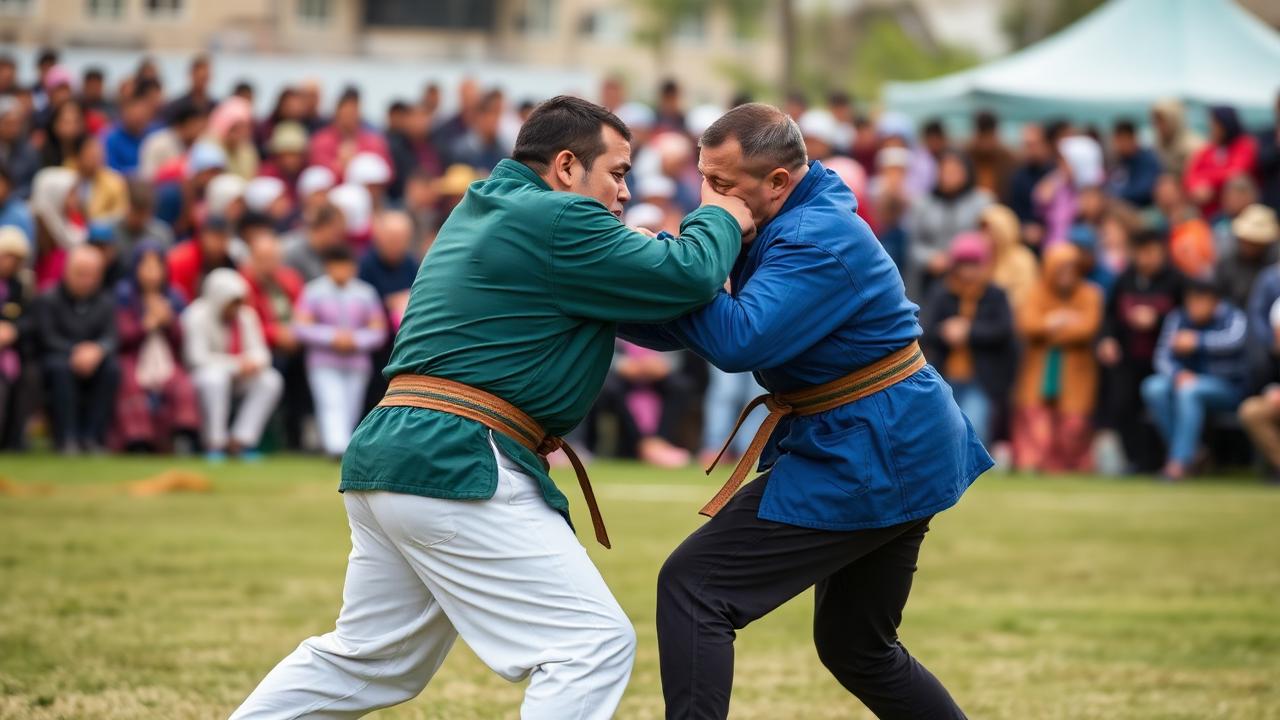
Before Uzbekistan had Olympic boxers, it had kurash — upright jacket wrestling fought at weddings and holidays for centuries. It is now an international sport with its own federation and Asian Games medals.
If you attend a village celebration, a spring Navruz festival or a regional holiday in Uzbekistan, there is a good chance you will see two men in coloured jackets circling each other on grass while a crowd shouts advice. That is kurash, and it is far older than any modern federation.
The rules, simply
- Wrestlers wear a jacket (yakhtak) and belt; grips are taken on the jacket and belt.
- Everything is fought standing — there is no ground fighting or submission.
- A clean throw onto the back ends the bout immediately (halal).
- Partial scores are awarded for less complete throws.
- Leg grabs with the hands are prohibited, which forces upright, visible technique.
Why it looks like judo but is not
Judo allows groundwork, strangles and armlocks; kurash does not. Judo grips a heavier gi; kurash uses a lighter jacket and belt. The result is faster, more open and, for spectators, easier to read: someone lands on their back and it is over.
From wedding field to world championship
In the 1990s Uzbek organisers codified the village tradition into a standard rule set, founded the International Kurash Association and pushed for recognition. Kurash now appears at the Asian Games and Asian Indoor Games, and national teams from Iran, India, Kazakhstan, Turkey and beyond compete seriously. Uzbekistan remains the reference nation.
The cultural layer people miss
Traditional kurash is inseparable from hospitality. Bouts were held at toy (celebrations), winners were rewarded with livestock, carpets or cash from the host, and the palvon — the strongman — held real standing in the mahalla. That social role still exists in rural areas even where the sport is now formally regulated.
Where to see it in 2026
- Navruz celebrations in March, especially in the Fergana Valley and Surkhandarya.
- Regional holidays and wedding seasons in villages — ask your homestay host.
- National championships in Tashkent and provincial sport palaces.
- Boysun Bahori and similar folk festivals, where kurash sits alongside music and horse games.
Can visitors train?
Yes. Many judo and sambo clubs in Tashkent teach kurash and welcome visitors for a session. Bring a judo gi if you have one, arrive before the class starts and ask the coach directly — Uzbek clubs are typically generous with foreign guests who show up respectfully.
Honest verdict
Kurash is the clearest single answer to why Uzbekistan produces so many world-class fighters. Watch one afternoon of it and the country's boxing, judo and wrestling medals stop looking like a surprise.