Uzbekistan's 35th Independence Day (1 September 2026): What Happened, What It Means, and How the Country Actually Celebrates
· 12 min read · Culture
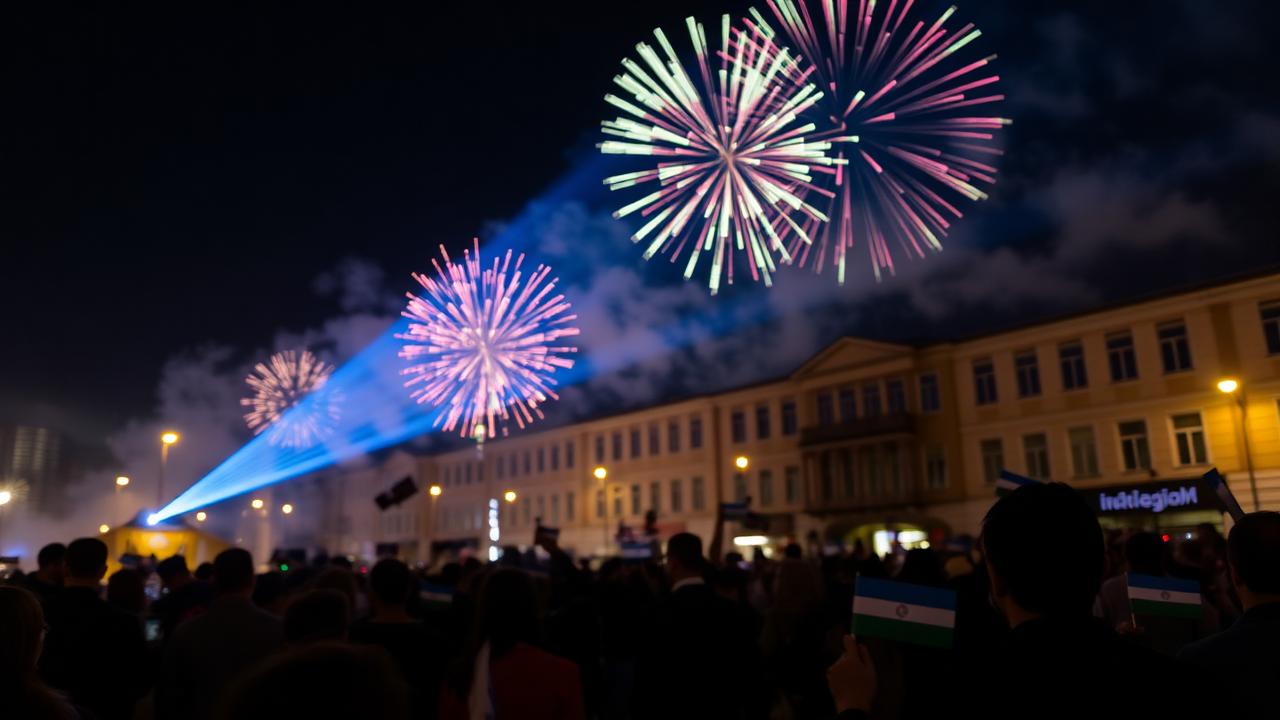
Thirty-five years since 31 August 1991. Here is what the 2026 anniversary actually involved, what the president promised for the next decade, and what the day looks like from a normal Tashkent courtyard.
Uzbekistan marked the 35th anniversary of its independence on 1 September 2026, and this was not a routine flag-raising year. The centrepiece ceremony was staged in New Tashkent, the new district east of the capital, on 28 August — several days before the official holiday — and combined a political address with one of the largest cultural productions the country has ever mounted. If you were in Uzbekistan that week, or you are trying to understand what people are talking about, this is the full picture.
The date: 31 August or 1 September?
Both, and the confusion is legitimate. The Supreme Soviet of the Uzbek SSR adopted the declaration of state independence on 31 August 1991, following the failed August coup in Moscow. The very same session designated 1 September as the national holiday. So the historical act is dated 31 August 1991, while Independence Day — Mustaqillik kuni — is celebrated on 1 September every year. In 2026 that made it the 35th anniversary.
Why 1991 mattered here
Uzbekistan did not fight a war of secession. Independence arrived through a legislative act in a fortnight of institutional collapse, and the state that emerged kept much of the Soviet administrative machinery while rewriting its symbols: a new flag in November 1991, a new emblem, a new anthem, and a national narrative anchored in Amir Timur rather than in Moscow. Understanding that continuity explains a lot about how the holiday is staged today — highly organised, state-led, and focused on achievement rather than on rupture.
The 2026 anniversary ceremony in New Tashkent
The main gala took place in New Tashkent, and the choice of venue was itself the message. The area now holds the campus of New Uzbekistan University, the National Pedagogical University named after Nizami Ganjavi, and the new National Library — all presented as physical proof of the reform decade. The programme mixed national music and dance with a large-scale drone show and international guests: British soprano Sarah Brightman, Italian tenor Alessandro Safina and Spanish tenor José Carreras all performed.
The seven national programmes
In his address, President Shavkat Mirziyoyev used the anniversary to set out seven national programmes for the coming decade, with targets across investment, education, healthcare and economic growth. The framing was explicitly forward-looking — the anniversary as a launch point rather than a retrospective. Whatever your view of the politics, this is the speech that will be quoted in Uzbek policy documents for the next several years, so it is worth knowing it exists.
What the holiday looks like on the ground
Strip away the televised gala and Independence Day in Uzbekistan is, for most families, a domestic holiday. Mahalla committees organise courtyard events in the morning. Extended families gather for a large lunch, very often plov cooked outdoors in a kazan. Children receive small gifts. In the evening, people head to the parks — New Uzbekistan Park, the Ecopark, the city fountain areas — and stay out late because the weather in the first days of September is finally bearable after the August heat.
Practical notes for visitors
- 1 September is a public holiday: government offices, banks and most business services close, and many close 31 August as well when the calendar allows a bridge.
- Museums and major monuments generally stay open, but check hours — several run holiday timetables.
- Central Tashkent sees road closures and heavy security around the ceremonial areas in the days before and on the day itself. Allow extra time and expect metro stations near event sites to be busy.
- Taxi surge pricing after evening events is severe. Walk ten minutes away from the crowd before ordering.
- 1 September is also the first day of the school year, so the morning is full of children in white shirts with flowers — the best street photography of the year, with permission.
- Alcohol service is reduced or suspended at some venues around the official events; do not assume a bar will serve as normal.
The school-year overlap nobody explains
Because Independence Day and the start of the school year fall on the same date, 1 September carries a double meaning here. Schools hold their Bilimlar kuni — Day of Knowledge — ceremonies alongside the national holiday, which is why the imagery of the day is as much about first-graders with gladioli as it is about flags. If you are travelling with children or visiting an Uzbek family, this is the single warmest day of the civic calendar to be invited into.
Thirty-five years in numbers
The country that declared independence in 1991 had roughly 21 million people. In 2026 it has passed 38 million, making it by a wide margin the most populous state in Central Asia and one of the youngest populations in Eurasia. Tourism, which barely existed as an industry in the 1990s, is now a headline policy area with visa-free access for most of Europe, East Asia, the Gulf, the United States, and — as of the last days of August 2026 — India. That trajectory is the substance behind the anniversary rhetoric.
How to experience it if you are here next year
Plan to be in Tashkent for the evening rather than the morning. The daytime is formal and largely televised; the evening is when the city belongs to families. Pick one park, arrive before dark, eat street food, and stay for the fountain and light programme. Then walk. It is the one night of the year when the whole capital is outdoors at the same time, and no museum will tell you more about modern Uzbekistan than that crowd will.