Eagle Hunters of Uzbekistan (2026): The Truth About Falconry in Central Asia
· 9 min read · Culture
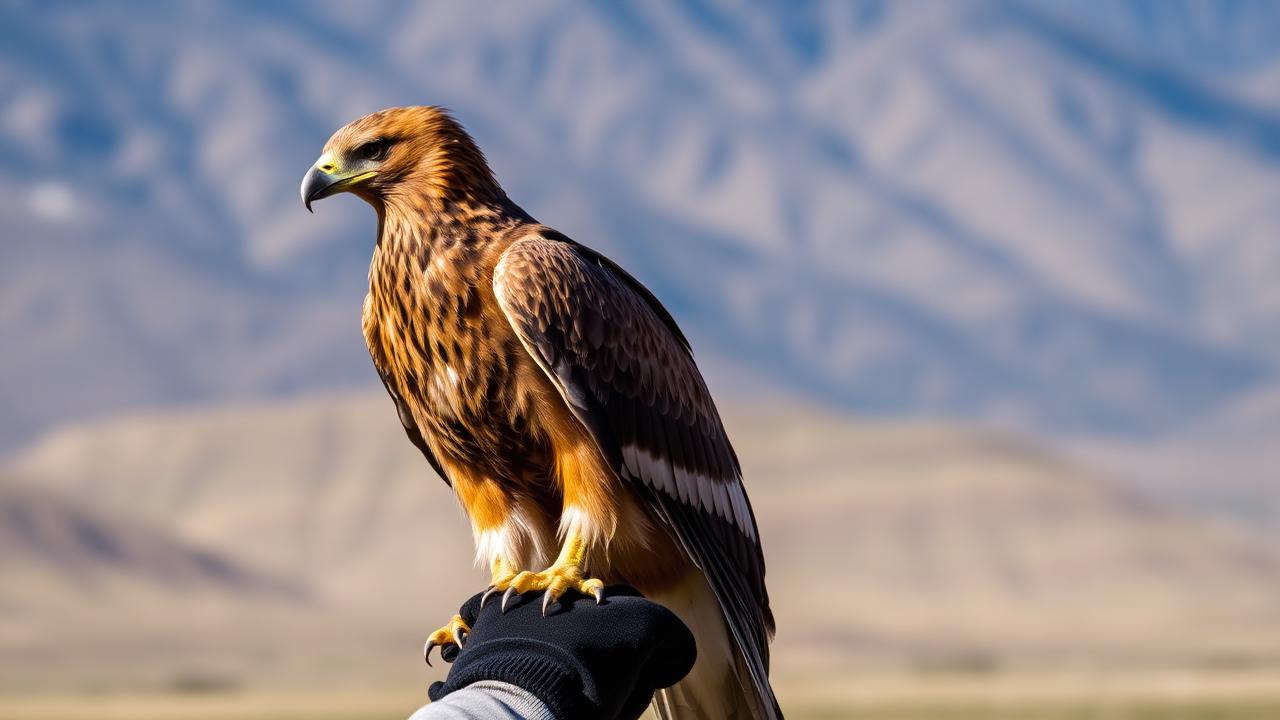
Every Central Asia tour sells an eagle-hunter photo op. Almost none of them tell you the tradition is overwhelmingly Kazakh and Kyrgyz, not Uzbek — or what that means for the bird on your arm.
Type Central Asia into an image search and a man on horseback with a golden eagle appears within the first ten results. It has become the region's visual shorthand. It is also a tradition with a precise geography, and Uzbekistan is on the edge of it rather than at the centre. If you are planning a trip and want to see working birds of prey, this is the honest picture in 2026 — including which experiences are worth your money and which are a bird in a hotel car park.
Whose tradition is it?
Berkutchi or burkitshi — golden eagle hunting from horseback — is principally a Kazakh tradition, strongest today among Kazakhs in western Mongolia's Bayan-Ölgii province and in eastern Kazakhstan, with a parallel Kyrgyz tradition of eagle and falcon hunting around Issyk-Kul. UNESCO's intangible heritage listing for falconry includes a broad set of countries, and Uzbekistan has its own history of falconry — but the horseback-eagle-hunter image most travellers carry belongs to the nomadic steppe cultures more than to the settled oasis culture that shaped Uzbekistan.
Uzbekistan's own version
- Falconry with smaller birds — sparrowhawks, sakers and other falcons — has a long history in the region and appears in Timurid-era court imagery.
- Kazakh communities live in Uzbekistan, particularly in Karakalpakstan and the northern steppe districts, and some traditions travel with them.
- There is no significant living community of horseback eagle hunters operating as a working practice inside Uzbekistan today.
- Where you will meet eagles is at festivals, cultural shows and staged photo stops, not on a hunt.
What you can actually see in Uzbekistan
- Cultural festivals — Navruz events, regional folk festivals and the kupkari horseback season sometimes include birds of prey as part of a wider display of steppe traditions. Kupkari itself is the real living horseback sport here: /blog/uzbek-kupkari-buzkashi-horseback-sport-guide-2026
- Yurt camps and tourist stops near Nurata, Aydarkul and on the Samarkand–Bukhara road, where a handler may bring a bird for photographs.
- Occasional demonstrations at large hotels and event venues, which are entertainment rather than heritage.
- Wild raptors, which are genuinely abundant — golden eagles, griffon and Himalayan vultures, lammergeier and saker falcons over the Nuratau and Zaamin ranges. Bring binoculars: /blog/tudakul-lake-birdwatching-flamingos-uzbekistan-guide-2026
The welfare question, plainly
A working hunting eagle in a genuine berkutchi household is flown, fed, exercised and — in the strongest version of the tradition — released back to the wild after several seasons to breed. A photo-prop bird tethered outside a restaurant for eight hours a day in 40°C heat is a different animal in a different life. Both exist in Central Asia and they look superficially identical to a tourist with a camera.
Signals of a bad setup
- The bird is hooded and static for hours, with no shade and no water within reach.
- It is tethered on a short leash on hot ground or concrete rather than a proper perch.
- Multiple tourists handle it in quick succession with no rest interval.
- The handler cannot tell you the bird's age, how it was obtained, or how often it flies.
- The bird shows open-beaked panting, drooped wings or constant bating — trying to fly off the perch.
Signals of something genuine
- The bird flies during the demonstration rather than only sitting.
- The handler talks about training, moult and diet without being prompted.
- There are few visitors, long gaps, water and shade.
- The context is a festival or a family's own land, not a paid stop on a coach route.
If you want the real thing
Combine countries. Uzbekistan is superb for architecture, craft and cities; for working eagle hunters, the tradition is alive in the Kazakh communities of western Mongolia and eastern Kazakhstan, and in Kyrgyzstan around Issyk-Kul, where the annual games and specific hunting households host visitors in the cold months when the birds actually work. A multi-country Central Asia itinerary is easier than most people expect: /blog/central-asia-multi-country-silk-road-itinerary-2026
Legal and photographic notes
- Golden eagles and most large raptors are protected species. Taking any part of a bird — feathers included — out of the country is a customs problem: /blog/uzbekistan-customs-export-rules-souvenirs-guide-2026
- Always ask before photographing a handler, and expect a fee at a commercial stop. Agree it before, not after.
- Do not pay extra to hold a bird for longer. The payment structure is exactly what creates the overwork.
- A long lens and a wild bird over the Nuratau ridge is a better photograph than a tethered one on your wrist, and costs nothing.
The eagle-hunter image sells Central Asia beautifully. Knowing whose tradition it is, where it still lives, and what the bird's day looks like turns a cliché photo stop into an informed choice — and occasionally into skipping it altogether.