Drones & Photography in Uzbekistan: Rules, Permits & Where to Fly (2026)
· 11 min read · Practical
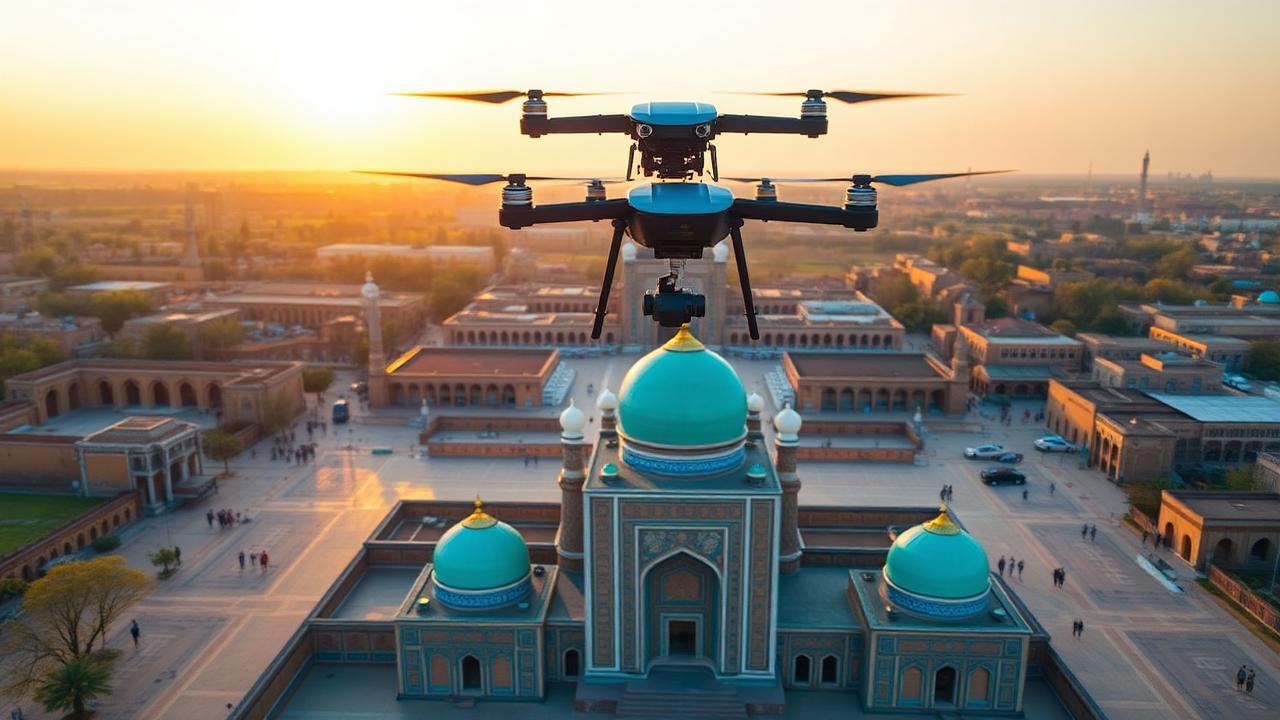
Can you fly a drone over the Registan? Do you need a permit to photograph mosques? What's the 2026 reality for content creators in Uzbekistan? Here's the complete, honest guide.
Uzbekistan is a photographer's dream — turquoise domes, desert horizons, mountain backdrops, and ancient city skylines that look almost unreal from above. But the drone and photography rules in Uzbekistan are a patchwork of old Soviet regulations, new tourism-friendly policies, and local enforcement that varies wildly by city. If you're a content creator, travel photographer, or just a traveler who wants to capture the Registan from the sky, this guide will save you from fines, confiscation, or worse.
The 2026 drone reality: what changed
Until 2022, drones were effectively banned for foreigners in Uzbekistan. The process to get a permit involved the Ministry of Defense, the State Security Service, and weeks of waiting. In 2023–2024, Uzbekistan liberalized its drone rules significantly, partly to attract content creators and tourism investment. By 2026, the situation is much better — but it is not 'fly anywhere you want.' Here is the current state of play.
Do you need a permit?
- Drones under 250g (DJI Mini series, etc.): No permit required for recreational flying in non-restricted zones. Register your drone on the UzAerosvyaz portal (free, online, takes 24 hours).
- Drones 250g–25kg: You need a flight permit from the State Inspectorate for Flight Safety (Gosavianadzor). This takes 7–14 business days and requires: passport copy, drone specs, flight plan with GPS coordinates, insurance, and a local contact/invitation letter.
- Drones over 25kg: Commercial permit only. Not relevant for 99% of travelers.
- Commercial filming (YouTube, Instagram, stock footage): Technically requires a commercial permit even for small drones. In practice, enforcement is minimal for non-professional content creators, but major productions should get the permit.
No-fly zones: where you absolutely cannot fly
- Within 5 km of any airport (Tashkent, Samarkand, Bukhara, Urgench, Nukus, Fergana, Namangan, Andijan).
- Military installations and border zones — especially near the Afghan border (Termez), the Tajik border (Sary-Chelek), and the Kazakh border (Gisht Kuprik).
- Government buildings in Tashkent: the Oliy Majlis (parliament), the Presidential Administration, the State Security Service headquarters on Amir Temur street.
- Over the Registan in Samarkand: this is NOT a military zone, but local authorities enforce a no-fly rule due to crowd safety and UNESCO site protection. Multiple drones have been confiscated here in 2024–2025.
- Within 500m of prisons, police stations, and power plants.
- At night (sunset to sunrise): all drone flights are prohibited regardless of permit.
Best legal places to fly in 2026
- Aydarkul Lake and Kyzylkum desert: wide open, no airports, stunning sand dune shots. The yurt camps can provide a local contact for permit applications.
- Chimgan and Charvak mountains: dramatic alpine landscapes. Avoid flying near the Charvak dam infrastructure.
- Nuratau Mountains: remote, beautiful, very few restrictions. Sentyab and Hayat villages have community tourism contacts who can help with local permits.
- Khiva — outside the walls: the old city itself is a no-fly zone (UNESCO + dense tourism), but the desert landscape 1–2 km north of Itchan Kala offers incredible shots of the walled city from a distance.
- Nukus and the Aral Sea ship cemetery: surreal landscape, minimal enforcement, but check with the yurt camp or tour operator before flying near the Ustyurt Plateau border zone.
- Fergana Valley — Rishtan and Margilan: flat, open, rice paddies and ceramics workshops make for beautiful aerial content. No major restrictions outside city centers.
Photography etiquette: mosques, people, and sacred sites
- Mosques and mausoleums: Photography is generally allowed inside most tourist mosques (Registan, Shah-i-Zinda, Bibi-Khanym). Flash photography is discouraged near ancient frescoes. Some active prayer halls may prohibit photography during prayer times — respect the signs.
- Inside working madrasas: Some still function as religious schools. Ask before photographing students or teachers.
- People: Always ask before photographing individuals, especially women in conservative areas (rural Fergana, Karakalpakstan). A smile and a nod usually works. Offering to show them the photo on your camera screen builds goodwill.
- Military and police: Do not photograph soldiers, police, or security checkpoints. This is taken very seriously and can lead to detention.
- Chorsu Bazaar and markets: Vendors are generally fine with photos if you buy something first. The bread (non) row is particularly photogenic and vendors are proud of their work.
- Weddings (toy): If you are invited to a wedding, ask the family before posting photos publicly. Some families are conservative about social media.
What happens if you fly illegally?
Enforcement has gotten more consistent in 2025–2026 as drone usage increased. Consequences range from:
- Verbal warning and told to land — most common at tourist sites.
- Confiscation of the drone — you may get it back at the airport when you leave, or you may not. Bring your receipt and registration.
- Fine of 5–20 basic calculation units (roughly $150–600) for flying in a restricted zone without a permit.
- Detention and questioning — rare for tourists, but has happened near military zones. Always carry your passport.
Gear recommendations for Uzbekistan
- DJI Mini 4 Pro or similar under-250g drone: no permit hassle, excellent image quality.
- Bring extra batteries — Uzbekistan has long distances and limited charging in remote areas.
- ND filters: desert light is extremely bright, especially at midday.
- Hard case for transport: airline baggage handling can be rough.
- Portable charger/power bank: 20,000+ mAh for multi-day desert trips.
- SIM card with data: Ucell or Beeline, 30 GB for ~$5, works in most of the country including desert roads.
Final word
Uzbekistan is becoming one of the best drone-friendly destinations in Central Asia, but only if you respect the rules. The desert, the mountains, the yurt camps, and the ancient cities offer footage that almost no other country can match — turquoise domes rising from sand dunes, caravans of camels at sunset, 2,000-year-old walls stretching to the horizon. Register your drone, avoid the no-fly zones, ask permission before filming people, and you will come home with content that genuinely goes viral.