Dried Apricots, Green Raisins and Walnuts: How to Buy Uzbek Bazaar Fruit Without Being Overcharged (2026)
· 10 min read · Food & Drink
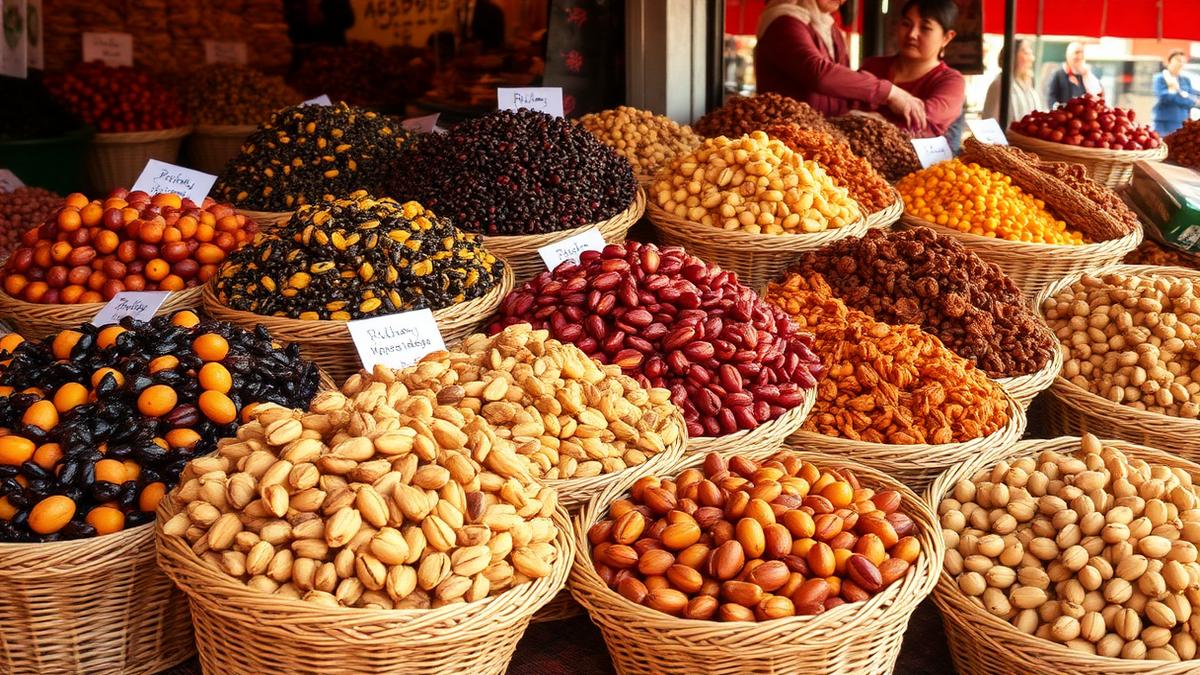
Uzbek dried fruit is world class and absurdly cheap — if you know what you are looking at. Here is how to tell a sun-dried apricot from a sulphured one, what a fair price per kilo is, and what you can legally fly home with.
The dried fruit and nut rows are the best-value souvenir in Uzbekistan and the part of the bazaar where tourists most reliably overpay. The produce itself is genuinely exceptional — Fergana Valley apricots, Samarkand green raisins, Bukhara walnuts, mountain almonds — but prices quoted to a foreign face can be two to four times the local rate. This guide gives you the vocabulary, the price anchors and the quality tells so you buy well.
The products worth buying
Dried apricots (oʻrik qoqi)
The flagship. Two very different products share the name: dark brown, wrinkled, sun-dried apricots with a deep caramel flavour, and bright orange, plump, soft apricots treated with sulphur dioxide to preserve colour. The dark ones are the real thing and what locals buy for themselves. The orange ones look prettier and taste flatter. Ask for 'quyoshda quritilgan' (sun-dried).
Apricot kernels (danak)
Cracked from the stone and roasted, tasting like a bitter-sweet almond. Sold everywhere and excellent — but eat them in moderation, as bitter kernels contain natural amygdalin. A handful is fine; a bowl is not.
Green raisins (sabza / kishmish)
Long, pale-green, seedless raisins from Samarkand region, dried in shade rather than sun to keep the colour. Sweeter and more delicate than dark raisins, and the single best thing to bring home.
Walnuts (yongʻoq)
Uzbek walnuts are thin-shelled, pale and sweet with almost no bitterness. Buy them in shell if you can — shelled ones oxidise fast.
Pistachios, almonds and chickpeas (nohat)
Roasted salted chickpeas are the local snack nobody warns you about and everyone gets addicted to. Pistachios are good but often imported from Iran — ask.
Rough 2026 prices per kilo
- Sun-dried dark apricots: 45,000–80,000 soʻm depending on grade
- Sulphured orange apricots: 35,000–60,000 soʻm
- Green sabza raisins: 55,000–90,000 soʻm
- Dark raisins: 30,000–50,000 soʻm
- Shelled walnuts: 90,000–140,000 soʻm
- Roasted almonds: 100,000–160,000 soʻm
- Roasted chickpeas: 25,000–40,000 soʻm
Treat these as anchors, not gospel — prices vary by season, grade and city, and are lowest in the Fergana Valley and highest in tourist-facing corners of Samarkand and Bukhara. If a first quote is three times these numbers, it is a tourist price.
How to buy like a local
- Always taste first. Every vendor expects it and will offer samples unprompted.
- Buy from the middle of the row, not the first stall at the entrance.
- Ask the price per kilo before naming a quantity: 'Bir kilosi qancha?'
- Say 'yarim kilo' for half a kilo, 'chorak kilo' for a quarter.
- Bargain gently: counter at about 60–70% and settle near 80%. Smile; it is a social exchange, not a fight.
- Bring cash in small soʻm notes. Card machines exist but are unreliable in the produce rows.
- Buying two or three items from one vendor gets a better combined price than one item from three vendors.
Quality tells
- Unnaturally bright orange apricots = sulphured. Fine to eat, but not the premium product.
- Sticky, glossy raisins may be oiled to look fresh; good sabza is dry to the touch.
- Walnuts should smell sweet, not sharp — a paint-like smell means rancid oil.
- Ask when it was dried. This year's harvest ('bu yilgi') is worth paying more for.
- Vacuum-packed gift boxes are convenient but usually cost double the loose price for lower-grade fruit.
Best bazaars for it
- Chorsu Bazaar, Tashkent — biggest selection, most tourist pricing, taste widely.
- Siyob Bazaar, Samarkand — excellent sabza raisins, next to Bibi-Khanym.
- Urgut Bazaar, near Samarkand — weekend market, genuinely local prices.
- Kumtepa Bazaar, Margilan — Fergana Valley apricots at source, Thursday and Sunday.
- Bukhara's covered bazaars — smaller, calmer, good walnuts.
Taking it home
Dried fruit and nuts are the most airline-friendly souvenir Uzbekistan produces: light, stable and not liquid. Rules differ by destination — the EU, UK, US and Australia all restrict or ban some plant products, and Australia and New Zealand are strict about nuts in shell. Check your own country's border rules before you buy 5 kg, declare food honestly on arrival cards, and keep everything in sealed, labelled bags. Vacuum-sealing at the bazaar is often available for a small fee and makes customs conversations shorter.
One last tip
Buy your dried fruit at the end of your trip, not the start. It is cheaper in the Fergana Valley and Samarkand than in an airport shop, but carrying three kilos of walnuts around Khiva in August is its own punishment.