How to Haggle in an Uzbek Bazaar (2026): The Rules Nobody Explains to Tourists
· 10 min read · Culture
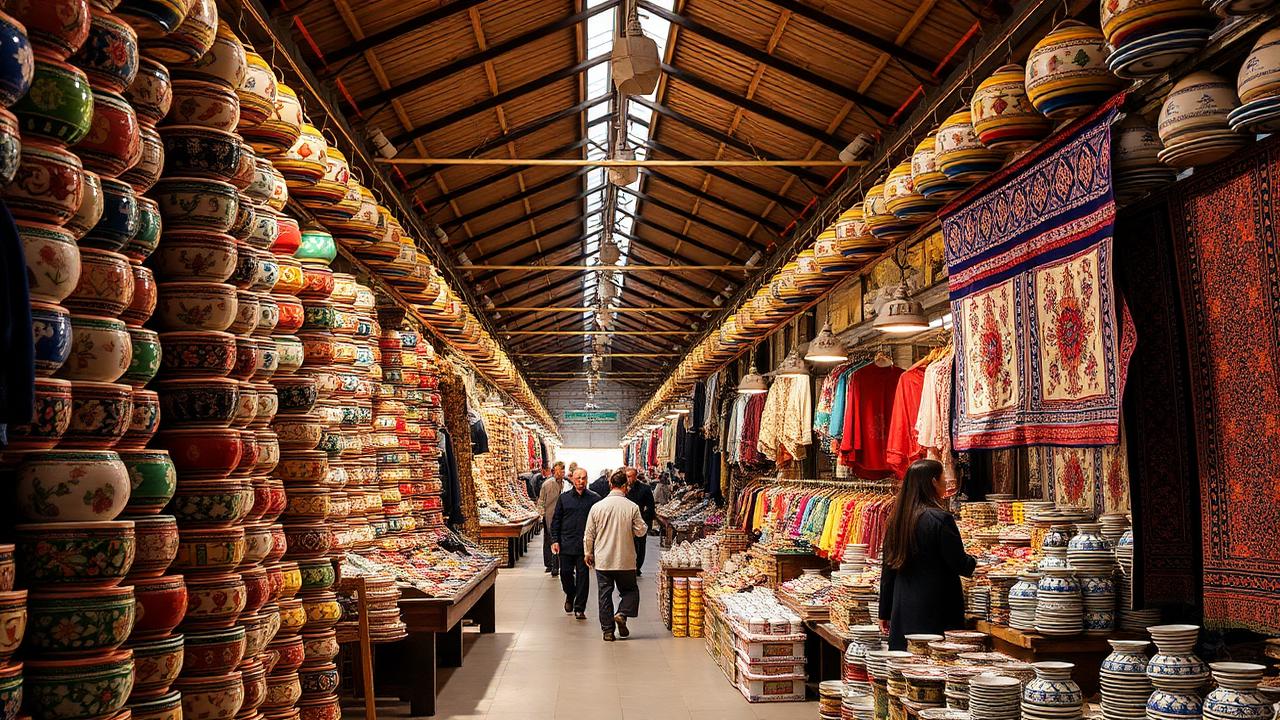
Foreign visitors either haggle over everything and offend people, or haggle over nothing and pay triple. Neither is how Uzbeks shop. There is a middle way, and it is mostly about which counter you are standing at.
The single most common money mistake in Uzbekistan is not being scammed. It is not knowing that the country runs two parallel pricing systems in the same building: fixed prices at food counters and printed-tag shops, and negotiable prices on handicrafts, textiles and anything a trader bought to resell. Mixing them up makes you look either naive or rude. Here is how to read the difference.
Where you do not haggle
- Food weighed on scales — meat, dried fruit, nuts, spices. The price per kilo is real and locals pay it. You can ask for a better rate on a large quantity, but grinding over 5,000 som of walnuts is graceless.
- Bread. Non has a customary price and is treated as close to sacred. Never bargain for it.
- Anything with a printed tag: supermarkets, chain pharmacies, mall shops, museum tickets.
- Taxis booked through an app. The price in Yandex Go or Bolt is the price.
- Restaurants and choyxonas, where the bill is the bill and service is sometimes added.
Where haggling is expected
- Suzani, ikat and any textile sold by a trader rather than the maker.
- Carpets and rugs, where the first number is almost always an opening position.
- Ceramics from resale stalls — though at a workshop in Rishtan the maker's price is closer to fixed.
- Jewellery, metalwork, knives, antiques-that-are-not-antiques, and souvenir stalls near monuments.
- Street taxis flagged by hand, where you must agree the fare before you get in.
The mechanics: how a real negotiation goes
A good bazaar negotiation is a conversation, not a duel. The trader names a price. You look, you handle the object, you ask a question about it — who made it, which region, whether the dye is natural — and only then you respond. A counter at roughly 50 to 60% of the opening figure is normal on souvenir goods, and the settle point usually lands 20 to 30% below the opening ask. On genuinely handmade pieces the room is smaller, because the material and labour are real.
What actually moves the price
- Buying more than one thing from the same seller. This is by far the strongest lever.
- Paying cash in som rather than card, which saves the trader a fee.
- Speaking a few words of Uzbek or Russian. It changes the temperature of the whole exchange.
- Late afternoon, when a trader would rather close a sale than carry stock home.
- Being willing to walk away pleasantly. Being willing to walk away angrily achieves nothing.
Phrases worth memorising
- Qancha turadi? — How much is it? (Uzbek)
- Skolko stoit? — How much is it? (Russian, understood everywhere)
- Qimmat — expensive. Said with a smile, it is the whole opening move.
- Arzonroq bo'ladimi? — Can it be cheaper?
- Rahmat — thank you. Use it when you buy and when you do not.
Rough 2026 price sanity checks
These are indicative ranges seen in Tashkent, Bukhara and Samarkand bazaars in 2026, not guarantees — quality spread is enormous and a handmade piece can legitimately cost many times a machine-made one.
- Machine-embroidered small suzani panel: roughly 15 to 40 US dollars. Fully hand-stitched pieces start far higher and rise into the hundreds.
- Rishtan ceramic bowl: about 8 to 25 dollars depending on size and whether the glaze is the traditional ishkor.
- Doppi skullcap: 5 to 20 dollars; Chust black-and-white styles at the upper end when hand-sewn.
- Silk ikat scarf: 15 to 50 dollars; adras and pure silk differ sharply in price and feel.
- Chust knife: 20 to 80 dollars depending on the blade and handle work.
Telling a fair markup from a tourist price
Walk the row first. Bazaars cluster by category, so five stalls selling similar scarves are within thirty metres of each other, and three quick enquiries give you the local band. If one price is double the others for a visually identical item, it is a tourist price, not a quality premium. Conversely, when a hand-stitched suzani costs ten times a printed one, that gap is real work, and haggling it down to the printed price is asking the maker to donate their winter.
The soft signals of a machine-made copy
- Perfectly even stitching with an identical reverse side — hand embroidery has a messier back.
- Colours that are aggressively bright and uniform across every piece on the stall.
- Ceramics with a printed transfer pattern rather than slight brush variation.
- A trader who cannot say where the piece was made or by whom.
Etiquette that keeps it pleasant
Do not start a negotiation you do not intend to finish; agreeing a price and then walking is genuinely rude here. Accept the tea if it is offered — it is hospitality, not an obligation to buy, though it does obligate you to be a decent conversational partner for ten minutes. Ask before photographing a vendor. And remember that in a country where the average wage is a fraction of a Western one, a two-dollar victory means very different things to the two people involved.
Where to practise: Chorsu in Tashkent for scale and food, Urgut's Sunday market near Samarkand for textiles at the best prices in the country, and Bukhara's trading domes for craft at higher prices but higher convenience. Our bazaar guides go deeper: /blog/urgut-sunday-bazaar-suzani-shopping-guide-2026