Uzbekistan After Dark (2026): The Night-Time Silk Road Nobody Tells You About
· 11 min read · Culture
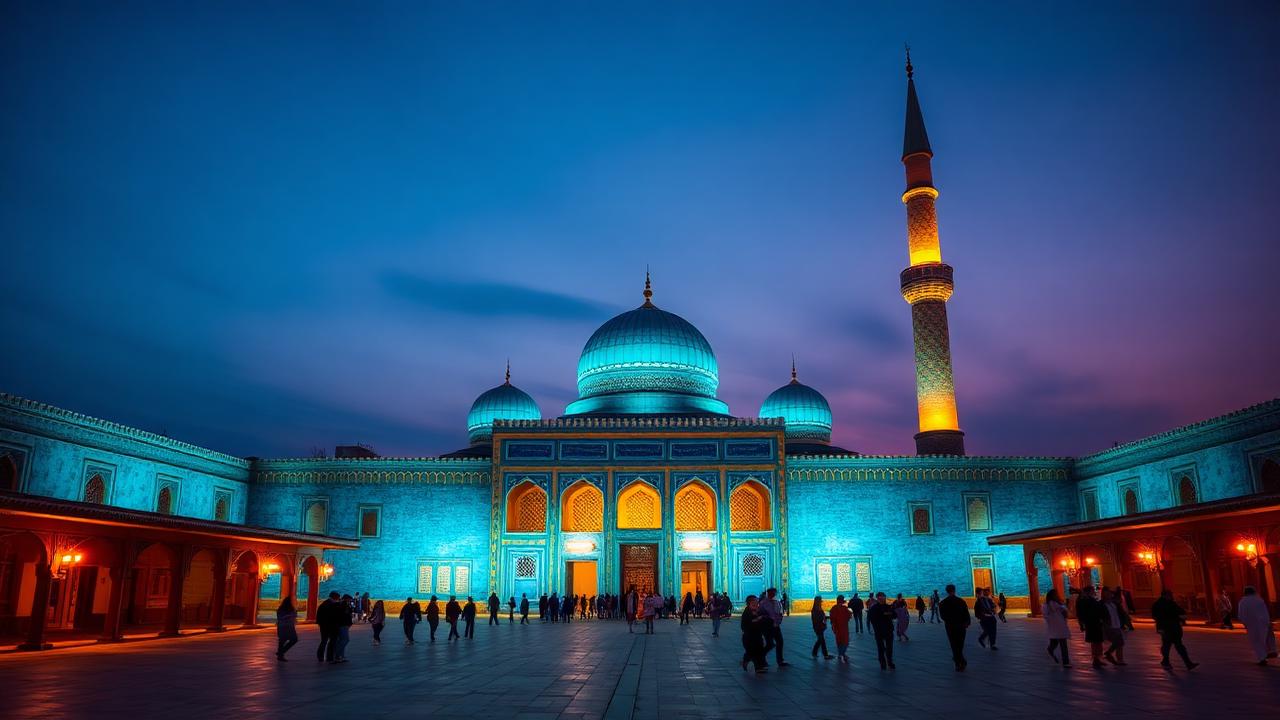
Most itineraries end at dinner. That is a mistake: in summer, Uzbekistan genuinely comes alive after 8pm, the monuments are lit, the temperature drops twenty degrees, and half the country is outdoors.
There is a version of Uzbekistan that most visitors never see, because their tour finishes at 6pm and their dinner finishes at 8. In 2026 the country is actively building out night tourism — floodlighting monuments, extending opening hours, programming squares and running evening shows — and in the hot half of the year the evening is simply the best part of the day. Daytime highs in Samarkand and Bukhara top 40°C in July; at 9pm it is pleasant, the tiles glow, and every local family is out walking.
Why the evening is the real Uzbekistan in summer
- Heat. Between June and early September, sightseeing between noon and 5pm is punishing. Locals structure the day around this: early morning, long afternoon pause, late evening social life.
- Light. Blue and turquoise tilework is unforgiving in flat midday sun and spectacular under warm floodlights.
- People. Squares, parks and promenades fill with families after dark. This is where you see ordinary life rather than the tourist layer.
- Space. Coach groups have gone back to their hotels.
Samarkand after dark
- The Registan light-and-sound show projects onto the three madrasas and is the headline evening event in the country. Check the current schedule — it typically runs on set evenings and seasons, and the start time shifts with sunset.
- Even without the show, the Registan is floodlit and the square outside is free to stand in. Come around 45 minutes after sunset for the best balance of sky and building.
- Gur-e-Amir, Timur's tomb, is lit and photographs beautifully with far fewer people than in the day.
- The Tashkent Street pedestrian avenue and the Eternal City complex at Silk Road Samarkand both run late, with restaurants, craft courtyards and performances.
Bukhara after dark
Bukhara is arguably the best night city in Uzbekistan, because its old town is compact, flat and walkable, and its centrepiece — the Lyabi-Hauz pool with its mulberry trees — is a place people actually sit. Order green tea or dinner at a terrace on the water, then walk ten minutes to Poi Kalyan, where the Kalyan minaret is lit from below and the square is usually near-empty by 10pm. The trading domes close, but the streets between them stay atmospheric, and the Ark fortress walls under lights are enormous.
Khiva after dark
Khiva's Itchan Kala transforms completely once the day-trippers leave. The walled town is pedestrian-only, the mud-brick walls take warm light exceptionally well, and the Kalta Minor's turquoise banding glows. This is the single strongest argument for sleeping inside the walls rather than day-tripping from Urgench. Climb the city walls or a minaret terrace before closing time for the sunset, then walk the lanes after. See our Khiva night walk guide for a route.
Tashkent after dark
- Magic City and the newer amusement and fountain parks are pure evening entertainment, heavily used by local families, and lit to an almost surreal degree.
- The Center of Islamic Civilization and the newest civic buildings are floodlit and impressive from the outside.
- Amir Timur Square, Independence Square and the Anhor riverside are prime evening strolls.
- Tashkent has a real restaurant, rooftop and bar scene — the only city in the country where that is true at scale. See our nightlife guide.
- The TV Tower observation deck at night gives you the city as a grid of lights.
Night food
Evening is when Uzbek food is at its best. Shashlik grills fire up after sunset — smoke, cumin and charcoal in the air is the smell of an Uzbek summer night. Somsa comes out of the tandyr in batches into the late evening. Chaikhanas serve green tea until late, and in Tashkent the street-food and night-market scene runs well past midnight in summer. Note the reverse rule: plov is a morning and lunchtime dish. If a plov centre is still serving at 9pm, it is reheated.
Practicalities
- Safety: Uzbekistan is one of the safest countries in the region and walking city centres at night is normal for locals, including women. Use ordinary big-city sense; the main hazards are uneven pavements and traffic, not crime.
- Transport: ride-hailing apps run late and are cheap. The metro closes around midnight, so check the last train before relying on it.
- Dress: even in summer, desert nights in Khiva and Bukhara cool sharply. Carry a light layer.
- Photography: a small tripod or a steady wall transforms night shots of lit monuments. Drone rules still apply after dark.
- Ramadan shifts everything: in the fasting month the evening is the entire social day, and the atmosphere after iftar is extraordinary.
- Some monument interiors close at sunset even when the exterior is lit — plan interiors for the day and facades for the night.
A suggested evening plan for each city
- Samarkand: 6pm Shah-i-Zinda before closing → 7:30pm dinner on Tashkent Street → 9pm Registan lit, plus the show if it is running.
- Bukhara: 6:30pm rooftop tea for sunset over the domes → 8pm dinner at Lyabi-Hauz → 9:30pm walk to Poi Kalyan and the Ark.
- Khiva: sunset from the city walls → dinner inside the Itchan Kala → a slow lantern-lit loop of the lanes.
- Tashkent: early evening at the TV Tower or Islamic Civilization Center → dinner in the centre → Magic City or a rooftop bar.
Show schedules, lighting hours and monument closing times vary by season and can change without notice; confirm locally on the day.