Accessible Travel in Uzbekistan (2026): The New Hotel Standard, Tactile Paths and What Really Works
· 11 min read · Practical
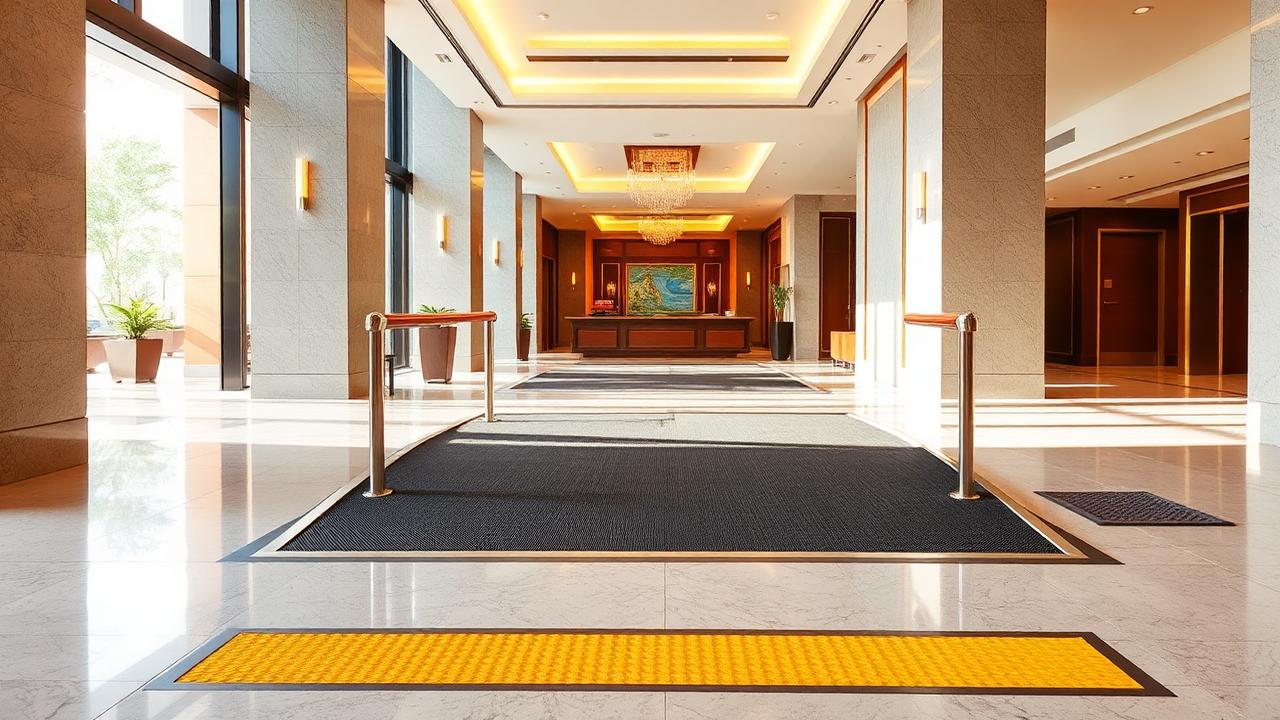
A new national standard for accommodation in 2026 pushes Uzbek hotels toward ramps, accessible rooms and tactile guidance paths for visually impaired guests. Here is what the rules say, and the ground truth for travellers with reduced mobility.
In 2026 Uzbekistan introduced a new national standard for accommodation facilities — O'zMSt 958:2026, 'Tourism Services. Accommodation Facilities. General Requirements' — developed by the standardisation committee under the Tourism Committee. It updates everything from what counts as a hotel breakfast to how a building should serve guests with disabilities. For travellers with reduced mobility, it is the most concrete piece of good news in years. It is also not a magic wand.
What the new standard changes
- Accessibility is written in: requirements for step-free access, accessible rooms and bathrooms, and tactile guidance paths for blind and partially sighted guests in qualifying properties.
- Breakfast gets defined: hotels are expected to offer Uzbek breakfast items rather than a generic international buffet — good news if you want non, qatiq, suzma and fresh melon instead of processed pastries.
- Categories are modernised: the standard brings classification of guesthouses, hostels and apartment-style accommodation in line with how people actually travel now.
- It applies to new and renovating properties first. Existing historic buildings change slowly, which is the crux of the practical picture below.
The ground truth, city by city
Tashkent — the most accessible place in the country
New hotels, malls, the airport terminals, the Center of Islamic Civilization and recent public buildings are broadly step-free with lifts and accessible toilets. Wide boulevards help. The weak points are pavement quality on side streets, high kerbs, and the metro: most stations are deep, escalator-served and have stairs, so they are not usable by wheelchair users independently. Ride-hailing with a saloon car is the practical way around town.
Samarkand — mixed, improving fastest
The Registan plaza itself is broad and largely flat, and the approach has been reworked; the interiors of the madrasas involve thresholds and steps. Gur-e-Amir and the Bibi-Khanym area have level approaches with some steps at entrances. Shah-i-Zinda is the hard one: it is built up a staircase, and there is no step-free route to the upper tombs. The Silk Road Samarkand resort district was built new and is the most accessible accommodation cluster in the country.
Bukhara — flat but cobbled
Bukhara's old town is delightfully compact and almost entirely flat, which helps enormously. The obstacle is surface: uneven stone paving, occasional steps into trading domes, and narrow doorways in converted courtyard houses. A rigid-frame chair with larger front castors copes far better than small-wheeled travel chairs.
Khiva — walls and thresholds
The Itchan Kala is pedestrianised, which is good, but it is a medieval walled town: raised thresholds, ramps that are really slopes of packed earth, and minarets and walls reachable only by stairs. Much of the atmosphere is available at ground level; specific monuments are not.
Booking accommodation that actually works
- Ask for measurements, not adjectives. Request the door width in centimetres, whether the bathroom has a roll-in shower or a bath, and whether there is a step at the entrance. 'Accessible' is used loosely.
- Ask for photos of the entrance and the bathroom. Reputable properties send them.
- Prefer new-build or recently renovated hotels if step-free matters — they are the ones the 2026 standard binds hardest.
- Historic courtyard guesthouses in Bukhara and Khiva are beautiful and frequently have a step or two at the gate and small bathrooms. Some have a ground-floor room that works; ask specifically.
- Confirm lifts. Boutique properties of three storeys sometimes have none.
Getting around
- Trains: Afrosiyob and other modern services have level-ish boarding with staff assistance and wider vestibules; station staff will help if you ask at the platform. Book in advance and note your requirements.
- Domestic flights: standard airline assistance procedures apply at Tashkent, Samarkand, Bukhara and Urgench.
- Taxis: ride-hailing apps are cheap and everywhere, but purpose-built wheelchair-accessible vehicles are rare. Folding chairs into a boot is the normal solution.
- Private driver with a minivan is the pragmatic choice for a multi-city trip and is inexpensive by international standards.
- The Tashkent metro is not step-free; treat it as a sightseeing attraction rather than transport if you cannot manage stairs and escalators.
For blind and partially sighted travellers
Tactile guidance paths — the yellow ribbed strips — are appearing in new terminals, museums and now, under the 2026 standard, in qualifying hotels. Coverage across the wider street network remains patchy. Audio guides exist at major museums; Braille signage is uncommon. Guide dogs are unusual in Uzbekistan and staff may be unfamiliar; arrange in writing in advance. A local guide is worth far more here than elsewhere: monuments are intensely tactile and textural, and a good guide will get you permission to touch carved wood and tilework where appropriate.
For deaf and hard-of-hearing travellers
Uzbekistan is very easy in one respect: almost everything transactional now happens by QR code and app. Written communication via a phone translation app is normal and nobody finds it odd. Uzbek Sign Language is used domestically and differs from ASL or BSL. Fire alarms in older hotels are audible-only; request a ground-floor room and tell reception.
Practical extras
- Bring spare parts and a puncture kit — repair shops for imported mobility equipment are limited outside Tashkent.
- Summer heat is a genuine accessibility issue: 40°C+ in July and August. Travel in spring or autumn if you can.
- Pharmacies are widespread, well stocked and cheap; bring prescriptions with generic names.
- Medical facilities in Tashkent are good and medical tourism is a growth sector; outside the capital, care is basic. Take insurance that covers evacuation.
- Toilets: modern malls, museums and new hotels have accessible cubicles; bazaars and older sites generally do not. See our toilets guide for the full picture.
The honest verdict
Uzbekistan in 2026 is a realistic destination for travellers with reduced mobility if you base yourself in newer hotels, use a private vehicle, accept that some medieval monuments have no step-free route, and travel outside the summer. The new national standard sets a direction that did not exist before, and the pace of new construction means the accessible share of the country's hotel stock is rising every year. What has not changed is the thing that carries you through: staff and passers-by here will help without being asked, immediately and without fuss.
Standards and enforcement evolve; confirm specific facilities directly with each property before booking.