Uzbek Suzani (2026): How to Spot Hand-Embroidered from Machine-Made — and What to Pay
· 11 min read · Culture
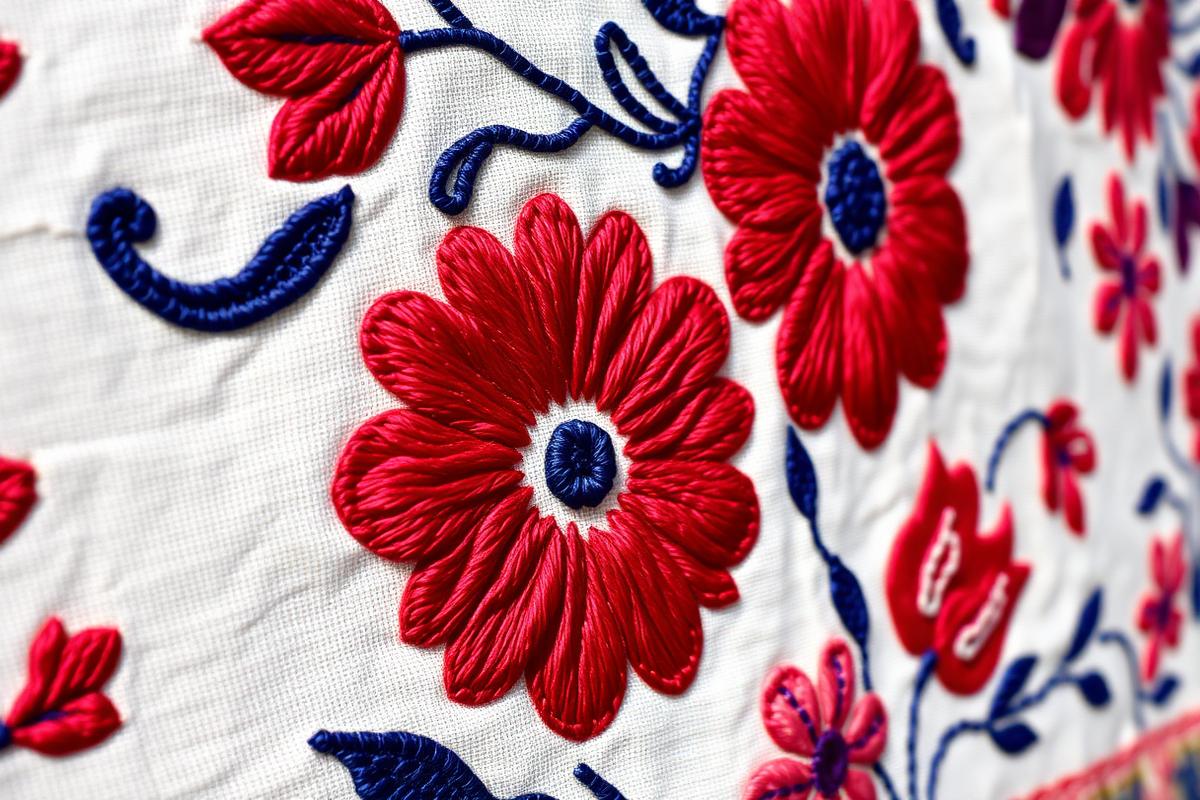
Suzani is the souvenir most people overpay for and misidentify. Here is how to tell hand-stitched from machine-made in ten seconds, what real prices look like in 2026, and the export rule nobody mentions until the airport.
Walk any bazaar from Tashkent to Khiva and you will be shown suzani: big embroidered cloths covered in sun-discs, pomegranates, tulips and curling vines. They are the most beautiful thing most travellers bring home from Uzbekistan, and also the item where the gap between a good buy and a bad one is widest — the same-looking piece can be a week of a woman's handwork or forty minutes of a Chinese embroidery machine. This guide is about telling the difference.
What suzani actually is
The word comes from the Persian suzan, 'needle'. A suzani is a large embroidered textile, traditionally made by women of a family as part of a bride's dowry — begun years before a wedding, worked on by mother, daughters, aunts and neighbours, and used as a wall hanging, bed cover, prayer cloth or wrapping for the bride's belongings.
The construction detail that explains almost everything about judging one: a traditional suzani is embroidered in strips. The base cloth is cut into panels, the design is drawn across all of them, each panel is embroidered separately by a different woman, and only at the end are they sewn back together. That is why authentic older pieces often show slight colour or pattern mismatches at the seams. Those 'flaws' are proof of the process, not defects — and some were left deliberately, on the belief that only God makes perfect things.
The motifs, and what they mean
- Large discs (oy or palak) — sun and moon medallions, the dominant motif of Tashkent and Nurata pieces; symbols of light, life and cosmic order.
- Pomegranate — fertility and abundance, the single most common fruit motif.
- Tulip, carnation and iris — spring, renewal, and in some readings protection.
- Almond / paisley (bodom) — the ubiquitous teardrop form; long treated as a charm against the evil eye.
- Chilli pepper and knife shapes — protective, warding motifs stitched around edges.
- Vines and leaf trails — continuity of family and lineage.
Regional styles you can learn to recognise
- Nurata — the connoisseur's style: fine, delicate stitching, lots of open cream ground, small flowering branches and birds.
- Bukhara — dense, richly filled fields, big rounded floral forms, deep reds and indigos.
- Samarkand — bold, large-scale medallions and strong colour, often with less filler detail.
- Shakhrisabz — famously intricate iroqi cross-stitch work and tightly packed compositions.
- Tashkent (palak) — dominated by very large sun discs covering the whole ground.
- Fergana valley — brighter, more varied palettes, often with silk on cotton.
Hand-embroidered vs machine-made: the ten-second test
Machine-made suzani is everywhere in the bazaars, and is not automatically a rip-off — it is only a rip-off when it is sold at handwork prices. Turn the piece over. The back tells the truth.
- Look at the reverse. Hand embroidery leaves an untidy, expressive back: knots, thread ends, carried floats, visible stitch paths. Machine embroidery leaves a flat, uniform back, often with a stiff backing or a fine gauzy stabiliser fused to the cloth.
- Check stitch regularity. Machine chain stitch is metronomically even. Hand stitches vary in length and angle, and the direction of the filling shifts subtly across a motif.
- Find the seams. Traditional pieces are panels joined together, with small pattern mismatches where they meet. A single uninterrupted sheet of fabric with a perfect pattern is a strong machine indicator.
- Test the sheen and hand-feel. Hand-stitched silk floss catches light differently as you tilt the piece, and feels soft and slightly uneven. Polyester machine thread has a flat, plastic-bright shine and a squeakier feel.
- Ask about the technique by name. Sellers of genuine work will happily talk about basma (couching), yurma (chain stitch, often worked with a hook), kanda-khayol and iroqi. Vague answers are their own answer.
- Burn test, but only if the seller offers it. A tiny thread end of real silk smells of burnt hair and turns to ash; polyester melts into a hard bead. Never do this to a piece you have not bought without permission.
Natural vs chemical dyes
Natural-dyed pieces — madder root for reds, indigo for blue, pomegranate skin, walnut husk, isparak (larkspur) for yellow — have colours that vary slightly within a single block and age gracefully. Chemical dyes are flat, very saturated, and identical across a whole area. Neither is fake; naturally dyed hand-stitched work is simply the top of the market and priced there. If a seller claims natural dyes, ask which plant gives which colour. The answer comes instantly from someone who actually knows.
What you should expect to pay in 2026
Prices are given in US dollars because that is how the bazaars quote foreigners; you can pay in so'm at the day's rate. These are realistic 2026 ranges after normal, friendly bargaining — not opening prices.
- Machine-made cushion cover or small panel: roughly $8–25. Fine as a gift, but do not let it be sold to you as handwork.
- Hand-embroidered small piece (cushion cover, table runner, 40–60 cm): roughly $30–90 depending on density and thread.
- Hand-embroidered medium panel (about 1 × 1.5 m), cotton ground, silk floss: roughly $120–350.
- Large full-size hand-stitched suzani (about 1.8 × 2.5 m), months of work: roughly $400–1,200, and higher for exceptional pieces.
- Antique or genuinely old suzani (pre-1950, natural dyes, hand-spun ground cloth): $1,000 and up, sometimes far up — and see the export warning below.
Opening prices in tourist-facing shops around the Registan and Lyab-i Hauz are commonly two to three times the settling price. Bargaining is expected, should be good-humoured, and works best if you are genuinely ready to buy. Never haggle hard on a piece you do not intend to purchase.
Where to buy
- Bukhara — the trading domes (Toqi Zargaron, Toqi Sarrafon, Toqi Telpak Furushon) and the Lyab-i Hauz area have the deepest choice in the country, from cheap machine pieces to serious collector textiles in the same 200 metres.
- Samarkand — Siyob bazaar for volume and lower prices; the shops in the Registan pedestrian zone for quality at tourist rates.
- Tashkent — Chorsu bazaar for everyday pieces, and the craft galleries and Human House-style workshop shops for documented handwork.
- Nurata and Shakhrisabz — buying near the source, sometimes directly from the women's workshops, which is both cheaper and more traceable.
- Margilan and the Fergana valley — best combined with a silk-workshop visit, where you can watch the thread being made before you buy anything stitched with it.
Workshop and craft-centre purchases usually cost more than the bazaar and are worth it when you want provenance: you can see who stitched it, on what, and with which dyes.
The export rule nobody mentions until the airport
Uzbekistan restricts the export of items of cultural or historical value. In practice this bites on antique and older textiles, not on new work. Modern pieces made for sale leave the country without any drama; genuinely old suzani can require an expert certificate confirming it is not protected cultural property, and pieces judged to be of museum value may not leave at all.
- Ask any seller of an 'antique' piece for the export documentation in writing before you pay. Reputable dealers arrange it as a matter of routine.
- Keep receipts for everything, and photograph the piece and the receipt together.
- If you are told a very old piece needs no paperwork at all, treat that as a reason to walk away — either it is not old, or the problem lands on you at customs.
- Rules and thresholds change; confirm current requirements with the seller and, for high-value purchases, with the relevant cultural-heritage expertise service before your flight.
Getting it home and living with it
- Roll, do not fold, for transport if you can — folds crease silk floss permanently. Rolled around a cardboard tube in a soft bag, a large suzani fits in checked luggage.
- Hang it out of direct sunlight. Natural dyes fade, and even chemical reds go dull in a bright window.
- Do not machine wash. Dust it, air it, and use a specialist textile cleaner for anything serious.
- For hanging, sew a fabric sleeve to the back and use a wooden dowel; never pin or nail through the embroidery.
The short version
Turn it over, look at the back, check the seams, ask which plant made the red, and pay a fair price for handwork rather than a handwork price for machine work. Do that and you come home with the best object in Uzbekistan's craft repertoire — one that was made by named women, in strips, over months, and that will still look good in thirty years.
For the silk side of the story, see the Margilan factory guide: /blog/margilan-yodgorlik-silk-factory-atlas-ikat-guide-2026 — and for wider bazaar bargaining, see /blog/uzbekistan-tourist-scams-how-to-avoid-2026