Uzbek Salads & Cold Starters — Achchiq-Chuchuk, Bademjan, Tashkent Salad & Every Side Dish (2026)
· 7 min read · Food
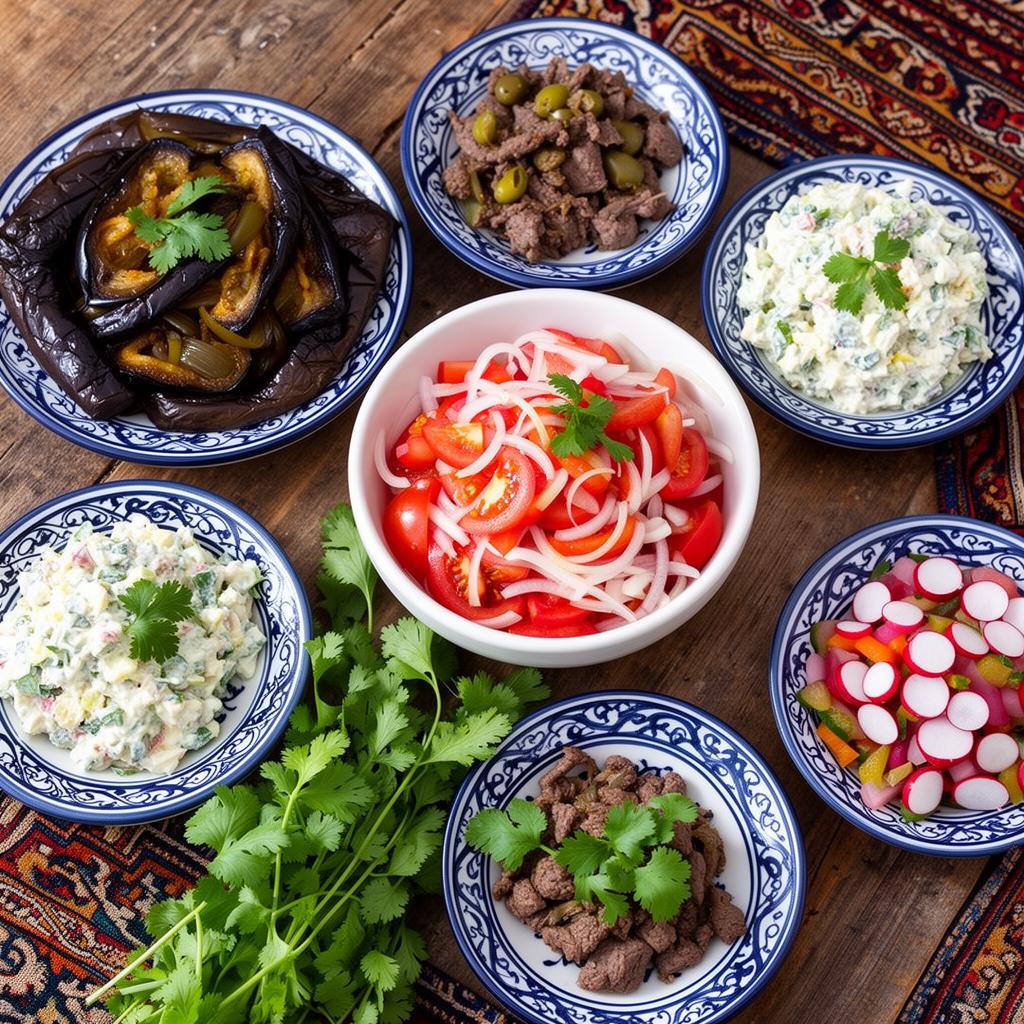
No Uzbek meal is complete without salads. Achchiq-chuchuk cuts through plov fat, bademjan adds smoky depth, and Tashkent salad is the city's edible signature. Here's every cold dish you need to know.
The Uzbek dastarkhan (tablecloth) always has a cold section. Even at a simple roadside choyxona, you'll find at least two salads on the table before your main dish arrives. These aren't afterthoughts — they're essential flavor balancers that make heavy Central Asian food work. Here's the complete guide to every Uzbek salad and cold starter, where to find the best, and how much they cost in 2026.
Achchiq-chuchuk (аччиқ-чучук) — the national salad
Achchiq-chuchuk (also spelled achichuk, achik-chuchuk, achiq-chuchuq) is the tomato and onion salad that appears at every single Uzbek meal. The name roughly means 'spicy-vegetable' — though it's rarely spicy by modern standards. Fresh tomatoes, raw onion, cilantro, salt, and sometimes a thin chili pepper. That's it. No oil, no vinegar, no lemon. The tomatoes provide enough acidity.
- Ingredients: ripe tomatoes, white onion, cilantro, salt, optional chili.
- Key: the onion must be sliced paper-thin and briefly rubbed with salt to soften.
- Serving: alongside plov, shashlik, or any main dish. Not eaten alone.
- Purpose: cuts fat, refreshes the palate, adds crunch between bites of rice.
- Price: 10,000–20,000 UZS ($0.85–1.70) at restaurants; free at many choyxonas.
Bademjan (бадемжан) — smoky roasted eggplant
Bademjan is roasted eggplant mashed with tomato, garlic, and sometimes bell pepper. The eggplants are charred over open flame until the skin blackens, then scraped and mashed into a smoky, silky dip. It's Uzbekistan's answer to baba ganoush — less tahini, more tomato, deeper smoke.
- Ingredients: eggplant, tomato, garlic, vegetable oil, salt, pepper.
- Key: the charring. Real bademjan gets its smoke from open flame, not liquid smoke.
- Serving: spread on non bread as an appetizer, or as a side dish.
- Regional: Bukhara bademjan adds pomegranate seeds for sweetness and color.
- Price: 15,000–30,000 UZS ($1.30–2.50).
Tashkent salad (Toshkent salati) — the city's namesake
Tashkent salad is the only Uzbek salad with a city name, and it lives up to the billing. Thinly sliced beef (or sometimes lamb tongue), radish strips, green onion, fresh dill, and hard-boiled egg — all tossed in a light sour cream or mayonnaise dressing. It was invented in Soviet-era Tashkent and has become a staple at every holiday table.
- Ingredients: boiled beef, radish, green onion, dill, egg, sour cream or mayo dressing.
- Key: the beef must be lean and sliced against the grain, almost shredded.
- Serving: as a starter at celebrations, or a light lunch with bread.
- Price: 25,000–45,000 UZS ($2–4) per portion.
Olivie (оливье) — the Central Asian potato salad
Olivie is the Russian-origin potato salad that every Uzbek family makes for holidays. Boiled potatoes, carrots, peas, boiled eggs, pickled cucumbers, boiled meat (beef or chicken), and mayonnaise. It's heavy, filling, and ubiquitous. Not uniquely Uzbek, but impossible to skip at any Uzbek gathering.
- Ingredients: potato, carrot, peas, egg, pickled cucumber, meat, mayo.
- Serving: holiday tables, birthdays, Navruz celebrations.
- Price: 20,000–35,000 UZS ($1.70–3).
Other essential cold starters
- Novvot / Navat salad — thinly sliced radish with fresh herbs and vinegar. Crisp and refreshing.
- Shakarob — tomato and bread salad (similar to Italian panzanella). Bread absorbs tomato juices. Fergana Valley specialty.
- Bosko / Bosqo — fresh tomato, cucumber, and onion salad with oil. Lighter than achchiq-chuchuk.
- Nokhat (chickpea) salad — boiled chickpeas with onion, herbs, and oil. Vegetarian-friendly.
- Pickled vegetables (tursi) — daikon, cabbage, carrot, cucumber. Served free at most restaurants.
- Fresh herbs (yashil) — cilantro, dill, basil, tarragon, green onion. Eaten raw with every meal.
The dastarkhan salad rule
There's an unwritten rule on the Uzbek dastarkhan: cold dishes outnumber hot dishes. At a typical family meal, you'll see 4–6 salads and only 1–2 hot mains. The cold dishes aren't starters in the Western sense — they're eaten continuously alongside the hot food, providing contrast and balance. Learning to eat plov with achchiq-chuchuk, shashlik with bademjan, and lagman with pickled vegetables is learning to eat Uzbek food properly.
Where to eat the best salads (2026)
- Tashkent — Chorsu Bazaar upper-floor food court: achchiq-chuchuk and bademjan made fresh every 20 minutes.
- Tashkent — Osh Markazi (Plov Center) — the achchiq-chuchuk here is deliberately sharp to cut the richness of their famous plov.
- Samarkand — Karimbek restaurant — bademjan with pomegranate, the Bukhara-style variation.
- Bukhara — Lyabi-Hauz choyxonas — Tashkent salad and bademjan with a view of the pool.
- Fergana Valley — any family-run restaurant — shakarob and novvot salads are fresher and more authentic than in the cities.
Real 2026 prices
- Achchiq-chuchuk — 10,000–20,000 UZS ($0.85–1.70)
- Bademjan — 15,000–30,000 UZS ($1.30–2.50)
- Tashkent salad — 25,000–45,000 UZS ($2–4)
- Olivie — 20,000–35,000 UZS ($1.70–3)
- Mixed salad plate (3–4 salads) — 40,000–70,000 UZS ($3.50–6)
- Pickled vegetables — usually free with any meal
Final word
Don't skip the salads. Many travelers focus only on plov and shashlik and miss the vibrant, fresh, labor-intensive cold dishes that make Uzbek meals complete. The best achchiq-chuchuk you'll ever eat costs less than $2 and is made by a woman who's been slicing tomatoes the same way for 40 years. That's the dish you'll remember.