Norin & Beshbarmak: Uzbekistan's Cold Horse Meat Noodle Dish Explained (2026)
· 10 min read · Food
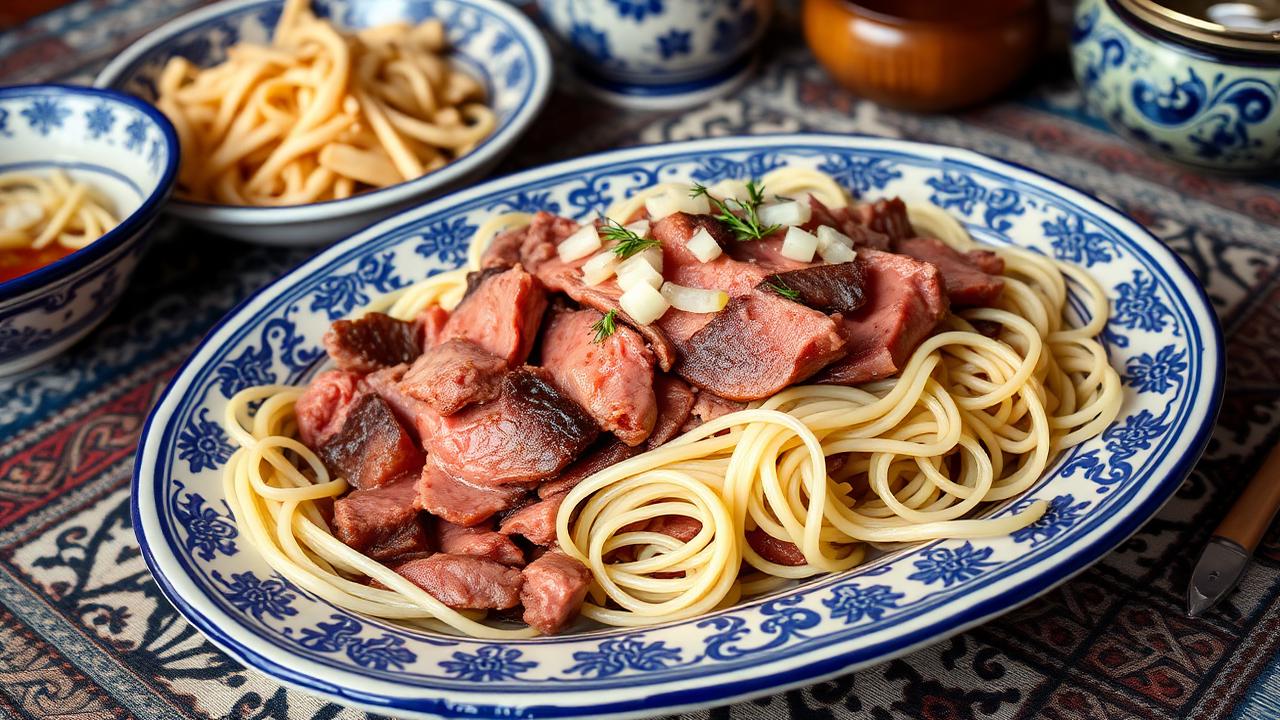
Cold noodles. Sliced horse sausage. Raw onion. Served at every Tashkent wedding for 200 years — and almost unknown outside Uzbekistan. Meet norin.
Ask a Tashkent local for the city's most underrated dish and the answer is almost always norin. It's served cold, it's made with horse meat, and it tastes nothing like what your brain expects. Here is the complete 2026 guide to norin — Tashkent's signature dish, its origins, where to find the best, how to eat it, and how it relates to the better-known Kazakh beshbarmak.
What is norin?
Norin (норин / norin) is a cold dish of paper-thin hand-cut wheat noodles tossed with finely sliced boiled horse meat — usually kazi (horse sausage) — and crisp raw onion. It's dressed with a little of the cooking broth, black pepper, and sometimes a spoon of meat fat. The noodles are cut after boiling, which gives them their irregular, almost ribbon-like shape.
It is a Tashkent dish above all others. Wedding tables in Tashkent without norin are considered embarrassing. The dish is so identified with the capital that older Uzbeks call it 'Toshkent oshi' (Tashkent's dish), even though plov also wears that name.
Why horse meat?
Horse meat (yilqi gosht) has been part of the Turkic diet for over a thousand years. In Uzbek cuisine it survives mostly in two forms: kazi (horse sausage) and norin. Horse meat is leaner than beef, has a slightly sweet flavor, and is considered 'warming' food in winter — Uzbek folk medicine believes it strengthens the body. Religious clerics in Uzbekistan have long ruled horse meat halal.
Norin vs Kazakh beshbarmak — what's the difference?
- Norin (Uzbek): cold or room temperature, noodles cut THIN like ribbons, horse meat sliced fine, raw onion mandatory.
- Beshbarmak (Kazakh / Kyrgyz): hot, noodles cut into large flat squares, meat in big chunks, served with broth on the side, name means 'five fingers' (eaten by hand).
- Norin is a starter or sharing plate. Beshbarmak is the main event of the meal.
- Both descend from the same nomadic ancestor dish but evolved differently — beshbarmak stayed nomadic and hot, norin became urban and refined.
How norin is made (the proper way)
A whole kazi sausage is simmered for two hours with onions and bay leaf. The cooking broth is reserved. The dough is rolled into thin sheets, cut into wide ribbons, boiled briefly, drained, and cooled. Once cold, the noodles are cut a second time into thinner strips. The kazi is sliced paper-thin. Everything is tossed together with sliced raw onion (a lot of it), pepper, a ladle of cooled broth, and sometimes a drizzle of melted dumba fat. Served on a flat sharing plate.
The taste
Cool, savory, slightly fatty, with the sharp bite of raw onion cutting through. The horse meat is mild — slightly sweet, less iron-heavy than beef. The noodles are silky from the broth. It's a dish that doesn't shout — it grows on you over a few bites. Most tourists who try it once say 'interesting,' and most who try it three times become obsessed.
Where to eat norin in Tashkent (2026)
- Norin House (Tashkent, Yunusobod) — specialty restaurant, plate for 2 at 80,000 UZS ($6.80).
- Saodat Choyxona (Tashkent old city) — old-school, served on traditional ceramic platters, 70,000 UZS.
- Bobotov Norin (Chilanzar district) — local institution since the 1970s, 60,000 UZS.
- Any traditional Tashkent toy (wedding) — norin is always the first cold dish.
- Frozen take-home version at Chorsu Bazaar — 120,000 UZS/kg ($10).
Outside Tashkent
Norin is harder to find in Samarkand, Bukhara, or Khiva — it's that closely tied to Tashkent. If you want it, ask 'norin bormi?' at any old-style choyxona. In Samarkand, try the Karimbek chain. In Bukhara, Old Bukhara restaurant sometimes serves it.
2026 prices for norin
- Norin (regular plate for 1) — 35,000–55,000 UZS ($3–4.70)
- Norin (sharing plate for 2–3) — 60,000–100,000 UZS ($5–8.50)
- Norin at wedding hall — included in the meal (free for guests)
- Kazi (horse sausage, by itself) — 200,000–280,000 UZS/kg ($17–24)
- Frozen ready-to-serve norin from bazaar — 100,000–140,000 UZS/kg
Etiquette
- It's a sharing dish — one plate for the whole table, eaten with forks from the middle.
- Always served with cold ayran or green tea — never hot tea (which would 'fight' the cold dish).
- Eaten BEFORE the hot main course (plov, lagman), not as the main itself.
- If you don't eat horse meat for personal reasons, just say 'men yilqi gosht yemayman' — your host will understand.
Final word
Norin is the kind of dish that defines a city's food identity without ever leaving it. Eat it in Tashkent the way you'd eat soup dumplings in Shanghai or pho in Hanoi — at the source, made by people whose families have made it for generations, on a hot summer day when nothing hot would be welcome.