Uzbek Melons: The 2026 Guide to Mirzachul, Khorezm & Why They're World-Famous
· 9 min read · Food
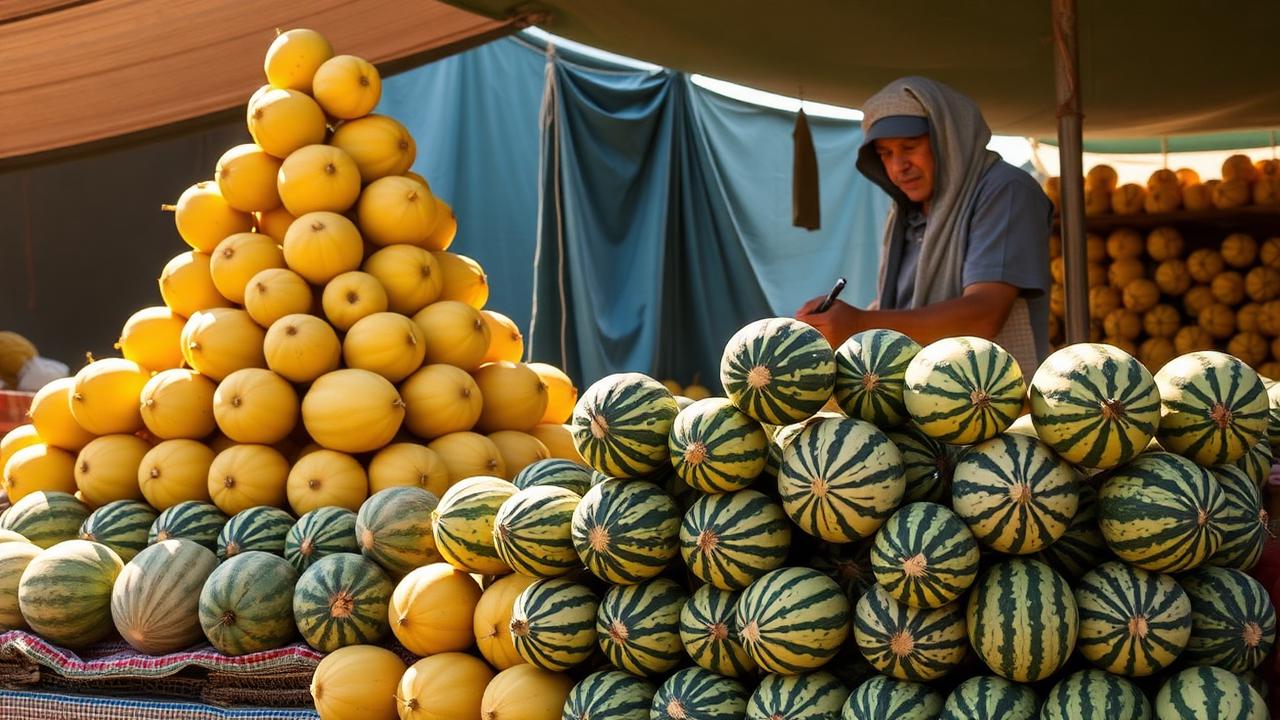
Marco Polo called Uzbek melons 'the best fruit in the world.' Eight centuries later, that hasn't changed. Here's everything about the country's melon obsession.
Uzbekistan grows more than 160 named varieties of melon — more than any country on earth — and in summer, melon pyramids tower three meters high at every bazaar from Tashkent to Termez. This is the complete 2026 guide to Uzbek melons: the varieties, the seasons, the bazaars, the etiquette, and why even Marco Polo wrote home about them.
Why Uzbek melons are different
Three things make Uzbek melons world-class: the punishing continental climate (40°C days, cool nights, intense sun = maximum sugar concentration), the loess soil of the Fergana, Mirzachul and Khorezm valleys (mineral-rich, perfectly drained), and 2,000 years of selective breeding by farmers who treat melons like wine grapes. The result: sugar levels of 16–20% Brix, against 10–12% for an average supermarket melon.
The main varieties you'll see in 2026
Mirzachul (мирзачул)
The most famous yellow melon — smooth golden skin, oblong shape, white-yellow flesh, intensely sweet and floral. Grown in the Mirzachul steppe between Tashkent and Samarkand. Peak season: late July to September.
Khorezm gulobi (хоразм гулоби)
Khorezm's pride — green-striped rind, fragrant orange flesh that tastes like honey and roses. The name 'gulobi' means 'rose-water.' Best in August. These are the melons traditionally hung in cool cellars and eaten through winter.
Qora qovun (қора қовун) — black melon
Deep green to almost black skin, pale green flesh, crisp and very juicy. Less sweet than Mirzachul but more refreshing. The summer thirst-quencher.
Ananas (pineapple melon)
Yellow netted skin, pale flesh with a genuine pineapple aroma. A 20th-century cultivar that took off because the smell hits you from three meters away at the bazaar.
Qish qovun (winter melon)
Hard rind, hung in attics or cellars, eats through January. The flesh slowly softens and the sugar concentrates — by Navruz they're at peak sweetness.
Watermelon (tarvuz)
Don't sleep on Uzbek watermelons either — Bukhara watermelons are legendary, sold by truckload along the Tashkent–Samarkand highway from June through September.
Melon season — month by month
- June: early watermelons, first thin-skinned summer melons, prices high.
- July: peak watermelon, early Mirzachul, prices crashing.
- August: PEAK MELON. Every variety available, prices at floor, pyramids everywhere.
- September: best Khorezm gulobi, autumn melons, harvest festivals.
- October–November: late storage varieties, prices rising again.
- December–March: winter melons (qish qovun) only, hung from cellar ceilings.
How to pick a perfect Uzbek melon
- Smell the stem end first — it should smell intensely sweet and floral. No smell = unripe.
- Press the bottom (opposite the stem) — slight give means ripe. Rock-hard = unripe. Soft = overripe.
- Slap or thump it — a deep hollow sound (like a drum) means ripe.
- Look for the 'ground spot' — a yellow or cream patch where the melon rested. Yellow = ripe, white = picked too early.
- Vendors will cut a small wedge to let you taste — this is normal, not rude. Accept it.
Where to buy melons in 2026
- Chorsu Bazaar (Tashkent) — the famous melon row in the outdoor section, July–October.
- Mirzo Ulugbek Dehqon Bazaar (Tashkent) — locals' favorite, slightly cheaper than Chorsu.
- Siyob Bazaar (Samarkand) — biggest melon selection in central Uzbekistan.
- Urgut Bazaar (near Samarkand) — Sunday market, melons from local farms, lowest prices.
- Roadside stands on the Tashkent–Samarkand highway — fresh from the field, August best.
- Urgench and Khiva bazaars — for authentic Khorezm gulobi.
2026 melon prices
- Mirzachul (whole melon ~3 kg) — 25,000–40,000 UZS ($2.10–3.40) in peak season
- Khorezm gulobi (~4 kg) — 35,000–60,000 UZS ($3–5)
- Ananas — 30,000–45,000 UZS ($2.50–3.80)
- Watermelon (~8 kg) — 20,000–35,000 UZS ($1.70–3) — yes, an entire watermelon for the price of a coffee
- Winter melon (qish qovun) — 50,000–80,000 UZS ($4.20–6.80), more expensive due to storage
Melon etiquette
- Melon is eaten AFTER plov or any oily meal, not before — Uzbeks believe it 'sets' the stomach.
- Never drink cold water immediately after eating melon (an old superstition still widely respected).
- Always offered to guests first, with the sweetest middle slice handed to the eldest.
- A whole melon is a perfectly acceptable gift when visiting an Uzbek home in summer.
Final word
If you visit Uzbekistan between July and October and don't eat a slice of Mirzachul melon dripping down your chin in a 38°C bazaar, you missed half the country. Go in August. Bring tissues.