Why Uzbek Signs Are Written Twice: The Latin vs Cyrillic Alphabet Battle (2026)
· 8 min read · Culture
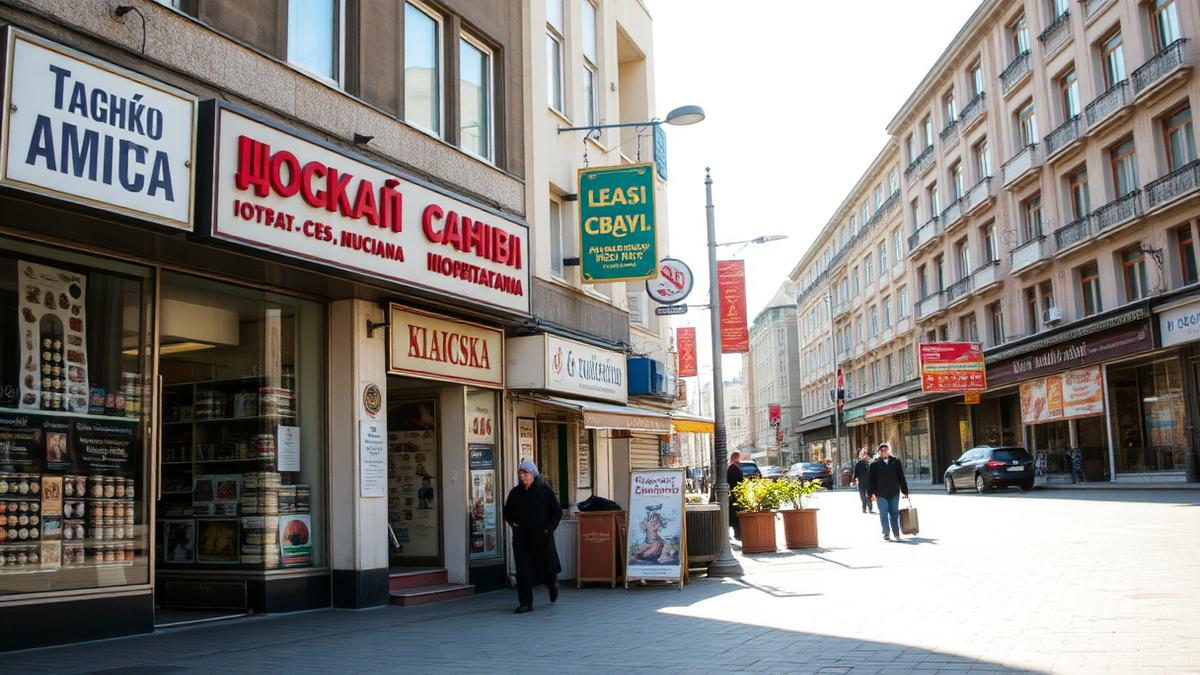
The same street name appears three times on one block: in Latin Uzbek, Cyrillic Uzbek and Russian. It is not a mistake. It is a thirty-year-old, still-unfinished national alphabet reform — and one of the most quietly fascinating things about the country.
Walk down any street in Tashkent and read the signs carefully. A pharmacy says DORIXONA. The one next to it says ДОРИХОНА. A bank writes its name in Latin, its opening hours in Cyrillic, and its ad campaign in Russian. Uzbek is a single language being written in two alphabets at the same time, in public, by everybody, and no one finds it strange.
A very short history of four alphabets
- Before 1928 — Uzbek was written in a Perso-Arabic script, as it had been for centuries.
- 1928–1940 — a Latin alphabet (Yanalif) was introduced across the Soviet Turkic republics.
- 1940 — Moscow switched Uzbek to Cyrillic, part of a wider Soviet policy shift.
- 1993 — two years after independence, Uzbekistan legislated a return to Latin script.
- 1995, 2019, 2021 — the Latin alphabet was revised repeatedly, changing letters such as oʻ, gʻ, sh and ch.
- 2020s — deadlines for a full transition have been announced and postponed several times.
Why it never fully finished
Three reasons, all human. First, an entire adult generation was educated in Cyrillic and reads it faster — including many civil servants, doctors and journalists. Second, the library problem: decades of Uzbek literature, science, legal texts and newspapers exist only in Cyrillic, and digitising or reprinting them is expensive. Third, Russian remains widely used in business and media, and Russian is Cyrillic, so the keyboard never went away.
The result is a genuinely bilingual-in-script society. Schoolchildren learn Latin. Their grandparents write Cyrillic. Websites often publish both. Telegram, where a huge share of Uzbek public life happens, is a chaotic mix of both plus Russian.
What this means for you as a traveller
Good news
- Latin Uzbek is readable on sight for anyone who reads English letters — you can sound out street names, food and signs immediately.
- Most tourist-facing signage in Samarkand, Bukhara and Khiva is in Latin Uzbek and English.
- Google Maps and Yandex Maps handle both scripts; searching in Latin usually works.
Awkward news
- Older bus route boards, government buildings, hospitals and neighbourhood shops are often Cyrillic-only.
- Menus in local cafés may be Cyrillic or Russian, with no English.
- Search results for a place can differ depending on which script you type.
Ten words worth recognising in both scripts
- Dorixona / Дорихона — pharmacy
- Kassa / Касса — cash desk, ticket office
- Bekat / Бекат — bus or transport stop
- Kirish / Кириш — entrance; Chiqish / Чиқиш — exit
- Ochiq / Очиқ — open; Yopiq / Ёпиқ — closed
- Non / Нон — bread
- Choyxona / Чойхона — teahouse
- Bozor / Бозор — bazaar
- Hojatxona / Ҳожатхона — toilet
- Muzey / Музей — museum
The letters that trip people up
Modern Latin Uzbek uses two characters with a raised apostrophe: oʻ (as in Toshkent's neighbour Oʻzbekiston) and gʻ (as in Gʻijduvon). The apostrophe is part of the letter, not punctuation. You will also see x used for a throaty 'kh' sound — so 'Xiva' is Khiva, and 'oshxona' (canteen) is pronounced osh-kho-na. Once you know x = kh and q = a deep k, most place names suddenly become pronounceable.
One language, two alphabets, three generations, and everybody manages. It is the most Uzbek solution imaginable.
Honest verdict
The alphabet situation sounds confusing and is, in practice, a small learning curve that pays off within a day. Learn x = kh, q = k, oʻ = a rounded 'aw', and screenshot the ten-word list above. You will read half the signs in the country and locals will notice immediately — trying to read Uzbek, in either script, gets a warmer reaction here than almost anything else you can do.