Kupkari (Buzkashi): Inside Uzbekistan's Wildest Horseback Sport (2026 Guide)
· 10 min read · Culture
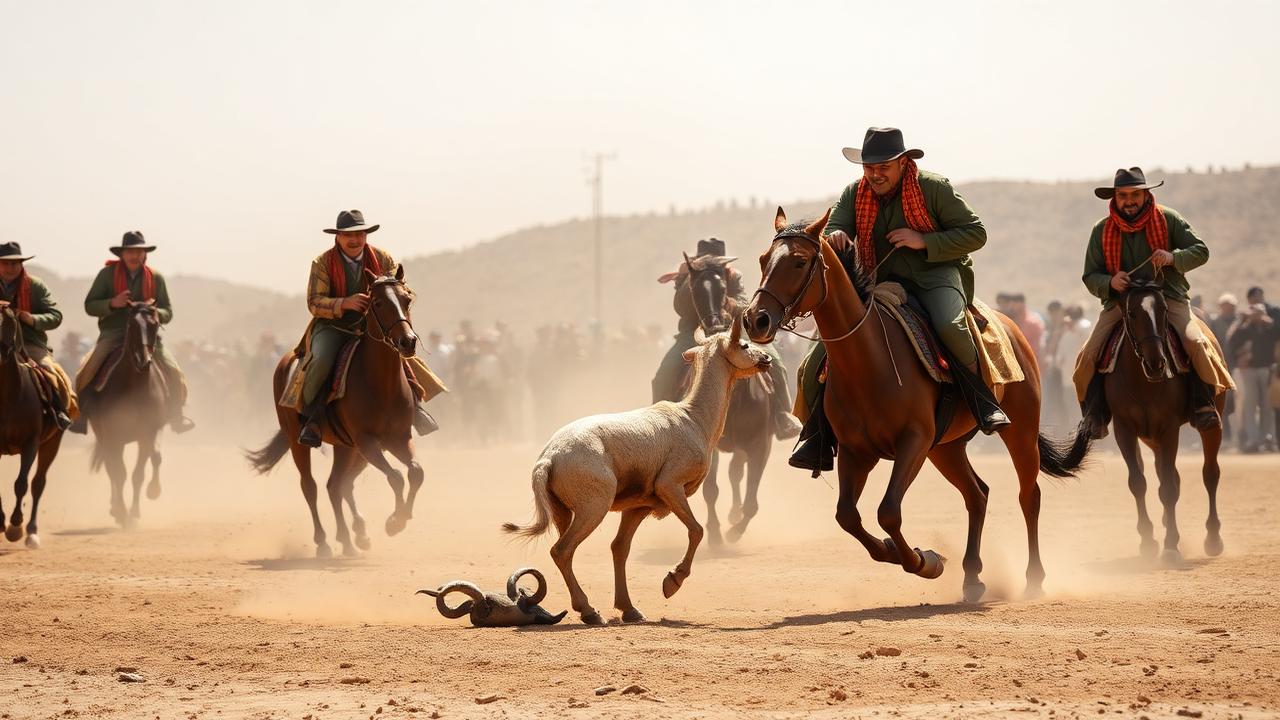
Two hundred men on horseback. One headless goat carcass. No referees, no time limit, prize is a brand new Chevrolet Captiva. Welcome to kupkari — the sport Uzbekistan does not put in tourist brochures.
If you have heard of buzkashi at all, it is probably because of a single scene in Rambo III or a Vice documentary about Afghanistan. But the game is just as Uzbek as it is Afghan — here it is called kupkari (literally 'many work') and it is played every weekend from November through April across the south of the country, with prizes that now regularly include cars, motorcycles, and live bulls. This is the 2026 guide to watching one as a foreign traveler.
What is kupkari?
Kupkari is a mounted team sport played by chavandozi (skilled riders) on specially trained horses. The 'ball' is a headless, decapitated goat carcass (sometimes a calf) weighing 30–60 kg, soaked in water for two days so it does not tear apart. The objective: pick the carcass up from a chalk circle on the ground, ride away from the pack while being grabbed, whipped, and bumped by every other rider, and deposit it in a second scoring circle (the 'marra') to claim the prize for that round.
Kupkari vs Afghan buzkashi
- Uzbek kupkari has no formal team structure — it's individual rider vs the entire field.
- Each round has its own prize (a sheep, a carpet, a TV, a car) — sponsored by the host family.
- Rounds last 5–30 minutes; tournaments run all day, sometimes two days.
- Whips are allowed, but never on another rider's face — only horses and other men's arms.
- Spectators stand 50 meters back; the action can swing toward you suddenly. Stay alert.
When and where to watch in 2026
Surxondaryo (Termez region) — December to March
The heartland of Uzbek kupkari. Weekly weekend tournaments in villages around Sherobod, Denau, and Boysun. Ask any local taxi driver — they will know where the next 'kupkari boyladi' is happening.
Bukhara and Qashqadaryo regions — November to April
Frequent tournaments around weddings and circumcision celebrations (sunnat toy). Host families literally announce 'come watch and eat plov' — foreigners are welcome and often invited closer.
Navruz (March 21) — countrywide
The biggest kupkari of the year is held during Navruz celebrations in every region. The Samarkand Navruz kupkari near Konigil village regularly draws 5,000 spectators and has had top prizes of $25,000 cars.
Fergana Valley — April–May
Spring kupkari in Margilan, Andijan, and Namangan, often tied to local mahalla festivals.
How to find a kupkari as a tourist
- Ask your guesthouse host — every Uzbek knows when the next one is. They are advertised by word of mouth, not online.
- Telegram channels: search 'kupkari' or 'kopkari' — several regional channels post dates and locations.
- Tashkent-based tour operators (Advantour, Caravanistan partners) sometimes run kupkari day trips in season for $80–120 per person.
- Ask a taxi driver in Termez, Boysun, or Shakhrisabz on a Saturday morning — there is almost certainly one within 30 km.
The horses — half the story
A kupkari horse is not a normal horse. Top chavandoz horses (usually Karabair or Akhal-Teke stock) are trained from age 4 to charge a pack, brace under a rider's full weight, and stand still when their rider falls. A trained kupkari stallion in 2026 can sell for $15,000–40,000. Owners refuse cash offers from foreigners — these animals are local heroes.
Etiquette for foreign spectators
- Stand behind the rope line. Move when the pack moves toward you. Seriously.
- Photography is welcome — drones usually not (they spook the horses).
- Greet older men with both hands on chest and a slight bow — they are often the prize sponsors.
- If invited to the post-game plov, accept — it is the second half of the event.
- Do not photograph the slaughtered carcass close-up if women and children are nearby. It is the sport, but it is also a meal afterwards.
- Bring cash — small bills are sometimes thrown into the winner's saddlebag as appreciation.
Is it cruel?
An honest answer: the goat is slaughtered halal before the game and the carcass is eaten communally afterward — none of it is wasted. The horses are pampered like racehorses. Riders bruise and break bones; there is no fake politeness about the danger. If watching mounted sport with risk and a dead animal is not for you, this is not your event. If you accept it on its own terms, you are witnessing something that has existed since the Bronze Age and survived empires, the Soviet ban, and modernity.