Kazi & Hasip: The Complete Guide to Uzbek Horse Meat Sausages (2026)
· 9 min read · Food
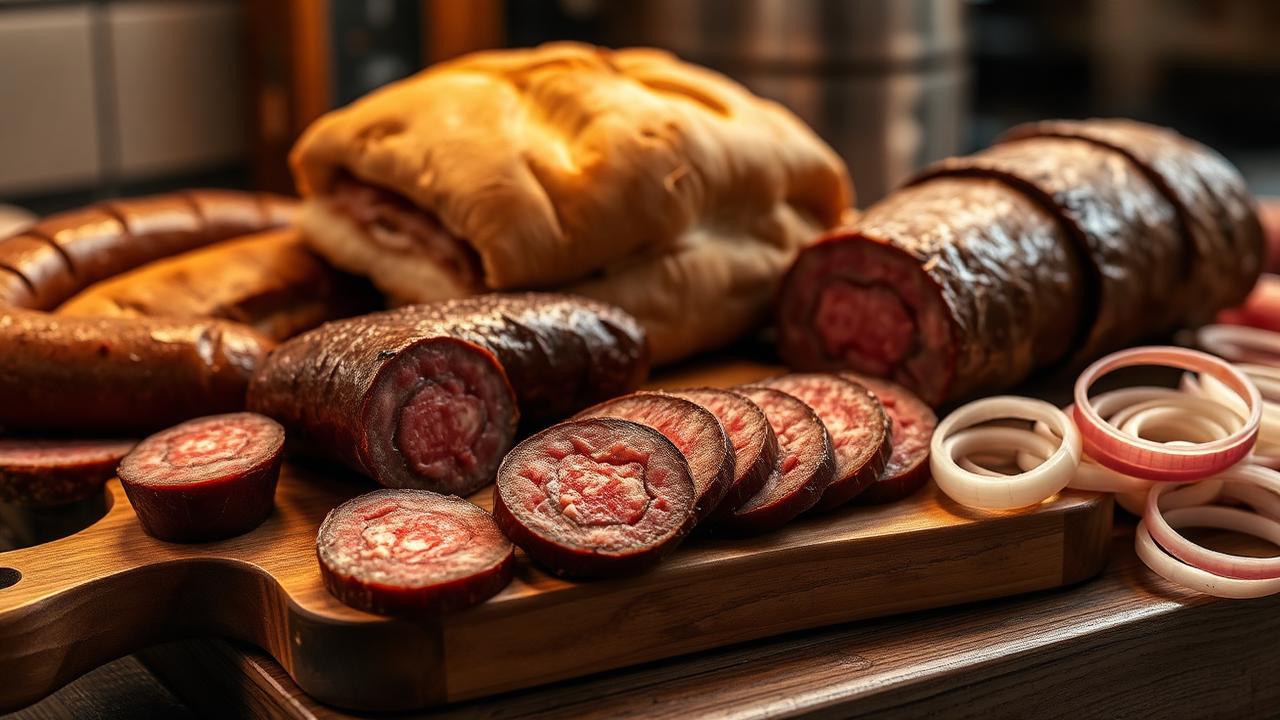
Marbled, smoky, deeply savory — Uzbek kazi is the horse sausage that turns first-time skeptics into lifelong fans. Plus hasip, its rice-stuffed cousin. Full 2026 guide.
Two sausages quietly dominate Uzbek bazaars and wedding tables: kazi (horse meat sausage) and hasip (offal-and-rice sausage). Both are old, both are halal, both are essential to understanding Uzbek meat culture. Here's the complete 2026 guide.
What is kazi?
Kazi (қази / kazy) is a cured sausage made from a whole strip of horse meat from the rib area, including a band of fat, stuffed into a natural horse intestine casing. It is salted, peppered, sometimes lightly smoked, and air-cured for anywhere from 3 days to several weeks depending on style. The slice is unmistakable: a marbled cross-section of lean meat and white fat in a perfect circle, like a small bullseye.
Two main styles exist: fresh boiled kazi (eaten the day it's made) and cured kazi (aged for weeks, sliced like prosciutto). The cured version is the prestige one and shows up on wedding tables.
Is horse meat halal? Yes — and here's why
Uzbek Islamic scholars across the centuries have consistently ruled horse meat halal. The Hanafi school (followed in Uzbekistan) considers it makruh (mildly discouraged) by some scholars but permissible by most, particularly given the deep Turkic cultural tradition. In practice, kazi is sold openly in every halal butcher and bazaar across the country and served at religious weddings without controversy.
What is hasip?
Hasip (ҳасип / hasip) is a totally different sausage — and the budget cousin of kazi. It's made from boiled rice mixed with chopped beef or lamb offal (liver, lung, heart), onion, salt, and spices, stuffed into natural intestine casings, and gently boiled until set. The texture is soft and almost porridge-like inside a thin sausage skin. Served hot, sliced thick, with raw onion.
Hasip is street food, breakfast food, market food. Kazi is wedding food and prestige food.
How kazi is made
- A long strip of fatty horse rib meat is cut to fit the intestine.
- Salted heavily (sometimes with garlic and pepper rubbed in), left overnight.
- Stuffed into a cleaned horse intestine, tied at both ends.
- Either boiled for 1.5–2 hours (fresh kazi) OR air-cured for 2–6 weeks in a cool place (aged kazi).
- Cooled, sliced thin, served cold with raw onion and non bread.
The taste
Kazi is gently sweet (horse meat is naturally so), salty, fatty, and deeply savory — somewhere between a high-end Italian salami and Spanish jamón, but milder. The fat is silky, not greasy. Most people who try it cold-sliced for the first time are surprised how refined it tastes.
Hasip is earthier — the offal and rice combination tastes like a richer, meatier blood sausage without the blood. Slightly metallic, deeply comforting, especially eaten hot at a winter bazaar.
Other Uzbek horse meat products
- Yilqi gosht — fresh horse meat (not sausaged), boiled or grilled.
- Karta — coiled horse intestine, grilled like a small sausage.
- Chuchuk — Kazakh-influenced version of kazi found in northern Uzbekistan, slightly different spice mix.
- Tushonka — Soviet-era canned horse meat, still sold in supermarkets.
Best places to buy kazi and hasip (2026)
- Chorsu Bazaar meat hall (Tashkent) — the legendary kazi row, dozens of vendors, taste before you buy.
- Mirzo Ulugbek Dehqon Bazaar (Tashkent) — slightly cheaper, very fresh.
- Siyob Bazaar (Samarkand) — Samarkand kazi is famously well-cured, ask for 'qoq kazi' (aged).
- Khujum Bazaar (Bukhara) — best kazi in Bukhara region.
- Hasip carts at Chorsu and Alay (Tashkent) — eat hot, sliced into bread.
- Frozen vacuum-packed kazi at Carrefour and Korzinka supermarkets — convenient, decent quality.
2026 prices
- Fresh boiled kazi — 180,000–220,000 UZS/kg ($15–18.50)
- Aged cured kazi — 250,000–320,000 UZS/kg ($21–27)
- Premium aged Samarkand kazi — up to 400,000 UZS/kg ($34)
- Hasip (per piece, ~150g) — 25,000–40,000 UZS ($2.10–3.40)
- Hasip in bread (street food, eat-in) — 20,000–30,000 UZS ($1.70–2.50)
- Tasting plate of kazi, salads and non in a restaurant — 80,000–120,000 UZS ($6.80–10)
How to eat kazi
- Always cold, always sliced THIN (3–4 mm). Thick slices ruin the texture.
- Served on a flat platter with raw onion rings and warm non bread.
- Eaten as a starter before plov, never as the main course.
- Paired with green tea or — at weddings — vodka. The fat needs cutting.
- Tourists: buy a small piece (200g) at the bazaar, ask for it sliced, eat it in your hotel room with bread and tomato. You'll be amazed.
Bringing kazi home
Vacuum-packed kazi is sold at Tashkent airport duty-free and at all major supermarkets. EU and UK customs allow up to 2kg of cured meat for personal use; US customs generally do NOT allow meat products from Central Asia (check current rules). For most travelers, eating it in Uzbekistan is the safer plan.
Final word
Don't be the tourist who refuses kazi because of 'horse meat.' That refusal closes the door on one of Central Asia's most refined, most ancient, most beloved foods. Try one slice at Chorsu. Just one. You'll understand.