Karnay & Surnay: The Sound of Every Uzbek Wedding (2026)
· 10 min read · Culture
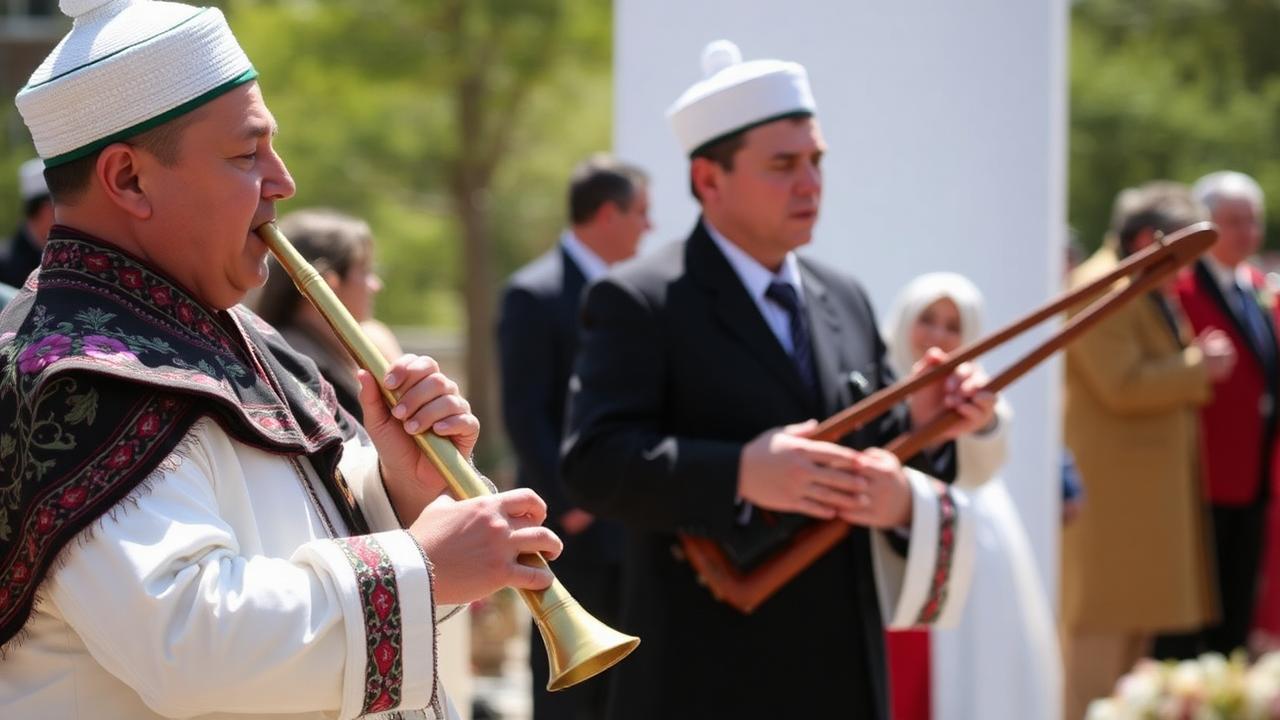
Before the first plate of plov is served, before the bride enters, before a single word is spoken — the karnay and surnay announce that an Uzbek wedding has begun. Here's the story of Central Asia's loudest tradition.
If you hear a sound like elephants trumpeting across a desert plain, followed by a high-pitched wail like a human voice stretched to breaking point, and you are anywhere in Uzbekistan on a Friday or Sunday — congratulations, you have found a wedding. The karnay (a 2-meter-long straight brass horn) and the surnay (a double-reed woodwind with a piercing, nasal tone) are the official sound of every Uzbek wedding, known locally as a 'toy.' No toy is complete without them. No guest would recognize a celebration that began in silence. This is the music that has announced Uzbek marriages, funerals, and military victories for over a thousand years.
What are the karnay and surnay?
The karnay is a long, straight brass tube — typically 1.5 to 2.5 meters in length, flared at the end, with no valves, no keys, and no mercy for the player's lungs. It produces a single deep, resonant note (sometimes two or three overtones) that can be heard from over a kilometer away. Traditionally, karnay players were part of the royal military bands of the Timurid and Bukharan courts, used to announce the arrival of khans and to intimidate enemies before battle. Today, they announce the arrival of the groom.
The surnay is a double-reed instrument similar to an oboe but louder, shriller, and more aggressive. It is made of wood (apricot or mulberry) with a metal bell and a reed made from river cane. A skilled surnay player can produce microtonal scales, rapid ornamentation, and a vibrato that sounds like a human voice in extreme emotion. In a full toy band, two to four surnays play melody and harmony while one to three karnays provide the thundering bass drone.
The wedding toy: a musical timeline
Phase 1: The nikokh (engagement) — quiet beginnings
The wedding begins days before the main celebration with a small nikokh ceremony at the bride's home. No karnay here — the surnay may play softly as the groom's family presents gifts. The real noise comes later.
Phase 2: The kelin salom (groom's arrival) — the karnay erupts
On the wedding day, the groom and his family arrive at the celebration venue in a decorated convoy of cars. As the first car pulls up, the karnay players blast a long, powerful drone. The sound is literally earth-shaking — it vibrates in your chest. The surnay players respond with a fast, triumphant melody. This is the signal to every neighbor for blocks around: the toy has begun.
Phase 3: The plov ceremony — music while you feast
While hundreds of guests eat plov at long communal tables, the surnay players walk between the tables playing celebratory tunes. The karnay rests — this is the surnay's time. The melodies are traditional, regional, and often hundreds of years old. Each city has its own wedding repertoire: Tashkent toy melodies are faster and more rhythmic; Bukhara toy music is slower and more ornamented; Samarkand's style blends both.
Phase 4: The kelin mazmun (bride's entrance) — the peak moment
The bride enters the hall in a heavily embroidered white or red dress, sometimes with a crown and veil. As she appears, both karnay and surnay play at maximum volume — the karnay sustaining a deafening drone, the surnay screaming a high, emotional melody. It is overwhelming by design: the music is meant to bring tears, to mark the transition from daughter to wife, to fill the room with sound so powerful that no words are needed.
Phase 5: The dance (raqs) — the band goes wild
After the formal ceremony, the music shifts to dance. Now the surnay leads with fast, rhythmic melodies while percussion (doyra frame drums and naghara kettle drums) joins in. The karnay may play short punctuating blasts. Men and women dance in separate circles — the men's dance (sometimes with swords or handkerchiefs) is athletic and competitive; the women's dance is graceful and flowing. The surnay player often improvises, matching the energy of the dancers in real time.
Regional styles: how the music changes by city
- Tashkent: faster, more rhythmic, influenced by modern pop. Some toy bands now incorporate synthesizers alongside traditional instruments — purists hate it, young couples love it.
- Bukhara: slower, more classical, closer to the old Bukharan court tradition. The surnay melodies here are more ornamented and melancholic. Karnay drones are held longer.
- Samarkand: a blend of Tashkent energy and Bukhara ornamentation. The Registan square still hosts surnay and karnay ensembles during Navruz and other festivals.
- Fergana Valley: the most 'folk' style, with rougher, more passionate playing. The naghara drums are louder and more prominent. Ferghana toy music feels like a village celebration, not a city performance.
- Karakalpakstan: distinct from Uzbek styles, influenced by Turkmen and Kazakh traditions. The karnay is shorter, the surnay plays pentatonic scales, and the rhythms are different.
How to hire a karnay-surnay band in 2026
- Standard band (2 surnay + 1 karnay + 1 doyra): 1,500,000–2,500,000 UZS ($120–200) for a 4-hour wedding performance.
- Large band (3–4 surnay + 2 karnay + 2 doyra + 1 naghara): 4,000,000–6,000,000 UZS ($320–480) for a full toy.
- Famous ensembles (Tashkent State Conservatory graduates, TV performers): 8,000,000–15,000,000 UZS ($640–1,200) — these are the ones hired by wealthy families and government officials.
- Most bands are hired through word-of-mouth — ask your hotel, your taxi driver, or the owner of the choyxona where you eat. Every Uzbek knows someone who knows a band.
How to experience a real toy as a traveler
Uzbek weddings are famously open. If you hear karnay and surnay, walk toward the sound. At the entrance, tell the security or the family member greeting guests that you are a tourist and you would love to see the celebration. In 95% of cases, you will be welcomed inside, offered a seat, and fed plov. Bring a small gift (chocolates, a nice tea set, or cash in an envelope — 100,000–200,000 UZS is appropriate). Dress modestly — men should wear long pants and a collared shirt; women should cover shoulders and knees. Do not bring alcohol as a gift unless you know the family drinks. Many Uzbek families, especially outside Tashkent, do not serve alcohol at all.
Where to see professional performances
- Tashkent State Conservatory: occasional public concerts featuring the conservatory's folk ensemble. Check their event schedule.
- El Merosi Theater (Samarkand): traditional music and dance performances in a historic setting, sometimes featuring karnay and surnay.
- Navruz (March 21) celebrations: every city hosts public concerts with full folk ensembles, including karnay-surnay bands, in main squares.
- Independence Day (September 1): massive state-organized performances in Tashkent's Mustaqillik Square, often with the country's best ensembles.
- Magic City Tashkent: the 'ethno-village' area occasionally hosts folk music evenings with karnay, surnay, and dance.
Final word
The karnay and surnay are not background music. They are the sound of Uzbek identity — the voice of a people who have celebrated, mourned, and fought to this sound for a thousand years. When you hear that first karnay blast at a wedding, feel it in your chest, and know that you are hearing something older than the country, older than the cities, older than the Silk Road itself.