Uzbek Drinks & Beverages Guide — Ayran, Maksym, Chalop, Kompot, Sharbat & Beyond Tea (2026)
· 7 min read · Food
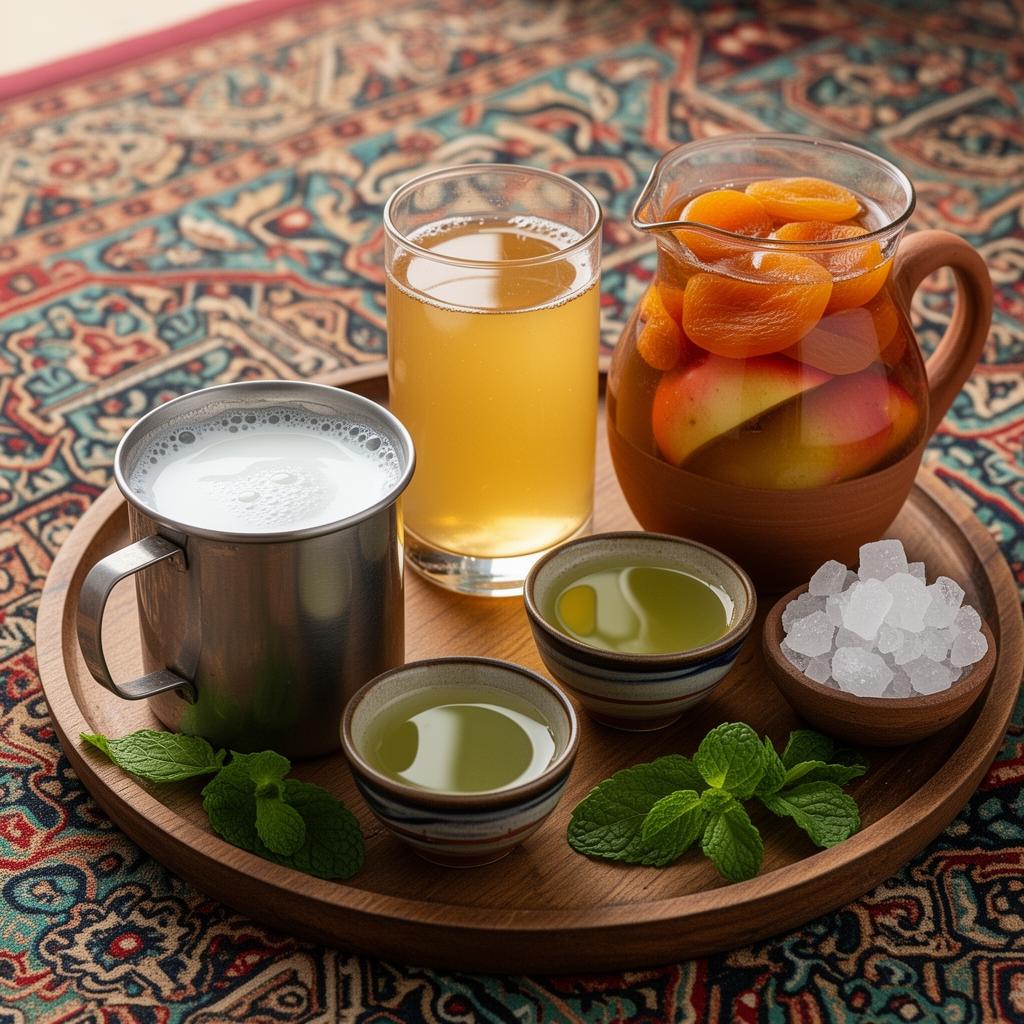
Uzbekistan's drink culture goes far beyond green tea. Ayran cools you in 40°C heat, maksym is a fermented wheat elixir, and kompot tastes like childhood. Here's every Uzbek beverage you need to try.
Every guide to Uzbekistan mentions green tea. Almost none mention the extraordinary range of cold, fermented, and fruit drinks that Uzbeks consume daily. In a country where summer temperatures hit 45°C, having a diverse drink culture isn't a luxury — it's survival. Here's the complete guide to every Uzbek beverage beyond tea, with prices, where to find them, and the cultural context that makes each one special.
Ayran (айран / ayran / айран) — the king of Uzbek cold drinks
Ayran is the most consumed cold drink in Uzbekistan after water. It's qatiq (fermented yogurt) diluted with water, salted, and whisked until frothy. The result is a savory, tangy, incredibly refreshing drink that rehydrates better than water in desert heat. Every choyxona serves it. Every home makes it. Every supermarket stocks it.
- Ingredients: fermented yogurt (qatiq), water, salt. Sometimes fresh dill or mint.
- Texture: liquid, slightly frothy, thicker than milk but drinkable.
- Taste: salty, tangy, savory. Not sweet — this confuses many first-time visitors.
- Best: ice-cold, in a metal cup, on a 40°C day.
- Homemade vs bottled: homemade is fresher and tangier. Bottled (Bio Milk, Mila brands) is consistent and widely available.
- Price: restaurant glass 8,000–15,000 UZS; bottle 6,000–12,000 UZS; homemade nearly free.
Maksym (максим / maksym) — the fermented wheat drink
Maksym is one of the most unique drinks in Central Asia. It's made by fermenting malted wheat or barley with water, yeast, and sometimes mint. The result is a slightly sour, mildly sweet, effervescent drink that tastes somewhere between kvass and weak beer — but it's completely non-alcoholic. In Tashkent, maksym carts are a summer institution: large blue or white metal jugs on wheels, dispensing cold maksym into plastic cups.
- Ingredients: malted wheat/barley, water, yeast, sometimes sugar and mint.
- Taste: sour-sweet, yeasty, slightly effervescent. Kvass-like but lighter.
- Best: cold, from a street cart, on a hot afternoon.
- Alcohol content: technically trace amounts from fermentation, but officially non-alcoholic.
- Price: 5,000–10,000 UZS ($0.40–0.85) per cup from street carts.
Chalop / Shalop (чалоп / chalop) — the kurt drink
Chalop is kurt (dried yogurt balls) dissolved in water with salt and sometimes fresh dill. It's a traditional shepherd's drink — filling, salty, and deeply thirst-quenching after a day in the sun. The taste is intense: sour, salty, and slightly chalky from the dissolved kurt. Not for everyone, but deeply authentic.
- Ingredients: kurt (dried yogurt balls), water, salt, fresh dill or mint.
- Taste: sour, salty, slightly chalky. Very acquired.
- Serving: cold, from street carts or at rural choyxonas.
- Price: 5,000–8,000 UZS ($0.40–0.70).
Kompot (компот) — the fruit punch of childhood
Uzbek kompot is stewed dried fruit drink — apricots, apples, pears, raisins, and sometimes prunes boiled in water with sugar until the liquid takes on a deep amber color and complex dried-fruit sweetness. Every Uzbek child grew up on this. It's served cold in summer, warm in winter, and is the default non-soda option at every family meal.
- Ingredients: dried apricots, apples, pears, raisins, sugar, water.
- Taste: sweet, fruity, slightly thick from dissolved fruit sugars.
- Serving: cold in summer, warm in winter. The fruit is eaten separately with a spoon.
- Price: 8,000–15,000 UZS per glass ($0.70–1.30).
Sharbat (шарбат / sharbat / sherbet) — the flower and fruit syrup
Sharbat is a sweet drink made from fruit or flower syrups diluted with water and ice. The most common are lemon sharbat, rose sharbat (gul sharbat), and mint sharbat. It's the Uzbek answer to lemonade — sweeter, more floral, and often served at weddings and celebrations in ornate glass pitchers.
- Varieties: lemon, rose (gul), mint, pomegranate, apricot.
- Serving: cold, in tall glasses, often with ice and fresh mint.
- Price: 10,000–20,000 UZS ($0.85–1.70).
Boza (боза / boza) — the ancient fermented millet drink
Boza is a thick, slightly sweet, fermented millet drink with a very low alcohol content (around 1%). It's one of the oldest drinks in Central Asia, dating back thousands of years. In Uzbekistan, it's less common than in Turkey or the Balkans, but still available in Tashkent's old town and at some traditional choyxonas in winter. The texture is thick and porridge-like — you eat it with a spoon as much as drink it.
- Ingredients: fermented millet, water, sugar.
- Taste: sweet, slightly sour, thick, malty.
- Alcohol: ~1%, traditionally acceptable in Muslim culture due to the low level.
- Price: 15,000–25,000 UZS ($1.30–2.20), harder to find.
Where to find the best Uzbek drinks (2026)
- Ayran — everywhere. Every choyxona, every restaurant, every supermarket. Fresh at Chorsu Bazaar dairy section.
- Maksym — street carts in Tashkent (Amir Temur Square, Chorsu area, Yunusobod) from May to October. Ask for 'sovuq maksym' (cold maksym).
- Chalop — rural choyxonas and some street carts. Ask 'chalop bormi?' (do you have chalop?).
- Kompot — every family restaurant, every home. Order 'kompot' and specify dried fruit or fresh.
- Sharbat — wedding restaurants, celebration halls, and upscale choyxonas.
- Boza — Tashkent old town near Khast Imam, and some winter-only stalls near Chorsu.
2026 prices for Uzbek drinks
- Ayran (glass) — 8,000–15,000 UZS ($0.70–1.30)
- Ayran (bottle 500ml) — 6,000–12,000 UZS ($0.50–1)
- Maksym (street cart cup) — 5,000–10,000 UZS ($0.40–0.85)
- Chalop — 5,000–8,000 UZS ($0.40–0.70)
- Kompot — 8,000–15,000 UZS ($0.70–1.30)
- Sharbat — 10,000–20,000 UZS ($0.85–1.70)
- Boza — 15,000–25,000 UZS ($1.30–2.20)
- Green tea (unlimited refills) — 5,000–10,000 UZS ($0.40–0.85)
What to drink when
- Morning: green tea (kok choy), at least three bowls.
- Hot summer day: ayran or maksym — both rehydrate and cool.
- After plov: ayran — Uzbeks swear it aids digestion of fatty food.
- Evening: kompot or sharbat — sweet, non-caffeinated, family-friendly.
- Winter: warm kompot or boza — comforting and warming.
- After shashlik: cold beer (Sarbast or Tashkent brand) or ayran for non-drinkers.
Final word
Uzbekistan's drink culture is as rich as its food culture, and almost entirely ignored by travel guides. Don't make that mistake. On your first 40°C day in Tashkent, walk to the nearest maksym cart, drink a frothy cup of fermented wheat while standing on the sidewalk, then find a choyxona for an ice-cold ayran. That's when you'll understand why Uzbeks don't just survive the summer — they enjoy it.