Uzbek Doppi & Traditional Clothing: The Complete 2026 Buying & Wearing Guide
· 11 min read · Culture
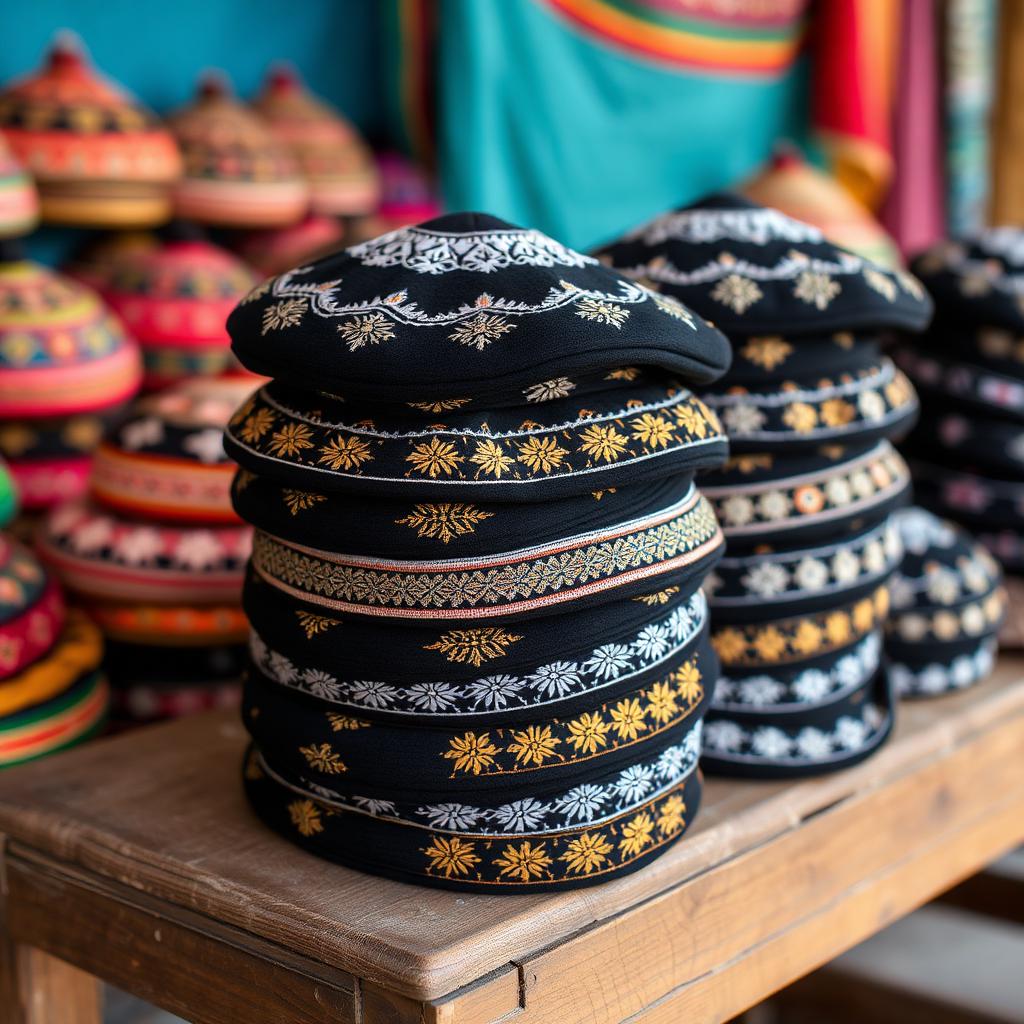
The little square hat you see on every Uzbek grandfather is not a souvenir — it's a 1,000-year-old identity card. Here's how to read it, buy a real one, and wear it without looking like a tourist.
Walk through any Uzbek city and within ten minutes you'll see the doppi — the square or rounded skullcap worn by men, women, and children across the country. Most tourists buy one as a souvenir, wear it for one photo, and never put it on again. That's fine, but you're missing the point. The doppi is a regional identity marker, a religious symbol, a wedding gift, a funeral garment, and one of the last living pieces of textile heritage in Central Asia. Here's the complete guide for 2026.
What is a doppi?
Doppi (also tubeteika in Russian, tyubeteyka, do'ppi in Latin Uzbek) is the traditional Uzbek skullcap. It's almost always square at the base and either flat-topped or slightly rounded. Men's doppi are usually black with white embroidery; women's are more colorful, often with mirrors, beads, or gold thread. Children wear miniature versions from age two. It is worn indoors, outdoors, to mosque, to weddings, to funerals, and at home. Older Uzbek men never take it off in public.
Regional doppi styles — how to read the pattern
Chust doppi (the iconic black-and-white)
Made in Chust (Fergana Valley) since the 19th century. Black velvet or felt with four white almond-shaped 'qalampir' (pepper) motifs on top and 16 small arches around the band. This is the doppi you see in every Uzbek photograph. Worn nationwide. Around 80,000–250,000 UZS ($7–22) depending on quality.
Margilan / Fergana silk doppi
Made from offcuts of atlas or adras silk. Brightly colored, often pink, green, and gold. Worn by women, sometimes by men at weddings.
Samarkand iroqi
Cross-stitch embroidery, often in geometric patterns, on a colored base. Heavier, more ornate, sold at Siyob Bazaar.
Bukhara gold-thread (zardo'zi)
Heavy gold-thread embroidery on velvet, sometimes with small pearls. Originally made for the Bukhara emir's court. Expensive (300,000–1,500,000 UZS / $25–125) and worn for weddings or formal occasions only.
Khorezm and Karakalpak styles
Often taller and conical rather than flat. Heavily embroidered with floral motifs. Worn by women in Khiva and Nukus regions.
Beyond the doppi — the rest of traditional Uzbek clothing
Chapan (the long quilted coat)
A wrap-around quilted robe, usually striped silk or velvet, tied at the waist with a sash (belbog). Worn by men over normal clothes, especially in winter or for ceremonies. Two main types: thin silk chapan for summer and weddings, thick padded chapan for winter. Stripes are not random — different regions have different stripe patterns. Bukhara stripes are wider, Samarkand stripes thinner, Khorezm uses more red.
Atlas and adras (the rainbow silk)
Atlas is pure silk ikat fabric; adras is silk-cotton blend. Made in Margilan (Fergana Valley) using a tie-dye warp technique that gives the fabric its blurry, fluid rainbow stripes. Worn by women as dresses, scarves, and headwraps. The Yodgorlik Silk Factory in Margilan still uses the original loom-and-dye process.
Khan-atlas dress
The most recognizable women's outfit in Uzbekistan — an ankle-length atlas dress, often worn with matching headscarf and tight under-trousers (lozim). Mandatory for Uzbek weddings.
Belbog (the sash)
A long folded silk sash, usually red or green with embroidered ends, wrapped around the waist over the chapan. Holds your money, your knife, and (historically) your honor.
Mahsi (soft leather boots) and kovush (overshoes)
Mahsi are thin leather inner boots worn inside the house and inside the mosque; kovush are stiff leather overshoes worn over them outdoors. Older men in Bukhara and Samarkand still wear this combo daily.
Where to buy real, not tourist-junk versions
- Chorsu Bazaar (Tashkent) — second floor, doppi row. Best for Chust doppi at fair prices.
- Yodgorlik Silk Factory (Margilan) — buy atlas and adras direct from the loom, half the price of Tashkent shops.
- Siyob Bazaar (Samarkand) — iroqi doppi and Samarkand-stripe chapan.
- Lyabi-Hauz craft shops (Bukhara) — gold-thread zardo'zi doppi, hand-embroidered chapan.
- Khiva Ichan Kala workshops — Khorezm-style doppi and felt vests.
- Human House (Tashkent, upscale) — fair-trade certified, designer-tailored chapan and dresses.
How to spot a real handmade doppi vs machine-made fake
- Turn it inside out: handmade has visible knotted thread tails; machine-made has perfectly clean stitch lines.
- Check stitch tension: handmade has slight irregularities (proof of human hands); machine is uniformly tight.
- Smell test: real velvet has a faint cotton/wool smell; polyester smells like plastic.
- Price under 50,000 UZS = almost certainly machine-made.
- Ask 'qo'lda tikilganmi?' ('is it hand-stitched?') — the seller's eyes tell you the truth.
2026 prices
- Machine-made tourist doppi: 30,000–60,000 UZS ($2.50–5)
- Handmade Chust doppi: 80,000–250,000 UZS ($7–22)
- Bukhara gold-thread doppi: 300,000–1,500,000 UZS ($25–125)
- Silk chapan (lightweight): 600,000–1,500,000 UZS ($50–125)
- Padded winter chapan: 800,000–2,500,000 UZS ($65–210)
- Atlas silk dress (handmade): 400,000–1,200,000 UZS ($33–100)
- Mahsi + kovush leather set: 350,000–800,000 UZS ($30–67)
How to wear them without being disrespectful
- Yes, foreigners can wear doppi — Uzbeks find it charming, not appropriative.
- Don't wear a doppi inside a bar or while drinking alcohol — it has religious associations.
- Don't put a doppi on the ground or sit on it. Ever.
- If invited into an Uzbek home, hosts may gift you a doppi or chapan at the door — accept with two hands and a slight bow.
- Men: wear the doppi straight on the crown, not tilted (tilted = informal/showy).
- Women: pair atlas dress with a headscarf for mosque visits.
Final word
Of all the souvenirs you can carry home from Uzbekistan, a good doppi or chapan is the one that keeps giving. It folds flat in your suitcase, costs less than a dinner in your home country, and gets compliments forever. More importantly, every time you wear it you're carrying a piece of a 1,000-year-old textile tradition that survived empires, conquests, and the Soviet Union. Buy real, buy local, wear with respect.