Uzbek Cinema in 2026: The Film Boom Nobody Outside Central Asia Has Noticed Yet
· 9 min read · Culture
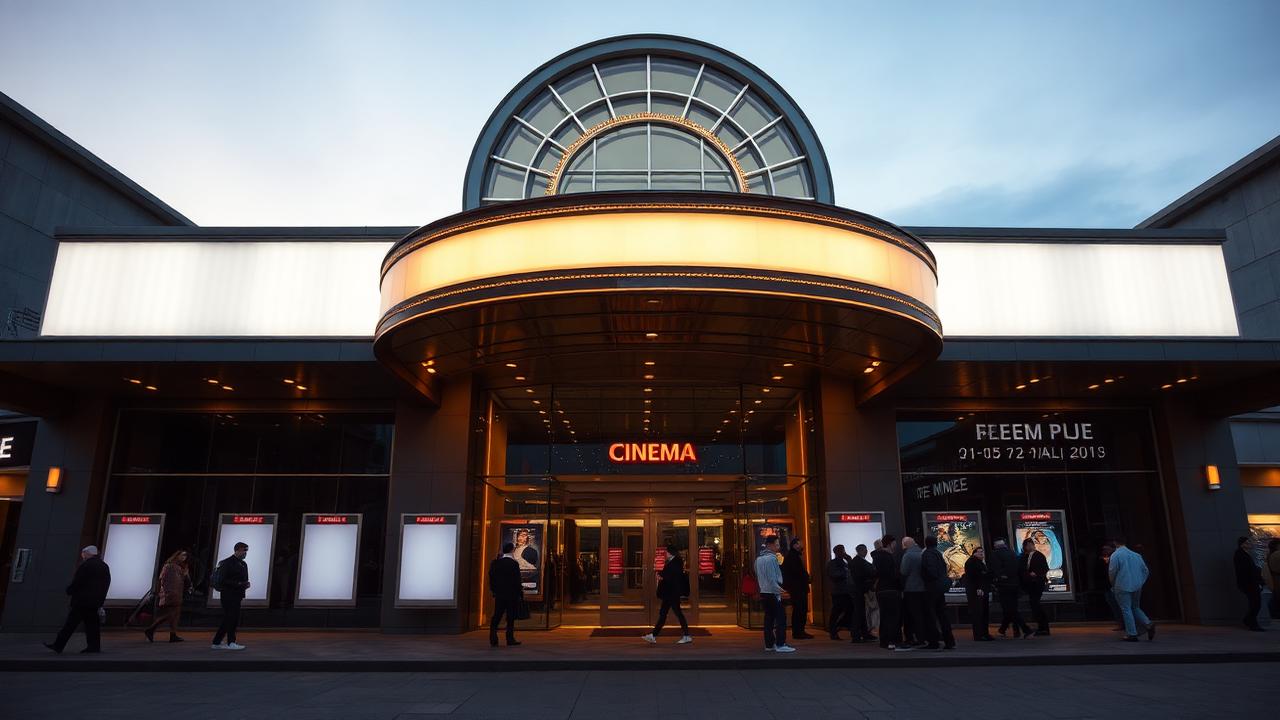
Uzbekistan produces more feature films per year than several European countries, almost none of them subtitled, and its domestic hits routinely outsell Hollywood at home. It is one of the world's most invisible film industries.
If you spend a weekend evening in a Tashkent shopping-mall multiplex you will notice something that contradicts everything you assumed: the biggest queues are not for the American blockbuster. They are for an Uzbek-language comedy or melodrama that nobody outside the country has heard of, playing to a packed house. Uzbekistan has a large, commercially self-sustaining film industry that operates almost entirely in its own language market — and in 2026 it is expanding fast.
The scale of it
Uzbekistan produces dozens of feature films a year, a mixture of state-supported productions through the national agency Uzbekkino and a much larger volume of privately financed commercial cinema. Budgets are small by international standards, shooting schedules are short, and the economics work because a domestic hit can fill cinemas nationwide with an audience that has few alternatives in its own language. Comedy and family melodrama dominate; horror, action and increasingly slick historical epics fill out the rest.
The state push
- Uzbekkino has been reorganised repeatedly through the 2020s with mandates to raise quality and export potential.
- Historical epics about Timur, Jaloliddin Manguberdi and Central Asian scholars have received significant state backing.
- Uzbekistan is courting foreign productions with location incentives, building on a Soviet-era history of doubling for the Middle East and South Asia — covered at /blog/uzbekistan-film-locations-bollywood-hollywood-guide-2026
- Festival presence is growing, with Tashkent's international film festival revived as the region's showcase event.
The Soviet inheritance
Uzbekfilm, the Tashkent studio founded in the 1920s, produced a substantial body of work across the Soviet period, including films that were serious festival cinema rather than provincial output. The Tashkent Festival of African, Asian and Latin American Cinema, held from 1968, made the city a real node in the non-aligned film world for two decades — a piece of Cold War cultural history that has almost vanished from Western memory. Restoration of that archive is an ongoing and underfunded project.
Names worth knowing
- Ali Khamraev — the towering figure of Uzbek Soviet cinema, whose westerns-of-the-steppe and lyrical dramas are the most internationally regarded work to come out of the studio.
- Shukhrat Abbasov — director of Tashkent, City of Bread, a landmark of the 1960s.
- Kamara Kamalova — one of the few prominent women directors of the Soviet Central Asian industry.
- A younger 2020s generation working in genre cinema and, increasingly, in streaming series.
Watching films in Tashkent as a visitor
- Multiplexes in the big malls screen international releases, usually dubbed into Russian, occasionally in the original with subtitles — check the listing carefully.
- Uzbek-language domestic films are rarely subtitled. Going anyway is still worth it once, for the audience experience as much as the plot.
- Ticket prices are low by international standards, and weekend evenings sell out.
- Look out for retrospective screenings and festival weeks, which are where restored Uzbekfilm classics surface with subtitles.
What to watch before you fly
Start with Khamraev if you want art cinema and a sense of the landscape: his 1970s work uses the desert and mountain country you will be driving through. For contemporary Uzbekistan, the streaming platforms carrying Uzbek series give a far more accurate picture of family life, mahalla dynamics and the way money and marriage are discussed than any travel documentary. Subtitles are the limiting factor and improving slowly.
Why it matters for understanding the country
Uzbek commercial cinema is where the society argues with itself: about arranged marriage, migration to Russia, debt, corruption, the pressure on young men to provide and on young women to conform. These are the conversations you will not get in a hotel lobby. A visitor who watches two Uzbek films understands the mahalla system better than one who reads three guidebooks: /blog/uzbek-mahalla-neighbourhood-system-guide-2026
Where it goes next
The bottleneck is not talent or money. It is subtitling, distribution and the absence of Uzbek titles on major international platforms. The pop-music industry solved the same problem with YouTube and short video within a few years — /blog/uzbek-pop-music-scene-viral-artists-guide-2026 — and there is no structural reason film cannot follow. When it does, one of the last genuinely unknown national cinemas will stop being unknown.