Uzbek Breakfast (Nonushta) Complete Guide — What Locals Actually Eat Every Morning (2026)
· 7 min read · Food
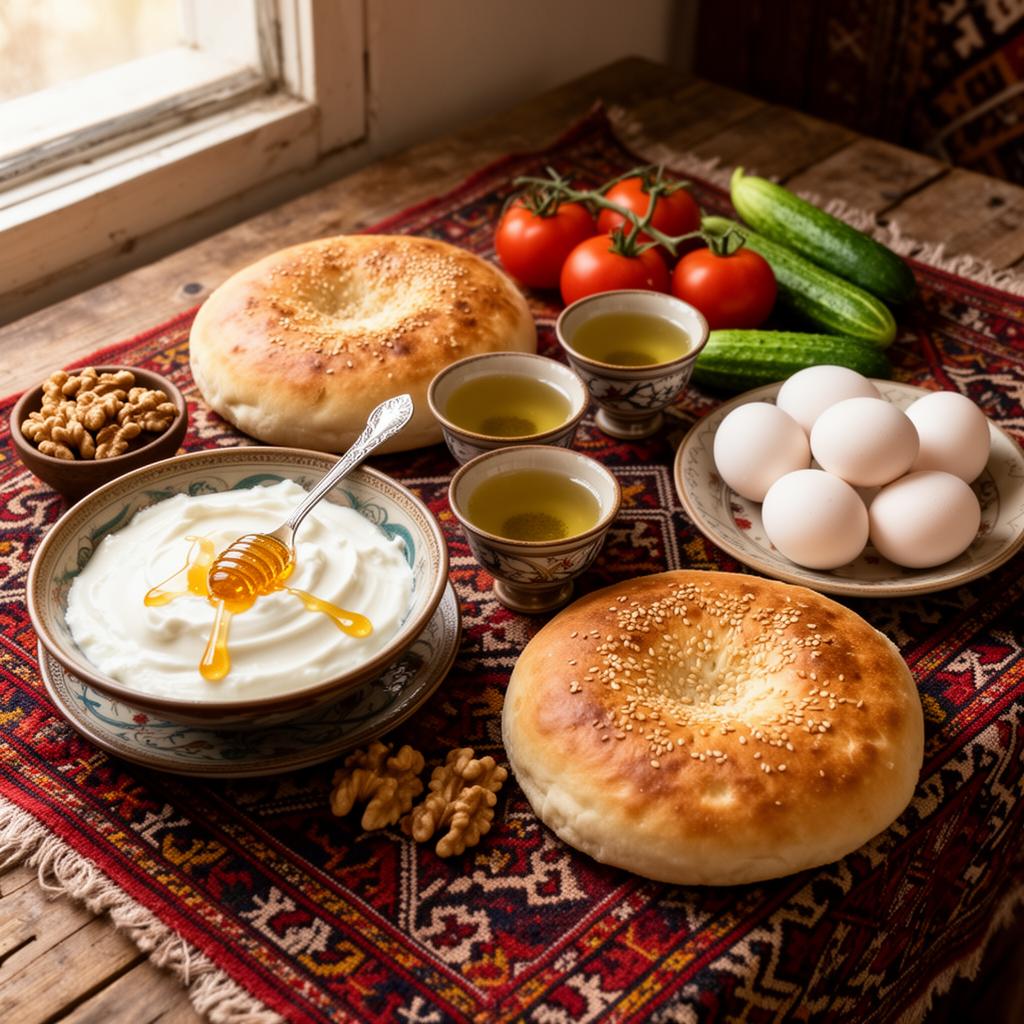
Uzbek breakfast (nonushta) is the most underrated meal in Central Asia. Here's what actually appears on the table every morning — from kaymak and honey on warm non bread to the three-bowl tea ritual that no Uzbek skips.
If you visit Uzbekistan and eat hotel buffet breakfast, you've missed the point. Real Uzbek nonushta (breakfast) happens in homes, in neighborhood choyxonas, and at corner bakeries where the non bread is still warm from the tandyr. It's simple, filling, and one of the most comforting meals you'll eat in Central Asia. Here's exactly what it looks like, where to find it, and how much it costs in 2026.
What is nonushta? The Uzbek breakfast explained
Nonushta (нохушта / nonushta / нонушта) is the Uzbek word for breakfast, derived from 'non' (bread) and 'ushta' (morning). Bread is the center of every breakfast. Not alongside it — it IS the breakfast. Everything else exists to accompany the bread. This is the fundamental difference between Uzbek and Western breakfast philosophy.
The essential components of a real Uzbek breakfast
- Non bread — always warm, always fresh. Round, stamped, crusty Uzbek non (лепёшка / lepyoshka / non). Bought that morning from the neighborhood tandyr bakery.
- Kaymak (қаймақ / kaymak / qaymoq) — thick clotted cream, spread like butter on the bread. Rich, slightly sour, incredible with honey.
- Honey (асал / asal) — usually local mountain honey, dark and fragrant. Poured over kaymak-topped bread.
- Green tea (кок чой / kok choy / зелёный чай) — served in piala bowls, never mugs. The first pour is light, the second stronger, the third strongest.
- Fresh vegetables — tomatoes, cucumbers, radishes, sometimes watermelon in summer. Simple, sliced, no dressing.
- Boiled eggs or fried eggs — often with a runny yolk for dipping bread.
- Walnuts and raisins — small bowls of nuts and dried fruit appear automatically.
- Suzma or qatiq — a spoonful of thick fermented yogurt on the side.
The three-pour tea ritual (every morning, without fail)
Uzbek breakfast tea follows the same three-pour ritual as every other tea session in the country. The host pours the first bowl, drinks it themselves (to prove it's safe), then pours the second for the guest. The third pour is the fullest and most honored. Never fill your own bowl — it's the host's job. And never refuse a refill — it's considered rude. A proper nonushta involves at least three bowls of green tea.
Where to eat the best Uzbek breakfast (2026)
- Tashkent — Chorsu Bazaar upper floor: find the bread-and-tea corner where locals eat breakfast before shopping. Non bread + kaymak + tea = 15,000–25,000 UZS ($1.20–2).
- Tashkent — Central Asian Plov Center (Beshqozon) opens early and serves a proper nonushta alongside their famous plov.
- Tashkent — Any neighborhood tandyr bakery before 9 AM. Buy the bread hot, find a nearby choyxona, order tea and kaymak. Total: under $2.
- Samarkand — Siab Bazaar bread row. The non here is slightly sweeter and denser than Tashkent's. Eat it at the market tea house with mountain honey.
- Samarkand — Bibikhanum Teahouse near Bibi-Khanym mosque serves a tourist-friendly but genuinely good nonushta set with unlimited tea refills.
- Bukhara — Lyabi-Hauz square choyxonas. Breakfast with a view of the 16th-century pool. Slightly tourist-priced but the atmosphere is unmatched.
- Bukhara — The tandyr bakery near Toqi Zargaron (Jewelers' Dome). Bread so fresh it burns your fingers.
- Khiva — fewer breakfast options, but the small choyxona near the North Gate serves a simple, honest nonushta for 20,000 UZS.
2026 prices for a full Uzbek breakfast
- Local choyxona nonushta set (bread, kaymak, honey, tea, eggs, vegetables) — 25,000–40,000 UZS ($2–3.50)
- Mid-range restaurant breakfast — 50,000–80,000 UZS ($4–7)
- Hotel buffet breakfast — usually included in room rate, rarely authentic
- Tandyr bread alone — 5,000–8,000 UZS ($0.40–0.70)
- Kaymak (100g portion) — 15,000–25,000 UZS
- Mountain honey (small jar) — 30,000–60,000 UZS
Regional differences you should know
Tashkent nonushta tends toward the elaborate — kaymak, multiple types of bread, and a full spread of vegetables. Samarkand nonushta is simpler but the bread is sweeter and more aromatic. Bukhara adds Jewish-Uzbek touches — sometimes holvaytar sweets appear on the breakfast table. Fergana Valley breakfasts are the most dairy-heavy — suzma and qatiq replace kaymak in many homes.
How to recreate Uzbek breakfast at home
- Buy the best crusty round bread you can find. Warm it in the oven. Uzbek non is irreplaceable, but a good sourdough round comes closest.
- Use clotted cream or thick Greek yogurt as a kaymak substitute. Add a tiny pinch of salt.
- Get good dark honey — mountain or forest honey if possible.
- Brew loose-leaf green tea strong. Serve in small bowls, not mugs.
- Slice fresh tomatoes and cucumbers thick. No dressing — the bread and kaymak are the dressing.
- Add soft-boiled eggs, walnuts, and raisins.
Why Uzbek breakfast matters
In Uzbek culture, nonushta is not a rushed meal. Even busy Tashkent professionals sit for 20–30 minutes over tea and bread before work. It's a moment of calm, hospitality, and family connection. If you're invited to an Uzbek home for breakfast, accept — it's one of the highest forms of hospitality, and the meal you'll remember longer than any restaurant dinner.
Final word
Wake up early, find the nearest tandyr bakery by following the smell of baking bread, buy a hot non, walk to the closest choyxona, and order kaymak, honey, and green tea. That's the Uzbek breakfast. It costs less than a coffee in London and delivers more comfort than any hotel buffet.