The Saiga's Last Uzbek Refuge: Can You See the Ice-Age Antelope on the Ustyurt?
· 9 min read · Nature
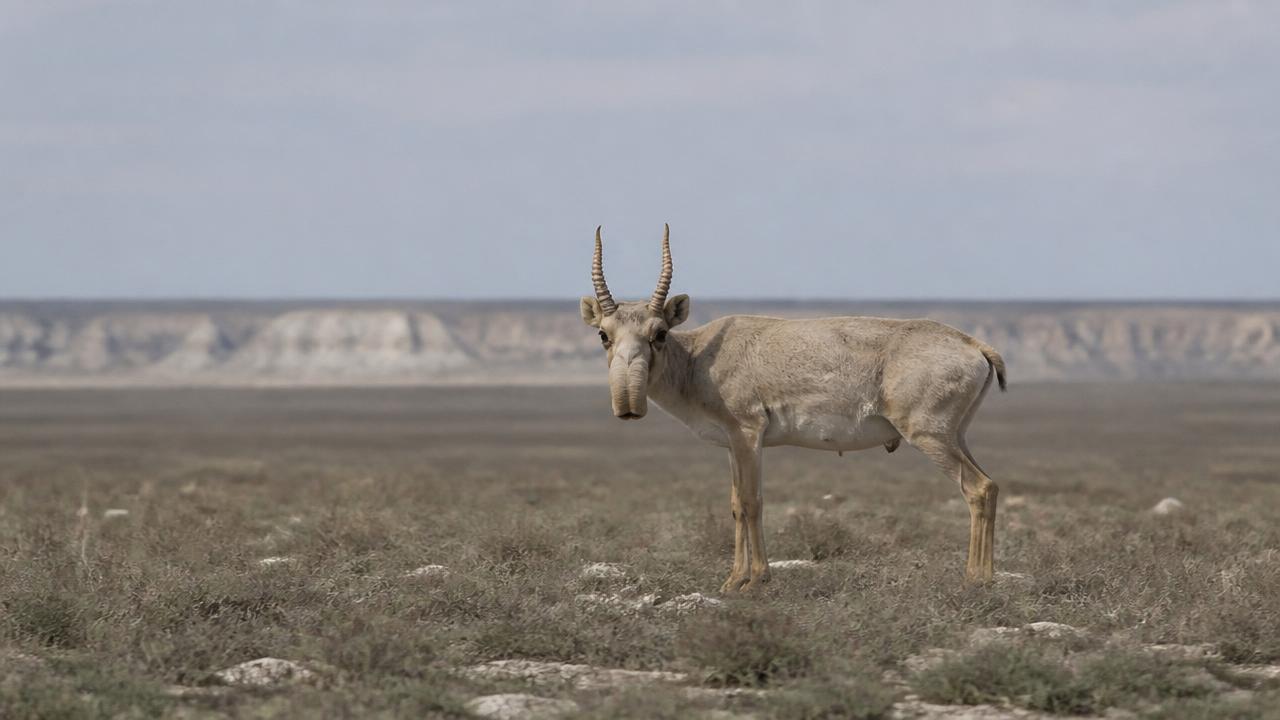
The saiga survived the last Ice Age, but poaching, disease and fences nearly erased it from Uzbekistan. A fragile population still crosses the Ustyurt — seeing one is possible, never guaranteed, and must be done responsibly.
The animal looks invented: a pale antelope with a soft, oversized nose hanging over its mouth. That nose filters summer dust and warms winter air, an adaptation built for the open steppe. Saiga once moved across Central Asia in enormous herds. Uzbekistan's Ustyurt population is now one of the species' most vulnerable stories.
Where saiga live in Uzbekistan
Their habitat lies on the Ustyurt Plateau in Karakalpakstan, west and northwest of the Aral Sea. Saiga move across political borders rather than staying inside a safari park, historically migrating between Uzbekistan and Kazakhstan. That mobility makes roads, fences and border infrastructure as consequential as poaching.
Why the population collapsed
- Illegal hunting for meat and male horns, which are traded for traditional medicine.
- Migration barriers that split seasonal habitat and prevent animals reaching water or pasture.
- Extreme winters, drought and disease events that can kill large numbers quickly.
- A very small local population, making every breeding season and protected corridor important.
Can a traveller realistically see one?
Possibly, but no ethical operator should promise it. The Ustyurt is immense, the animals move, and densities on the Uzbek side are low. A normal Aral Sea trip is more likely to reveal tracks, goitered gazelles, foxes or birds than a saiga. Treat any sighting as a conservation privilege, not a product included in the price.
How to travel responsibly
- Use an established Karakalpakstan guide who understands protected zones and wildlife distances.
- Never ask a driver to chase, surround or cut off animals for a photograph.
- Do not publish precise live locations of a small herd.
- Avoid buying horns, wildlife products or unverified 'traditional' souvenirs.
- Carry long lenses; remain inside the vehicle when your guide instructs you to.
Best season and practical route
Spring and autumn offer tolerable temperatures and active wildlife, but conditions vary and migrations are not a timetable. Base in Nukus and book a multi-day 4x4 expedition with a licensed local operator. The usual route combines Muynak, the Aral seabed and Ustyurt escarpments; wildlife-focused deviations require more time, fuel and permits.
The conservation work that matters
Uzbek conservation organisations and international partners have worked on anti-poaching, community education, protected areas and transboundary migration corridors. The most useful visitor contribution is choosing responsible local guides and treating the landscape as habitat rather than an off-road playground.
Honest verdict
Come to the Ustyurt for the scale of the plateau, not for a guaranteed checklist animal. If a saiga appears, keep your distance and understand what you are seeing: a survivor of the mammoth steppe whose future depends on being allowed to move.