Urgut Sunday Bazaar: Where to Actually Buy a Real Suzani in Uzbekistan (2026 Guide)
· 9 min read · Culture
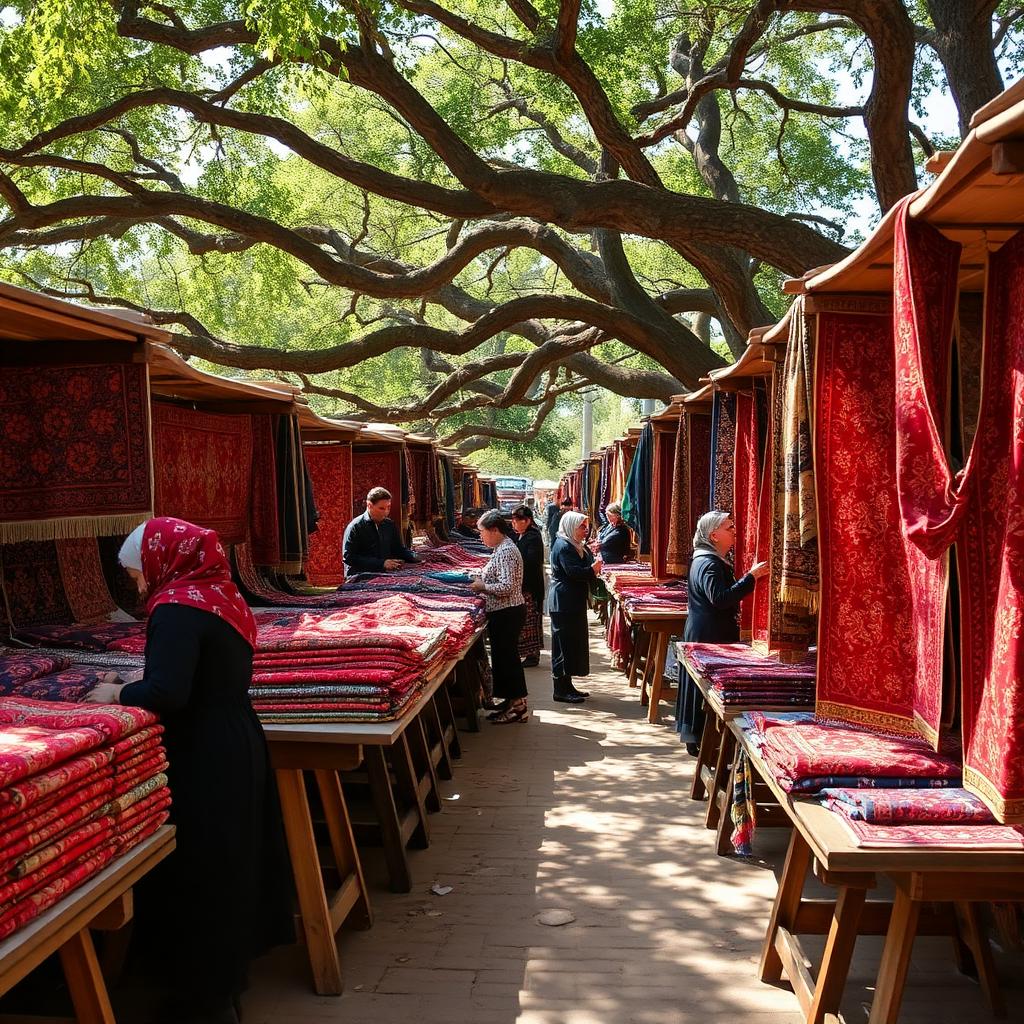
Every Sunday a thousand-year-old market village 45 minutes from Samarkand fills its shaded lanes with hand-embroidered silk suzanis. Prices are half of Samarkand's tourist shops. Here is how to buy one without getting fooled.
Urgut is a small town in the foothills of the Zerafshan mountains, 45 km south-east of Samarkand. Every Wednesday and Sunday its bazaar swells to 10,000+ traders — one of the largest weekly markets in Uzbekistan. Locals come for livestock, spices, and Chinese electronics; foreigners come for one thing: suzani. This is the source market where Samarkand shops buy their stock before doubling the price. If you plan to bring home one serious textile from Uzbekistan, buy it here.
What is a suzani?
Suzani (from Persian suzan, needle) is a hand-embroidered decorative cloth, traditionally made by a bride and her female relatives as part of her dowry. Motifs are almost always symbolic: pomegranates (fertility), sun discs (life), tulips (spring), scorpions and chili peppers (protection from the evil eye). The best suzanis take 6–18 months to embroider, use silk thread on hand-woven cotton or silk base, and are worked by 4–6 women simultaneously on a single frame. A real one will last 200 years; a machine copy will fall apart in 5.
Real vs fake — how to spot the difference
- Back of the fabric: on a real suzani the reverse is almost as neat as the front, with small consistent stitches. Machine embroidery leaves loose thread jumps and a stiff, rough back.
- Thread: real silk has a subtle uneven sheen; polyester is flat and too shiny. Rub between fingers — silk warms up, polyester stays cool.
- Colours: natural dyes (madder red, indigo, walnut brown, pomegranate skin gold) are slightly uneven within a single motif. Chemical dyes are chemically perfect and often too bright.
- Panels: the finest antique suzanis are made of 3–5 separately embroidered panels joined by a central seam — this is a feature, not a defect. Cheap new ones are single-piece.
- Weight: a real silk-on-cotton suzani of 2 x 1.5 m weighs about 1.2–1.6 kg. Anything much lighter is polyester.
- Ask to see the back and to bunch the fabric in your hand — real suzani drapes and springs back; polyester crinkles.
Fair 2026 prices
- Small hand-embroidered silk cushion cover (40 x 40 cm): 250,000–400,000 UZS ($20–$32).
- Table runner (150 x 40 cm), hand-embroidered: 700,000–1,200,000 UZS ($55–$95).
- Wall hanging (200 x 150 cm), fully hand-embroidered new: 3,500,000–6,000,000 UZS ($280–$480).
- Antique bridal suzani (30+ years, natural dyes): 8,000,000–25,000,000 UZS ($640–$2,000) depending on condition.
- Machine-embroidered copies (also sold): 150,000–400,000 UZS ($12–$32). Legit as a souvenir, not as an heirloom.
- Opening offer will typically be 2x fair price. Counter at 40–50%, settle around 60–70%. Cash in UZS gets a better price than dollars.
Which stalls to look for
The main textile lanes are on the eastern side of the bazaar, under a canopy of 700-year-old chinar (plane) trees planted, according to local tradition, by Timurid-era Sufi masters. Look for these specific families: Nafisa Karimova (row 4, stall 12 area) — third-generation embroiderer, has certificates from the Uzbek Ministry of Culture; the Rakhimov cooperative — 12 women from Konigil village, all natural dyes; and Bibi Aisha suzani school stalls near the western entrance. Ask any local for 'chinorlar tagida suzani' (suzanis under the plane trees) and they will point you.
How to get there
- Taxi from Samarkand: 200,000 UZS return with 3 hours waiting time (haggle from an opening 400,000). Trip is 45 minutes each way.
- Yandex Go: about 90,000 UZS one-way (Yandex works in Samarkand but coverage in Urgut is thin — arrange your return with the driver).
- Shared taxi from Samarkand Registan area: 25,000 UZS per seat, leaves when full from the corner opposite the Bibi-Khanym mosque.
- Marshrutka: number 152 from Samarkand's Registan bus stop, 8,000 UZS, 1 hour 10 minutes.
- Organised half-day tour (car + English guide + shopping consultant): $60–$90 for 2 people.
Opening hours and timing
Best day: Sunday. Also busy: Wednesday. Other days: only 20% of stalls open, mostly food. Arrive by 08:30 for the best selection; the serious antique traders pack up by 13:00. Do not go on a rainy day — the textile section closes. Ramadan mornings are quieter but afternoons are lively after iftar prep.
Combine with these
- Chor-Chinor sacred grove (5 min walk from bazaar) — 500-year-old plane trees, natural mosque, Sufi meditation space.
- Konigil paper village (30 min back toward Samarkand) — hand-made silk paper the Timurid way.
- Samarkand Registan for late afternoon light after your morning shopping.
Verdict
Urgut Sunday market is the single best textile purchase in Uzbekistan for anyone willing to spend a morning outside the Registan bubble. Bring cash, a tape measure, and enough time to walk the whole textile row twice before committing. Your suzani will be on your wall for 50 years — don't buy the first one you see.