Urgench Airport to Khiva by Train (2026): The New 11 km Rail Link That Finally Kills the Airport Taxi Scramble
· 9 min read · Transport
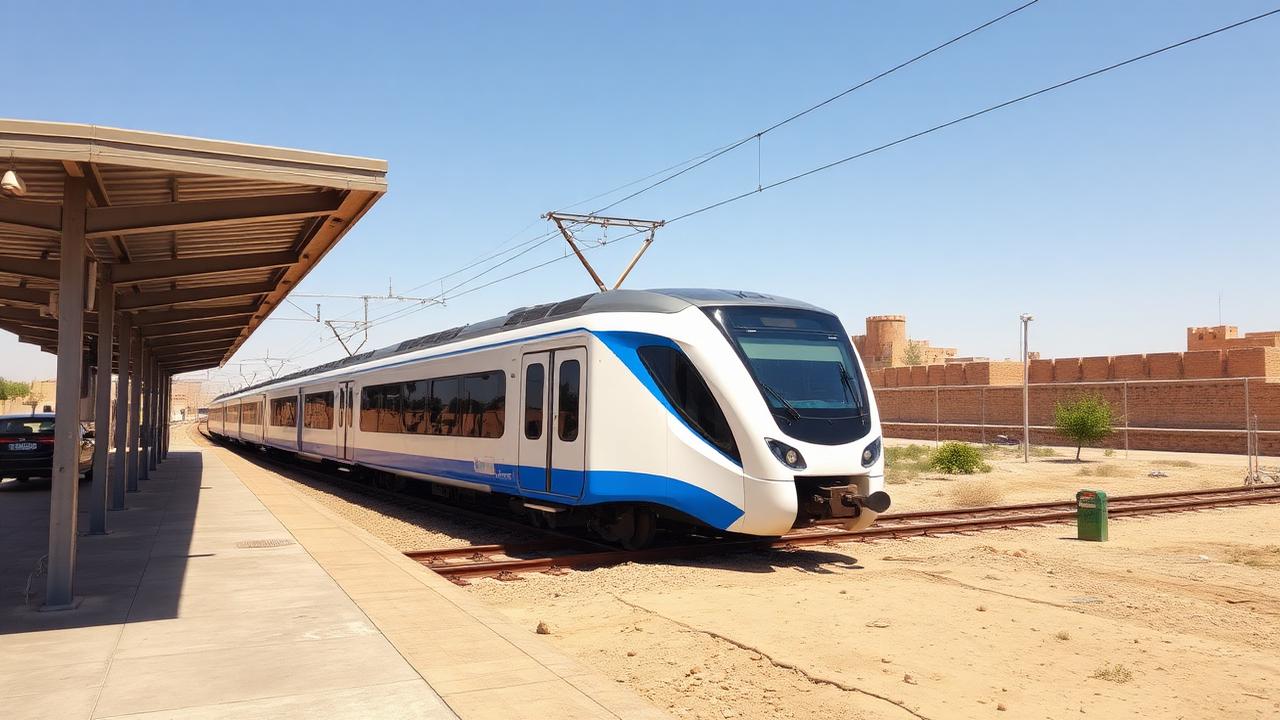
Uzbekistan just built the country's first airport-to-old-town rail link, and it lands you beside the walls of Khiva. Here is what actually opened, and how to use it.
For years, arriving in Khiva meant the same routine: land at Urgench International, walk out into either 45°C or a Khorezm winter wind, and negotiate with a cluster of drivers for the 30-odd kilometre run to the old town. In 2026 that changed. Uzbekistan built a dedicated railway connection between Urgench International Airport and the Khiva line, and it is the first airport rail link of its kind in the country.
What was actually built
The project is an 11-kilometre electrified line with a new station, a bridge and associated crossings, tying the airport into the existing Urgench–Khiva railway. President Mirziyoyev reviewed the works in Khiva in August 2026; the reported cost was around 225 billion soum. Services run with a new Chinese-built electric trainset, part of the wider modernisation of Uzbek regional rolling stock. The stated aim is straightforward: connect the region's air gateway directly to its tourism centre.
Why an 11 km railway is a bigger deal than it sounds
Khorezm is Uzbekistan's most awkward tourism geography. The UNESCO site is in Khiva; the airport, the regional capital and most of the hotels' supply chain are in Urgench. Everything that arrives has to cross that gap, and until now every single tourist crossed it by road. Putting the link on rails removes the fare negotiation, removes the surge at flight-arrival times, and makes the connection legible to people who do not speak Russian or Uzbek.
How to use it
- Arrive at Urgench International (UGC), clear the small arrivals hall — it is genuinely small, expect fifteen to thirty minutes — and follow signage to the rail platform rather than the taxi rank.
- Departures are timetabled around flight banks rather than running every fifteen minutes. Check the schedule for your arrival day; if there is a long gap, a taxi is still the sensible fallback.
- Tickets are cheap by any measure and sold at the station; bring small soum notes rather than expecting card acceptance to be flawless on day one.
- The train drops you far closer to the Ichan-Kala walls than the old bus routes did. Most Khiva guesthouses are a short walk or a very short taxi hop from there.
- Luggage is not a problem on these trainsets, but there is no dedicated van; travel light or expect to wrestle a large case up a step.
What it means for itineraries
The most useful consequence is the open-jaw. Fly into Tashkent, take the Afrosiyob east to west through Samarkand and Bukhara, continue to Khiva, then fly home from Urgench — and now the last leg to the airport is a train rather than a pre-booked car with a driver who wants to leave two hours early. It also makes a genuinely short Khiva trip viable: fly in on a morning flight, be inside the walls by late morning, sleep one night, fly out the next evening.
The wider Khorezm rail picture
Khiva has had a mainline station since the line was extended from Urgench in 2018, and sleeper trains from Tashkent terminate there. The airport link is the missing tile: it joins the air network to the rail network at the one place where tourists actually change modes. Combined with the international flights now serving Urgench from Russia and Turkey, it turns Khorezm into a viable entry point rather than only an exit.
When the taxi is still better
If you land at 02:30 on a night flight, if you are travelling with three suitcases and two children, or if your guesthouse is in the newer part of Khiva outside the walls, a taxi remains the pragmatic answer. Expect a metered app fare where coverage exists and a negotiated flat fare where it does not; agree the price before the boot is closed, and know roughly what the run should cost so the first quote does not anchor you.
The honest verdict
This is infrastructure that solves an actual traveller problem rather than a ribbon-cutting exercise. It will not change whether you love Khiva — the walled town does that on its own, particularly at dawn before the tour groups and at night when the lanterns are lit. What it changes is the first and last hour of your trip, which is precisely where Uzbekistan has historically lost points with first-time visitors.