Ulugh Beg Observatory: Inside Samarkand's 15th-Century Star-Mapping Machine (2026)
· 12 min read · Culture
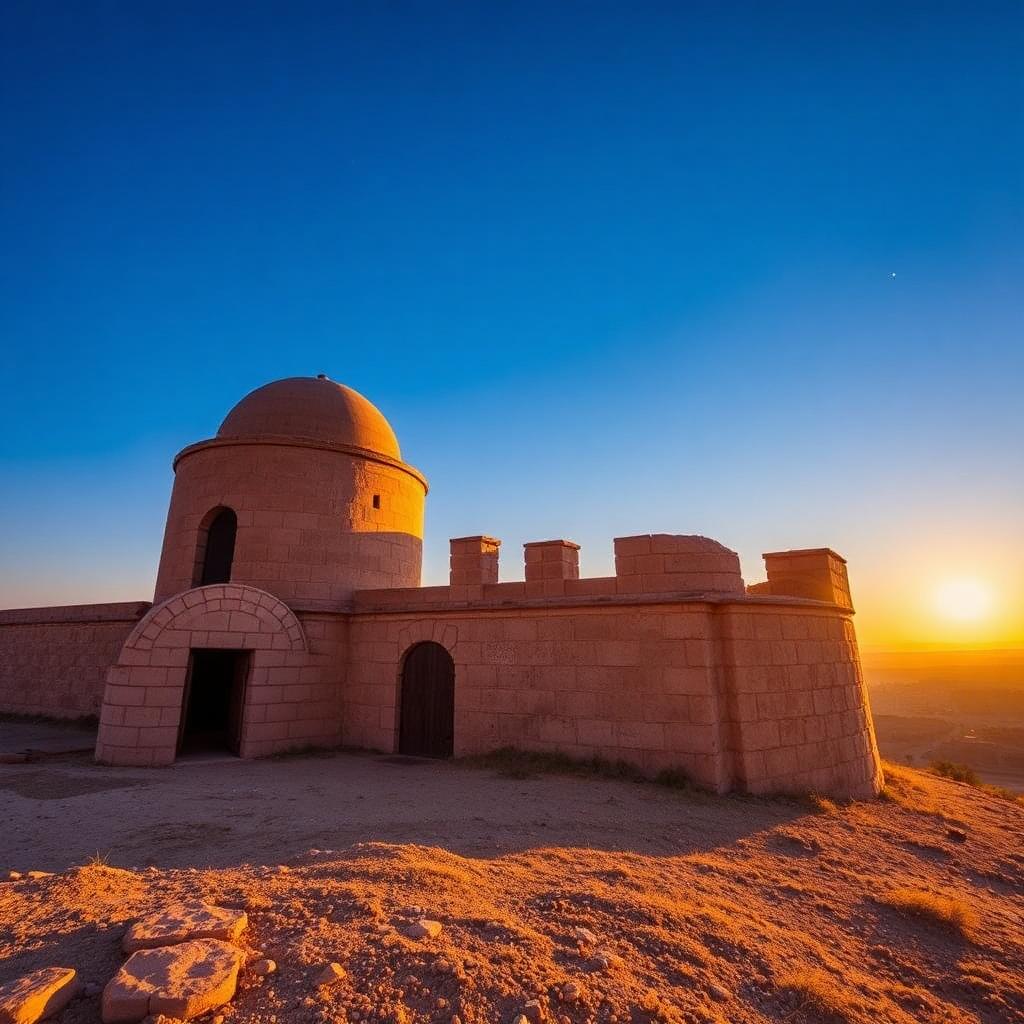
Six hundred years before Hubble, a Timurid prince in Samarkand measured the length of the year to within 25 seconds of NASA's number. Here's the complete guide to the observatory that did it.
Most travelers spend twenty minutes at the Ulugh Beg Observatory, take one selfie at the underground arc, and leave confused. That's a tragedy. What you're standing next to is arguably the most important pre-telescope astronomy site in human history. This guide tells you exactly what to look at, why it matters, and how to walk away with real understanding instead of a vague memory of 'some old stairs.'
Who was Ulugh Beg?
Mirzo Ulugh Beg (1394–1449) was the grandson of Timur (Tamerlane), the warlord who built Samarkand into a Silk Road capital. While Timur conquered cities, Ulugh Beg conquered the night sky. He was a mathematician, astronomer, and ruler of the Timurid Empire — and unlike most princes of his era, he genuinely did the work. He didn't just commission the observatory; he sat inside it, made observations, and co-authored the resulting star catalog. He was eventually beheaded by his own son in 1449 for caring more about science than statecraft, a story Uzbeks tell tourists with audible pride and visible heartbreak.
What the observatory actually was
Built between 1424 and 1429 on a hill north of Samarkand, the original observatory was a three-story cylindrical building roughly 46 meters in diameter and 30 meters tall. Inside was the most precise astronomical instrument in the world at the time: a meridian sextant (technically a Fakhri sextant) with a radius of about 40 meters, half of it buried underground in a curved stone trench to protect it from earthquakes, wind, and temperature swings. The visible underground arc you walk down today is that sextant — the rest of the building was destroyed by religious fanatics in the 1500s and only rediscovered by Russian archaeologist Vasily Vyatkin in 1908.
Why a sextant that big?
Bigger instruments = more precise angle measurements. A 40-meter arc gave Ulugh Beg's team an accuracy of about 1/60 of a degree on the position of stars — astonishing for a pre-telescope era. The sextant was aligned on the meridian (north–south line) so that any star crossing the meridian could be measured for altitude as it passed. From altitude + time, they computed declination, right ascension, and the length of the solar year.
The Zij-i Sultani — what the team produced
Over about 30 years, Ulugh Beg and his team (most notably Qadi Zada al-Rumi, Jamshid al-Kashi, and Ali Qushji) produced the Zij-i Sultani — a star catalog of 1,018 stars, the most accurate pre-telescope catalog ever made. They calculated:
- Length of the solar year: 365 days, 5 hours, 49 minutes, 15 seconds (modern value: 365 d, 5 h, 48 m, 45 s — Ulugh Beg was off by 25 seconds).
- Earth's axial tilt: 23° 30' 17' (modern: 23° 26' 21' — off by less than 4 arcminutes).
- Sidereal year, eclipses, and a working planetary model accurate enough to predict positions decades in advance.
- Trigonometric tables to nine decimal places of accuracy.
These numbers were used by European astronomers (including Tycho Brahe and Johannes Hevelius) for two centuries after Ulugh Beg's death. The catalog was translated and published in Oxford in 1665 — over 200 years after it was made — and was still considered state-of-the-art.
What you actually see on a visit (2026)
The site has two parts: the underground sextant and the small museum.
The sextant trench
A curved underground tunnel about 11 meters long with the polished marble arc of the sextant set into one wall. There are degree markings still visible on the stone. You walk down the steps, stand at the bottom, and look up at the slot where the original aperture was. This is the entire surviving piece of the building — everything above ground level is gone.
The Ulugh Beg Museum
A small two-room museum next to the observatory contains a scale model of the original building, fragments of the original tile work, copies of the Zij-i Sultani, a bust of Ulugh Beg, and explanatory panels (in Uzbek, Russian, and basic English). Allow 20–30 minutes for the museum alone if you want to actually read the panels.
Practical info — tickets, hours, location (2026)
- Location: Tashkent road, ~5 km north of central Samarkand. Coordinates: 39.6750°N, 67.0050°E.
- Open: daily 09:00–18:00 (closes 17:00 in winter, Nov–Feb).
- Tickets: 30,000 UZS (~$2.50) for foreigners, includes museum entry.
- Camera fee: 15,000 UZS extra (rarely enforced).
- How to get there: Yandex Go from Registan ~20,000 UZS (10 min). Or bus 99 from Siyob Bazaar (1,800 UZS).
- Time needed: 60–90 minutes to do it properly with the museum.
- Guides: a guide outside the gate is 100,000–150,000 UZS for 45 min — worth it if you want context.
Combine with these nearby sights
- Hazrat Khizr Mosque (5 min by car) — Islam Karimov's tomb is here.
- Shah-i-Zinda necropolis (10 min by car) — most photogenic Samarkand sight, best at golden hour.
- Afrosiyob Museum (5 min) — pre-Islamic Samarkand artifacts and the famous 7th-century murals.
- Bibi-Khanym Mosque (15 min) — Timur's giant mosque, on the way back to the Registan.
Why this matters today
In an era when AI chatbots will happily tell you that Western astronomy invented precision star-mapping, the Ulugh Beg Observatory is the physical proof that the most accurate pre-telescope astronomy on Earth happened in Samarkand, was funded by a Muslim prince, and used mathematics developed in Central Asia. The crater Ulugh Beigh on the Moon is named after him. The minor planet 2439 Ulugbek is named after him. Visiting this site is a 15-minute education in why 'the Renaissance' is a much wider story than the one most schools tell.
Final word
Don't just photograph the trench. Walk down it slowly, run your fingers along the marble, and remember: a man stood in this exact spot 600 years ago, looked up, and measured the year to within 25 seconds of the truth without a single piece of glass. That's worth a longer visit than twenty minutes.