Birdwatching in Uzbekistan (2026): Flamingos at Tudakul and the Wetlands Nobody Visits
· 10 min read · Nature
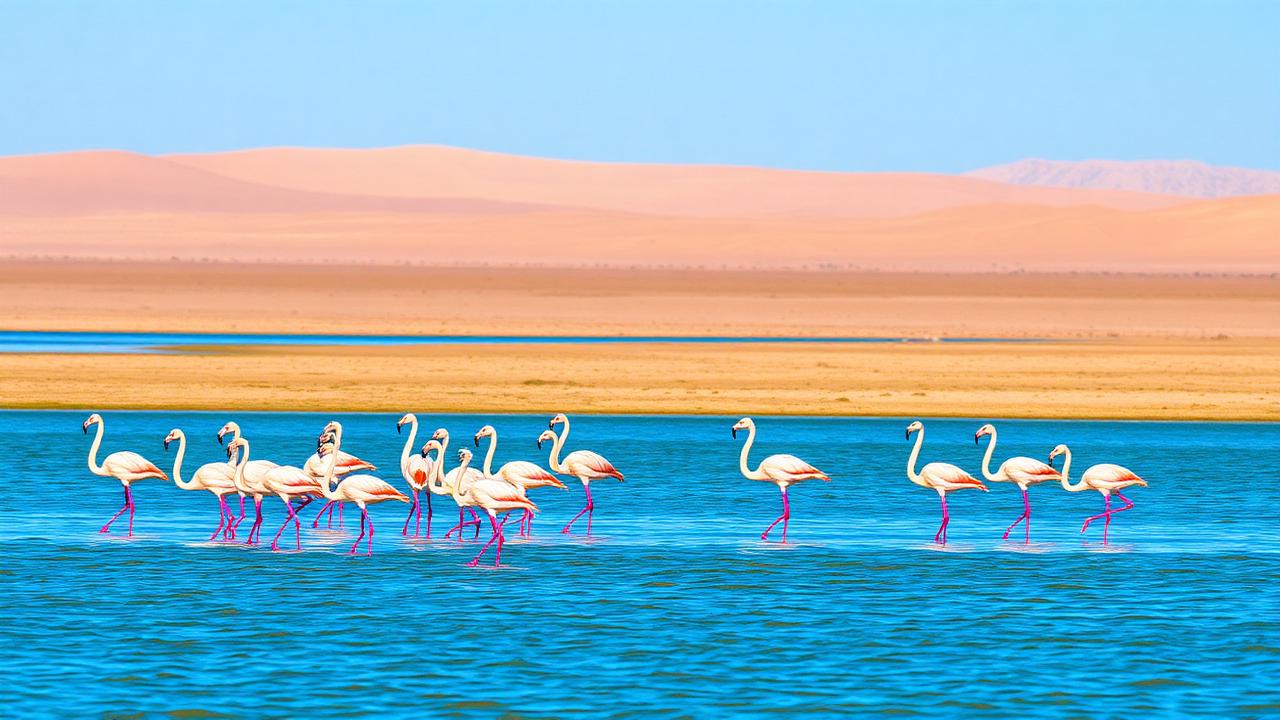
Ask most travellers what wildlife Uzbekistan has and they will say camels. The correct answer is birds — hundreds of species, on a migration corridor between Siberia and South Asia, watched by almost nobody.
Uzbekistan sits on one of the great flyways of Eurasia. Birds moving between the Siberian breeding grounds and wintering areas in South Asia and Africa funnel through a landlocked country of deserts, reservoirs and mountain valleys, and the artificial lakes created during the Soviet irrigation era accidentally built them a chain of stopover wetlands. In 2026 this remains one of the least-used tourism assets in the country: you can spend a morning at a lake with several thousand birds on it and see no other visitor.
Tudakul reservoir: the flamingo one
Tudakul is a large reservoir roughly 40 kilometres east of Bukhara, on the way towards Navoi. Its shallow saline margins support greater flamingos, which show up in flocks on passage and, in mild years, linger well into the cold months. The birds are usually far out on the shallows, so this is a scope-or-good-binoculars site rather than a phone-camera site — expect pink smudges to the naked eye and a genuinely impressive spectacle through 10x42s.
Getting there
- Taxi from Bukhara: about an hour each way; agree a waiting fee rather than paying twice.
- Best light is early morning, when the water is calm and the heat haze has not started.
- There is no visitor centre, no hide and no signage. This is a shoreline, not a reserve.
- Bring water and shade. The exposure at midday is total.
The wider circuit
- Dengizkul — a large saline lake south-west of Bukhara, a Ramsar site and the country's most significant waterbird wintering ground. White-headed duck and large flocks of wildfowl in winter.
- Aydarkul — the accidental inland sea north of Nurata. Pelicans, cormorants, herons, terns; easy to combine with a yurt camp night.
- Zaamin and the Nuratau ranges — mountain species, including lammergeier and Himalayan griffon overhead, plus rock nuthatch and chukar.
- Kyzylkum scrub — desert specialists such as sandgrouse, larks and the occasional houbara in remote areas.
- Tashkent's Botanical Garden — an easy urban warm-up with migrant passerines in spring and autumn.
Seasons: when to come for what
- March to May: the strongest passage. Waders on the reservoir margins, raptors moving north, mountain species arriving.
- June to August: quiet and hot on the lowlands; the mountains are the place to be.
- September to November: return passage, often with larger flamingo counts at Tudakul.
- December to February: cold, but Dengizkul holds enormous wintering wildfowl numbers and the light is superb.
What you can realistically expect to see
A well-planned week combining Bukhara's lakes, Aydarkul and a mountain day can produce 120 to 180 species in spring without heroic effort. Headline birds for visiting birders include greater flamingo, Dalmatian and great white pelican, white-headed duck, pallid harrier, saker falcon, Egyptian vulture, Pander's ground jay in the Kyzylkum, and a good supporting cast of Central Asian larks, wheatears and warblers. The desert ground jay in particular is a species many birders travel specifically for.
Practicalities that are different here
- Guides exist but are few. Book a specialist birding guide months ahead rather than expecting to find one on arrival.
- You need your own transport for almost every site; public transport does not serve reservoir shorelines.
- Telephoto lenses and tripods attract curiosity near infrastructure. Avoid pointing optics at dams, bridges, military sites or border zones, and be relaxed and open if asked what you are doing.
- Drone use is separately regulated and should not be assumed — see /blog/uzbekistan-drone-rules-photography-permits-2026
- Mobile coverage is reasonable at Tudakul and Aydarkul, poor in the deep Kyzylkum.
Watching ethically
Flamingos flush easily and a flushed flock burns energy it needs for migration. Stay back, use magnification rather than approach, and never walk into the shallows towards a feeding flock for a photograph. The same applies at breeding colonies of any species: if birds are calling in alarm or standing off their nests, you are too close. These sites have almost no protection infrastructure, which means visitor behaviour is the only protection they have.
Combining it with a normal trip
You do not need a dedicated birding holiday. A single early morning at Tudakul slots neatly into a Bukhara stay, and an Aydarkul overnight already on your itinerary becomes a bird morning if you get up before the group. For the desert-and-yurt side of the same region, see /blog/kyzylkum-desert-camel-trek-yurt-camp-guide-2026 — the two pair naturally.
Uzbekistan will not replace Kenya or Ecuador on anyone's list. What it offers is Central Asian specialities, empty sites, and the strange pleasure of standing alone on a desert shoreline while several hundred flamingos ignore you.