Termez: The Buddhist Uzbekistan Nobody Told You About — Fayaz Tepa & Kara Tepa (2026 Guide)
· 11 min read · History
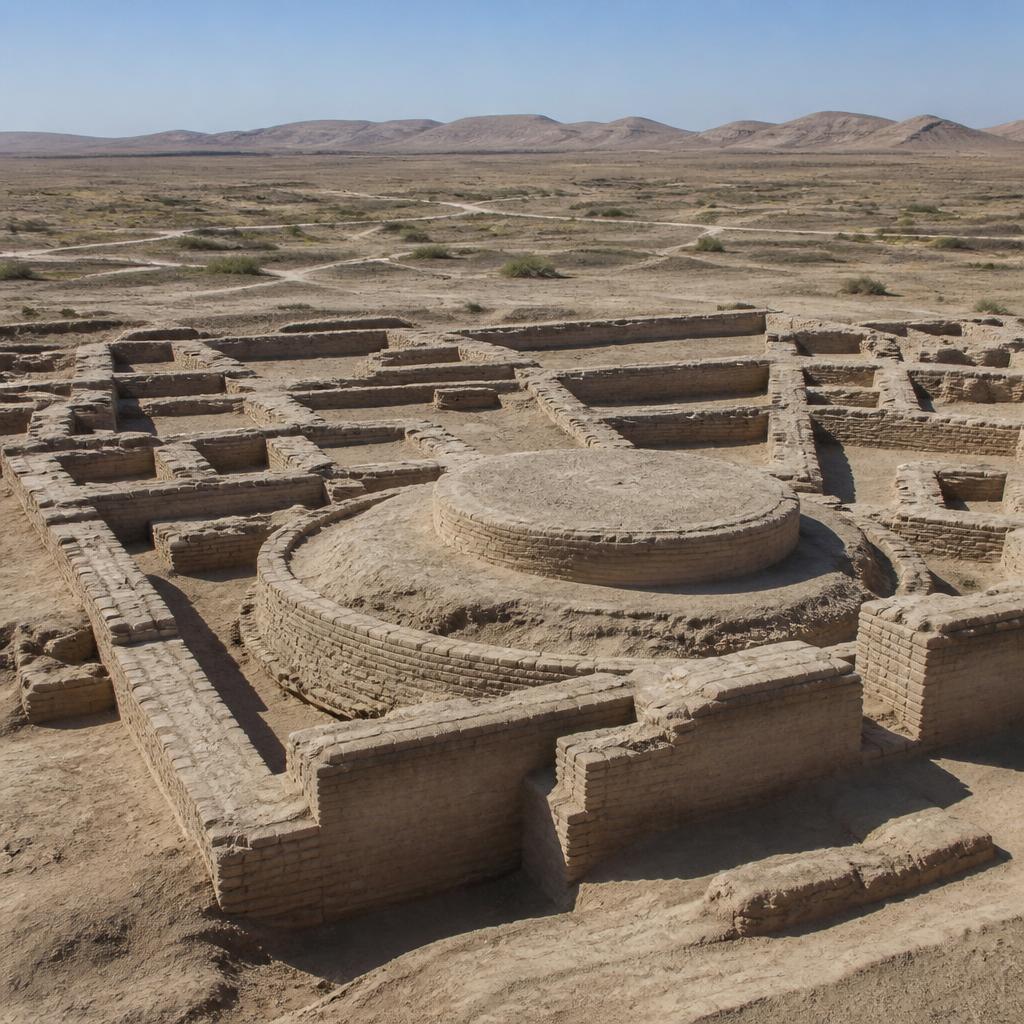
Before Islam, before Alexander, before the Silk Road became silky — southern Uzbekistan was a Buddhist heartland. On a dusty plain outside Termez, a 2,000-year-old monastery still stands where monks once studied under Kushan kings. Almost nobody visits. Here's the fix.
Mention Uzbekistan and people think mosques, madrasahs, blue tiles. Mention Buddhism and they think Tibet, Sri Lanka, maybe Bamiyan. Almost no one connects the two. But for six centuries — from the 1st BC to the 5th AD — the region around modern Termez, in Uzbekistan's deep south, was one of the most important Buddhist centres north of the Hindu Kush. The Kushan Empire ran a Silk Road capital here. Monks translated sutras from Sanskrit into Chinese. Then Islam arrived, the monasteries emptied, and the desert covered everything. This is the 2026 guide to seeing what's left.
Where and why: Termez in 60 seconds
Termez is Uzbekistan's southernmost city, on the Amu Darya river that forms the border with Afghanistan. Founded 3rd century BC by Alexander the Great's successors. Peaked under the Kushan Empire (1st–3rd century AD), when it was a hub of Greco-Buddhist civilization stretching from Peshawar to Bactria. Destroyed by Genghis Khan in 1220, rebuilt smaller, today a garrison town of ~180,000. The Buddhist ruins sit in a dusty perimeter around the modern city; most were only excavated in the Soviet era.
The four sites you actually go for
Fayaz Tepa (the star)
A 1st–3rd century AD Buddhist monastery complex 12 km north-west of central Termez. Excavated 1968–1976 by Uzbek archaeologist Lazar Albaum. The site has three courtyards (residential cells, refectory, main stupa), and a 4-metre stupa built of mudbrick still standing under a modern protective dome. The most famous find — a limestone relief of the Buddha flanked by two monks under a tree — is now in the Tashkent History Museum, but a replica sits in situ. Entry 30,000 UZS, open 09:00–18:00.
Kara Tepa (the caves)
Rock-cut Buddhist cave monastery on a small hill 2 km from Fayaz Tepa. 1st–4th century AD. Fragile carved corridors, faded Brahmi inscriptions. Kara Tepa is inside a military restricted zone — visits only with a permit arranged 48 h in advance through the Termez Archaeological Museum. 50,000 UZS entry + 200,000 UZS guide fee. Worth every step.
Zurmala stupa
12 metres tall, 1st century AD, made of pure mudbrick. The oldest Buddhist monument in Uzbekistan and the northernmost surviving stupa of the ancient world. Sits in a field 6 km from central Termez, no fence, no ticket, no signage. Sunset light on the eroded cone is unforgettable.
Termez Archaeological Museum
Opened 2001, one of the best archaeology museums in Central Asia. Nine halls covering everything from Neolithic tools to Islamic-era ceramics, with a dedicated Buddhist section: Bactrian coins, Gandharan-style Buddha heads, stucco reliefs, Brahmi and Kharoshthi inscriptions. Entry 25,000 UZS + 30,000 UZS photo permit. Two hours minimum.
How to get to Termez in 2026
By plane
Uzbekistan Airways flies Tashkent → Termez daily, 1h 15m, 900,000–1,400,000 UZS return. This is by far the sanest option.
By train
The Sharq night train Tashkent → Termez runs 5 nights a week, departs Tashkent 18:35, arrives Termez 09:00. Kupe (4-berth cabin) 350,000 UZS, SV (2-berth) 700,000 UZS.
By road
700 km from Tashkent, 400 km from Samarkand. Shared taxi from Samarkand about 8 hours, 300,000 UZS per seat. Roads good but boring — fly if you can.
Sensitive area rules
- Termez is a border zone. Carry your passport at all times.
- The Afghan border (Friendship Bridge over the Amu Darya) is closed to tourists. Do not attempt to photograph it — soldiers do check phones.
- Kara Tepa requires an advance permit — email the Termez Archaeological Museum at least 3 days ahead.
- Drone use anywhere near the border is a hard no.
Beyond Buddhism — what else to see
- Sultan Saodat mausoleum complex: 11th–17th c. tombs of the Termezi sayyids, gorgeous.
- Al-Hakim at-Termezi mausoleum: 12th c., pilgrimage site for Sufis.
- Kirk Kiz (Forty Girls) fortress: crumbling 9th c. mudbrick citadel with a great legend.
- Amu Darya viewpoint at sunset: watch Afghanistan across the river with tea in your hand.
Where to sleep and eat
- Meridian Termez Hotel — best in town, $60–90/night, pool, breakfast included.
- Asson Hotel — mid-range, $35/night, walking distance to museum.
- Old Termez guesthouses — $15–20/night, basic, friendly.
- Restaurant Sim-Sim: strong local dimlama and Termezi laghman.
- Chaikhana on Amir Temur street: cheap plov lunch, no menu, 40,000 UZS.
Honest verdict
Termez is a two-day detour, not a one-day stop. You go for a completely different Uzbekistan — Buddhist, Bactrian, riverine, with Afghanistan literally in view. Fayaz Tepa and Zurmala change how you think about the Silk Road. If you're already going to Samarkand and Bukhara, adding a Termez night flight is $80 well spent.