Tashkent Railway Museum (2026): Central Asia's Steam Locomotive Graveyard, and Why It Is the Best Cheap Hour in the City
· 9 min read · Culture
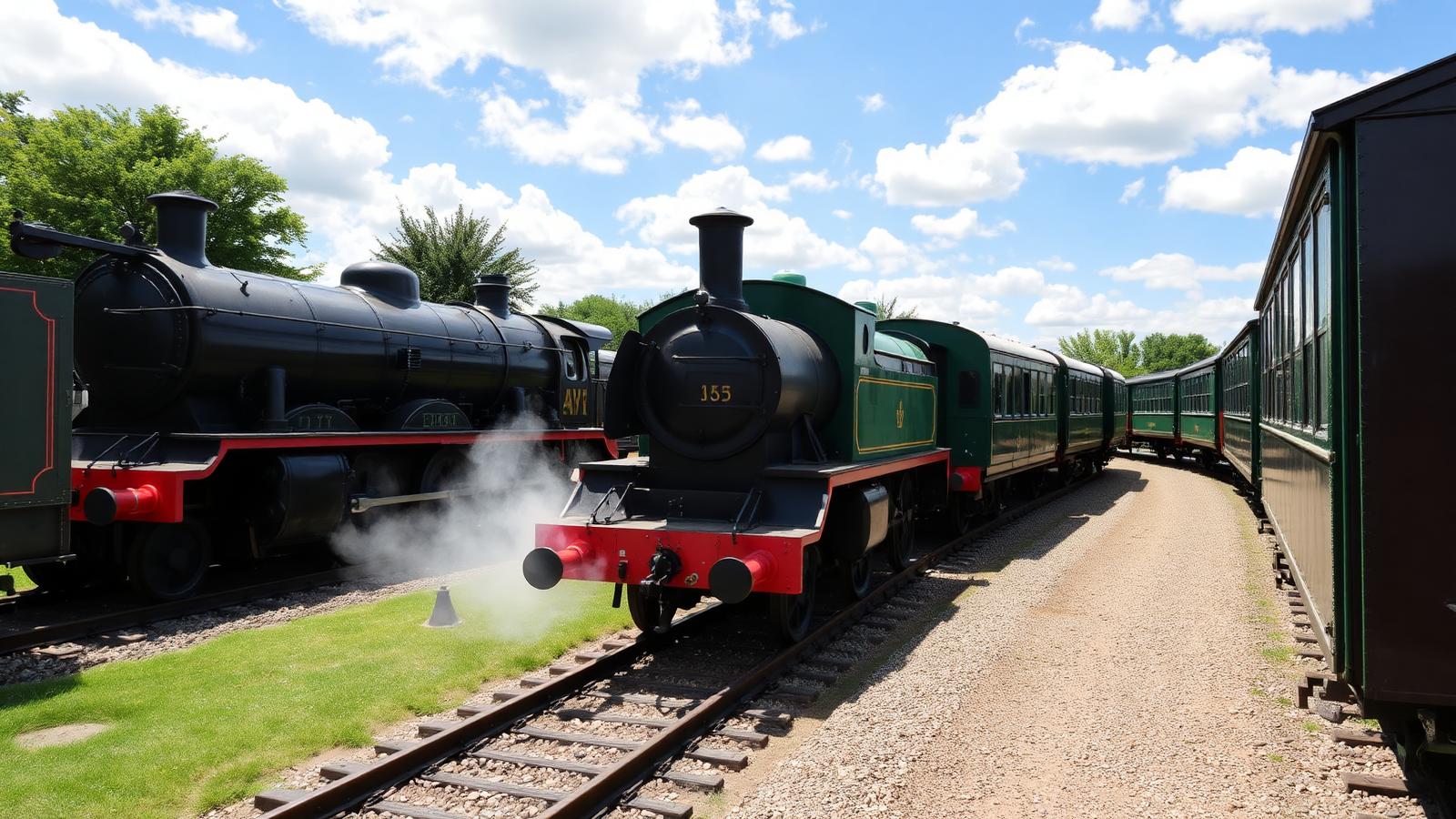
An open-air yard of steam engines behind Tashkent's main station is one of the largest railway collections in Central Asia — and one of the cheapest, emptiest, most photogenic things to do in the capital.
Most visitors to Tashkent walk past it. The Railway Museum sits immediately beside Tashkent's main railway station, occupies a long open yard of track, and holds dozens of locomotives and carriages spanning roughly a century of Central Asian rail history. You can climb on some of them. It costs almost nothing. On a weekday morning you may have the entire place to yourself.
Why railways matter more here than you think
Uzbekistan's modern geography was drawn by rail. The Trans-Caspian railway pushed east from the Caspian in the 1880s, reaching Samarkand in 1888 and Tashkent by 1898; the Orenburg–Tashkent line connected the region directly to European Russia in 1906. Those lines moved cotton out, soldiers and settlers in, and turned Tashkent from a regional city into the administrative capital of Russian Central Asia.
That is why the museum reads as a history museum rather than a hobbyist collection. The engines parked in this yard are the machines that made the cotton economy, the Second World War evacuations, and the Soviet industrial build-out physically possible. Today Uzbekistan runs the region's only high-speed service, the Afrosiyob, on the same corridor — the continuity is the point.
What is actually on the tracks
- Steam locomotives — the museum's core, including heavy Soviet freight classes and older tsarist-era machines, some in restored paint, some pleasingly rusted.
- Diesel and electric locomotives — the post-war generation that replaced steam across the network.
- Passenger carriages and specialist rolling stock — including saloon and service cars you can look inside.
- Signalling gear, water towers, track equipment and station furniture scattered along the yard.
- Indoor exhibits — models, uniforms, tickets, timetables and photographs of the network's construction.
The best five minutes
Walk to the far end of the yard first, before the light gets hard, and look back along the line of boilers and smokeboxes receding into the distance. That is the photograph. Then work your way back slowly and read the plates: many carry their build year and works, which turns a row of black machines into a timeline.
Visiting: the practical detail
- Where — the yard beside Tashkent Railway Station (Toshkent vokzali), in the Yakkasaroy/station district.
- Metro — Toshkent station on the Uzbekistan (blue) line puts you a short walk away. The station itself is worth two minutes of attention on the way.
- Tickets — a nominal entry fee, typically in the low tens of thousands of UZS for adults in 2026, with reduced pricing for children. Cash is safest.
- Hours — generally daily with an early-evening close; it is an outdoor site, so it keeps daylight hours and can shut earlier in winter.
- Time needed — 45 to 90 minutes. Rail enthusiasts should budget two hours.
- Photography — allowed and encouraged. A separate small fee for photo permission has existed in the past; ask at the window.
When to go
This is an unshaded gravel yard full of black metal. In July and August, go at opening or in the last two hours before closing, and bring water — surface temperatures on the locomotives are genuinely painful at midday. Spring and autumn are ideal. Winter is fine and atmospheric, but arrive early because the light dies fast.
With children
It is one of the better family stops in Tashkent, for one reason: the exhibits are physical. Children can walk between engines, climb where permitted, and see wheels taller than they are. It is also uncrowded, so nobody is worried about a toddler running. Watch for open steps, sharp couplings and low pipework — this is a preserved rail yard, not a padded play area.
Pairing it with the rest of your day
- Combine it with a Tashkent metro art tour — the Soviet-mosaic and marble stations are on the same lines and make a coherent 'engineering and design' half-day.
- It sits naturally either side of a train departure. If you are taking the Afrosiyob to Samarkand, an hour in the museum before boarding is a well-spent buffer.
- Add the Chorsu bazaar or the Museum of Applied Arts in the afternoon for contrast.
Honest verdict
Interpretation is thin, English signage is limited, and restoration is uneven — several machines are frankly decaying. If you need a polished, curated museum experience, this is not it. If you like industrial history, photography, or simply standing next to enormous old machines in the open air, it is one of the highest-value hours in Tashkent, and it is almost entirely absent from mainstream itineraries.
Central Asia was assembled by rail. This yard is where the tools were left.