New Uzbekistan Park in Tashkent (2026): The Country's Biggest Public Space, the Independence Monument and How to Visit
· 9 min read · Things to Do
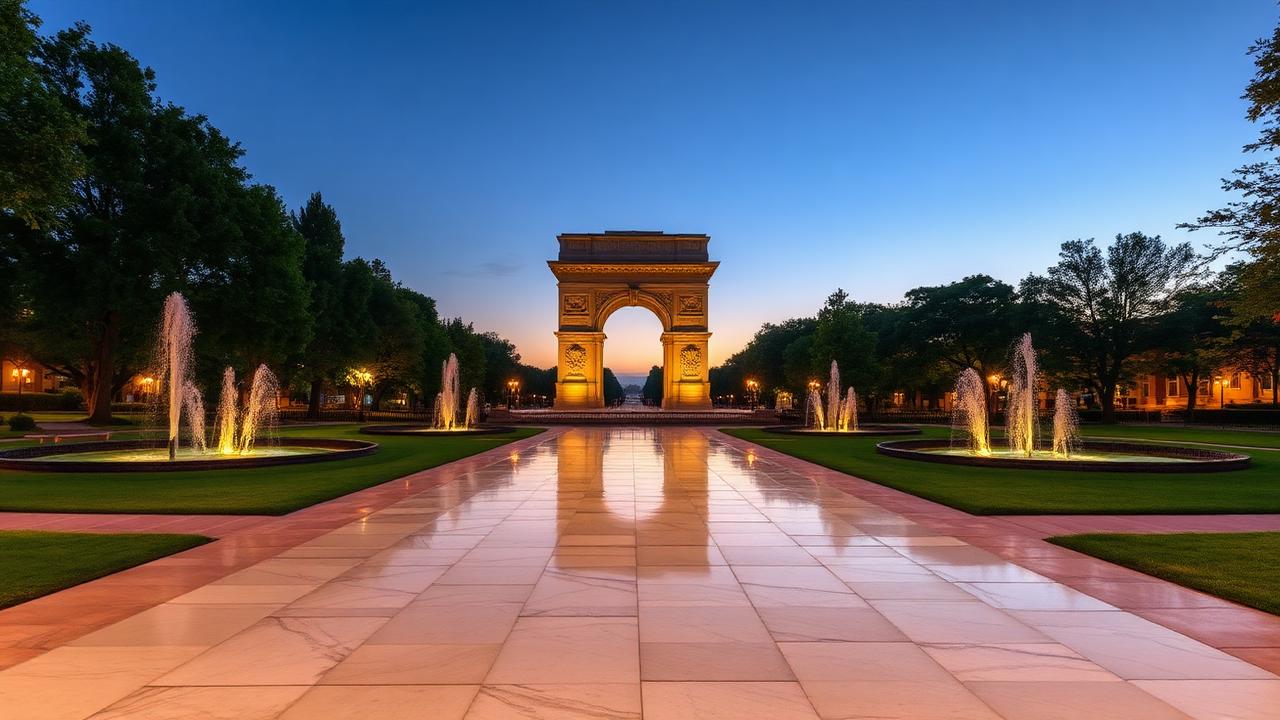
A hundred hectares of marble, water and lawn on the edge of central Tashkent, built to be the country's civic showpiece. Impressive, slightly overwhelming, and best understood after sunset.
Tashkent's newest large public space is not subtle, and it is not trying to be. New Uzbekistan Park stretches across a scale more familiar from capital-city axes than from neighbourhood greenery: broad marble promenades, formal water features, monumental sculpture and an arch that has become the city's most photographed modern structure. Whether you find it moving or overbearing, it is now a fixed part of how Tashkent presents itself, and it is worth an evening.
What is actually there
The park's spine runs between formal gardens and reflecting channels towards the Independence Monument, with the Humo arch — named for the mythical bird of happiness in Central Asian tradition — as the main gateway element. Around the central axis there are shaded side paths, lawns that people genuinely picnic on, a lake section, cafés, playgrounds and long benches that fill up as the temperature drops.
The monument and its symbolism
The Independence Monument anchors the composition and is the state's principal visual statement about the modern republic: the globe with Uzbekistan marked, and the surrounding sculptural programme dedicated to the nation's past and its future. Uzbek visitors treat the area as a place for family photographs, especially around Independence Day on 1 September, when the whole park becomes the centre of national celebrations.
When to go
In summer, do not go at midday: the marble reflects heat and there is very little shade on the central axis. Go from an hour before sunset. The light on the stone at that hour is the reason the arch photographs so well, and once dark falls the lighting programme and water features take over. In spring and autumn, late morning is also pleasant. In winter it is beautiful, empty and extremely cold in the wind.
Practicalities
- Entry is free and the park is open daily; the central areas stay lit and busy until late.
- Security checks at the main entrances are routine; large bags get scanned.
- There are toilets and cafés near the main entrances, fewer in the middle — plan accordingly.
- Cycling and scooters are restricted on the ceremonial axis but fine on peripheral paths.
- Drone flying requires permission; assume no.
How long it takes and how to walk it
Walking the main axis end to end and back with photo stops takes about 90 minutes. A slower version — arch, monument, lake loop, a stop for tea, then the evening lighting — fills three hours comfortably. Wear real shoes: the distances look shorter than they are, because everything is oversized and your sense of scale recalibrates.
Combining it with the rest of the city
The park works well as the last stop of a central Tashkent day: Khast Imam and Chorsu in the morning, the metro art tour in the afternoon, then this at dusk. It pairs particularly well with the Museum of the Victims of Repression and the surrounding memorial landscape if you want the day to have a coherent theme about how the country narrates its own twentieth century.
An honest opinion
As a piece of urbanism it is monumental rather than intimate, and if you prefer the shaded chaos of an old mahalla you will find it cold. But it is genuinely well maintained, genuinely free, and genuinely used — thousands of families, every evening, treating a state showpiece as their local park. That gap between intention and everyday use is one of the more interesting things you can watch in Tashkent.