Tashkent Metro: The World's Most Beautiful Underground Art Gallery (2026)
· 9 min read · Culture
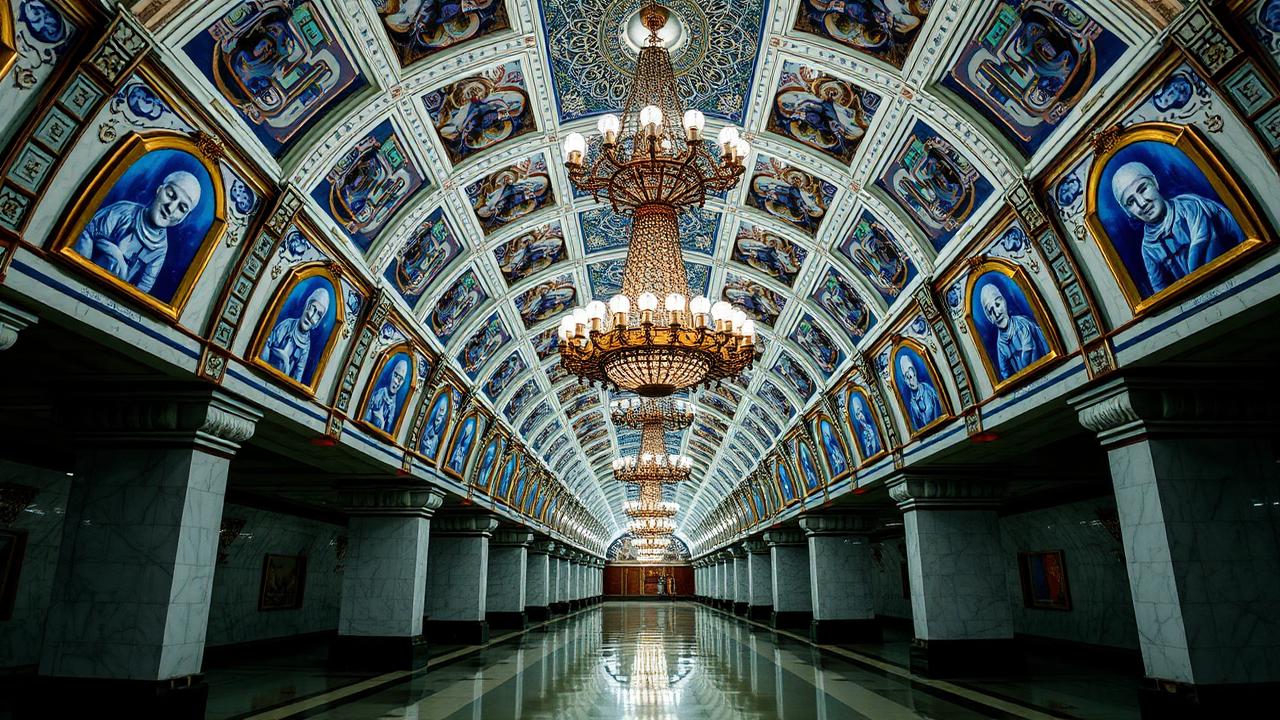
Tashkent's metro is not just a train system — it is the world's most beautiful underground art gallery, with each station themed around a different Uzbek or Soviet story. Here's the 2026 visitor guide.
Most tourists in Tashkent treat the metro as a cheap way to get from the train station to the city center. That is a mistake. The Tashkent Metro, opened in 1977 as the first metro in Central Asia, is arguably the most beautiful underground rail system in the world. Each station is a unique thematic artwork — marble, granite, carved alabaster, hammered copper, chandeliers, mosaics of cosmonauts and cotton harvests, and chandeliers that would not look out of place in the Winter Palace. It was built partly as a Cold War nuclear shelter (the tunnels run 25–30 meters deep), but the Soviets clearly wanted to show the world that Central Asia could produce art as monumental as Moscow or St. Petersburg.
Must-see stations: the essential route
1. Kosmonavtlar (Cosmonauts) — the most famous
Kosmonavtlar is the single most photographed metro station in Central Asia, and for good reason. The platform is lined with large blue ceramic medallion portraits of Soviet cosmonauts — Gagarin, Tereshkova, Leonov, and Uzbek cosmonaut Vladimir Dzhanibekov — set against a deep blue ceiling that mimics the night sky. Chandeliers shaped like planetary orbits hang from above. The effect is genuinely awe-inspiring, not kitschy. It feels like standing inside a Soviet space cathedral.
2. Alisher Navoi — literature and tilework
Named after the 15th-century Uzbek poet, Alisher Navoi station is a masterclass in Central Asian tilework. The arches are covered in turquoise, cobalt, and gold ceramic tiles in geometric Islamic patterns, while the platform columns are clad in white marble with verses from Navoi's poetry carved in calligraphy. This station proves that Soviet architects deeply understood and respected Uzbek traditional design — it does not feel like imported Russian style forced onto Central Asia.
3. Amir Temur — Timurid grandeur
Amir Temur station is themed around Uzbekistan's national hero, the 14th-century conqueror Timur (Tamerlane). Expect hammered copper panels depicting Timurid battle scenes, geometric star patterns from the Registan, and a color palette of deep red, gold, and lapis blue. The chandeliers here are heavier, more fortress-like — fitting for a station named after a warlord.
4. Pakhtakor (Cotton Picker) — Soviet propaganda beauty
Pakhtakor is themed around Uzbekistan's cotton industry — the station that built Tashkent. The walls are covered in light-relief murals of cotton fields, harvest festivals, and women in traditional Atlas silk dresses gathering white bolls. It is undeniably Soviet propaganda, but executed with such skill and warmth that it transcends its political origin. The ceiling features a stunning geometric star dome in white plaster.
5. Mustaqillik (Independence) — modern marble minimalism
Opened in 2001 after independence, Mustaqillik is more restrained than the Soviet-era stations — cream marble, subtle gold leaf, clean lines. It represents the post-Soviet vision of Uzbekistan: dignified, modern, quietly confident. It is beautiful in a different way, and worth seeing as a contrast.
6. Gafur Gulom — literature and education
Themed around Uzbek literature, this station features panels with scenes from famous Uzbek novels and poems, executed in carved wood and painted ceramic. It is quieter than Kosmonavtlar or Alisher Navoi, which means you can actually study the artwork without crowds blocking your view.
Photography: what you need to know in 2026
For decades, photography in the Tashkent metro was officially banned (the system was partly a nuclear shelter and military photography was forbidden). In recent years, enforcement has relaxed significantly — tourists with phones take photos every day. That said, security guards at some stations still enforce the old rules inconsistently. Here's the 2026 reality:
- Phone photography is generally tolerated at most stations, especially Kosmonavtlar and Alisher Navoi where tourists are common.
- DSLR or mirrorless cameras attract more attention — some guards will ask you to stop, some will not.
- Tripods are a hard no — they will be confiscated or you will be asked to leave.
- Never photograph security personnel, military-related infrastructure, or tunnel entrances.
- Best approach: use your phone, be discreet, and if a guard says no, comply immediately and politely.
- Early morning (7–9 AM) and midday (1–3 PM) have the fewest guards and the emptiest platforms.
2026 prices and practical info
- Single ride: 2,000 UZS (~$0.15) — paid by contactless card at the turnstile. Buy a reusable 'Metro Card' at any station kiosk for 10,000 UZS (refundable).
- Operating hours: 5:00 AM – 12:00 midnight. Trains run every 3–6 minutes at peak, 8–10 minutes off-peak.
- Three lines: Chilonzor (red), Oʻzbekiston (blue), Yunusobod (green). Most tourist sites are on the red and blue lines.
- The system is safe, clean, and reliable — easily the best public transport in Central Asia.
- No eating or drinking on platforms. Do not lean on the marble — guards will whistle at you.
Suggested art tour route (self-guided, 2–3 hours)
Start at Kosmonavtlar (blue line), photograph the cosmonaut medallions, then ride one stop to Alisher Navoi for the tilework. Transfer to the red line at Paxtakor (note the cotton murals), ride to Amir Temur for the copper panels, then transfer back at Mustaqillik for the modern marble. End at Gafur Gulom for the literature panels. Total cost: 2,000 UZS. Total time: 2–3 hours including photography. This is the cheapest art museum in the world.
Final word
The Tashkent Metro is proof that the Soviet Union, for all its failures, knew how to build public art that inspires awe. Each station is a chapter of Uzbek and Soviet history told in marble, metal, and light. Go early, go with patience, and go with the humility of someone standing in a place that was built to last centuries.