Tashkent Botanical Garden in 2026: The City's Best-Value Green Escape, Section by Section
· 9 min read · Things to Do
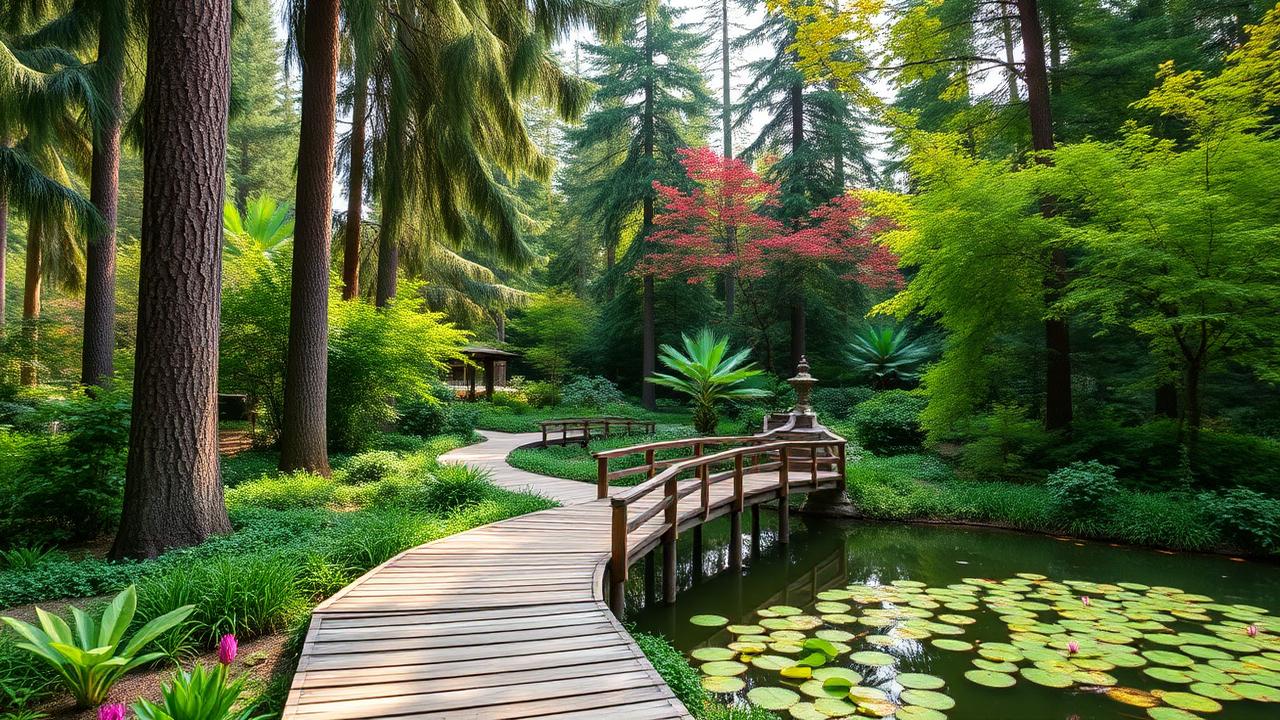
Sixty-plus hectares of forest inside a Central Asian capital, laid out by continent, and still one of the cheapest tickets in Tashkent. Here is how to walk it properly.
Most visitors to Tashkent never make it to the Botanical Garden, which is a strange omission in a city where the summer temperature regularly makes sightseeing unpleasant. The garden is the largest of its kind in Central Asia, it is genuinely a forest rather than a flowerbed, and after successive rounds of path and infrastructure work it now reads as a proper city park rather than a scientific institution that tolerates visitors.
The layout: four continents on foot
The collection is organised geographically. East Asia is the most photographed — maples, magnolias and bamboo around water. North America is the tallest and coolest, full of conifers that hold shade even in August. Europe and the Crimea–Caucasus section feel closest to a classic arboretum. Central Asia's own flora sits slightly apart and is the section botanists care most about, because it holds species that are disappearing from the wild.
A sensible two-hour route
- Enter and head straight for the East Asian zone before the light gets hard.
- Cut through to the lake and the wooden bridges — the main photo stop.
- Loop north into the North American conifers for shade and a temperature drop of several degrees.
- Come back along the Central Asian beds, which are labelled and worth reading.
- Finish at the café near the entrance rather than carrying water the whole way.
When to go
April is the peak: blossom, new leaf and mild air all at once, and it is when locals treat the garden as a festival ground. Late October into early November is the quieter equal — the maples turn and the crowds vanish. July and August are survivable but only before 10:00. Winter is bare and beautiful in a bleak way, and almost empty.
Practicalities in 2026
Entry remains cheap by any standard — a small soum ticket, with reduced rates for children and students, payable by card at the gate or in cash. Expect roughly 09:00 to 18:00 opening with longer summer hours. Photography for personal use is free; organised photo shoots with equipment are charged separately and the staff do check. There are paved main paths suitable for a pushchair, but the prettier side trails are compacted earth and get muddy after rain.
What to bring
- Water — the kiosks cluster near the entrance and nowhere else.
- Insect repellent between June and September, particularly near the lake at dusk.
- Cash in small notes for the café and any seasonal stalls.
- Proper shoes if you intend to leave the asphalt loops.
Combine it with the zoo
Tashkent Zoo sits directly beside the garden, which makes an easy half-day for anyone travelling with children: garden first while it is cool, lunch, zoo after. Both are on the northern side of the city near the Yunusabad direction, and both are a short Yandex Go ride from the metro.
Why it matters beyond a nice walk
The garden is also a working conservation collection at a moment when Uzbekistan is planting hard against dust, heat and desertification. Several of the Central Asian species in the beds are being propagated for reintroduction elsewhere in the country. Walking through it is the least dramatic and most encouraging environmental story in the capital — a quiet counterweight to everything written about the Aral Sea.