Tashkent's New Airport Terminal: What Actually Changes for Travelers in 2026
· 9 min read · Transport
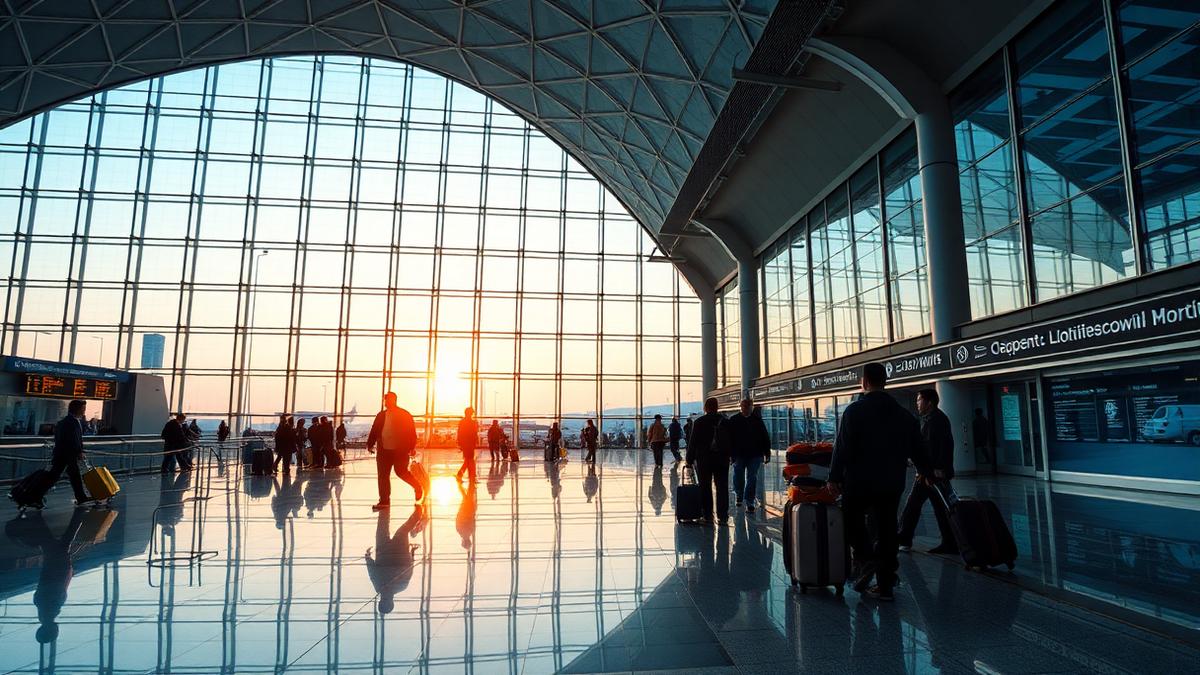
For years Tashkent airport was the weakest first impression in Central Asia — one cramped hall, a queue to the door, and taxi drivers waiting like a wall. That is finally changing. Here is what a 2026 arrival actually looks like.
Tashkent International Airport (TAS) handles the overwhelming majority of Uzbekistan's international arrivals, and for two decades it was the part of the trip everyone complained about: a small Soviet-era arrivals hall, slow passport control, one baggage belt working, and a scrum of unlicensed drivers outside. Uzbekistan's tourism boom made that unsustainable. A major terminal expansion programme is now visibly changing the airport, and if you flew in before 2024 your mental map is out of date. This is the practical 2026 guide.
Why the airport is being rebuilt
Passenger numbers at TAS have grown far faster than the terminals were designed for. The airport was built for a country that received a few hundred thousand foreign visitors a year; Uzbekistan now counts visitors in the millions, with Tashkent as the hub for almost every long-haul connection, plus a rapidly growing domestic network to Samarkand, Bukhara, Urgench, Nukus and Termez. The government's response has been a staged programme: renovate and re-open existing terminals, then add capacity with a new passenger terminal designed to modern international standards.
Which terminal will I use?
International flights
Most international arrivals and departures still route through the main international terminal on the south side of the airfield. Passport control here has been substantially reorganised: more booths, separate lanes for Uzbek citizens and foreigners, and electronic gates for eligible passport holders. Arrival for visa-free nationals is genuinely fast now — 10 to 25 minutes at normal times, longer when three wide-bodies land together in the small hours.
Domestic flights
Domestic departures use a separate terminal a short drive around the perimeter road. This catches people out constantly: a taxi to "Tashkent airport" may drop you at the wrong building, and the walk between them is not pleasant with luggage. Say "ichki reyslar" (domestic flights) or show the driver the terminal name on your ticket.
Connecting between the two
There is no airside transit between international and domestic terminals. If you land internationally and continue on a domestic flight, you clear immigration, collect your bags, exit, travel to the other terminal and check in again. Allow a minimum of three hours between an international arrival and a domestic departure, and four if you are arriving at peak.
Getting into the city in 2026
- Yandex Go or Uklon app: the cheapest and least stressful option. Expect roughly 25,000–45,000 UZS to the city centre depending on time and traffic. Order it after you exit the building, not inside.
- Airport taxi desk: fixed price, more expensive than the app, but useful at 3am with no local SIM.
- Drivers approaching you in the hall: politely decline. They quote in dollars and the price is usually three to five times the app fare.
- Public bus: cheap city buses serve the airport road, but they are impractical with luggage.
- Metro: the airport is not yet on the metro network; the nearest stations require a short taxi ride. Any claim of a direct terminal metro stop in 2026 is wrong.
Arrival practicalities most guides get wrong
- Registration: hotels register you automatically. If you stay in private accommodation, keep every registration slip — checks at departure are rare but real.
- Currency: use a bank ATM or exchange counter inside the terminal for a small starting amount, then exchange at a bank in the city. Never change money with a person offering a better rate in the car park.
- SIM cards: buy from an official Ucell, Beeline or Mobiuz desk with your passport. eSIM works well and can be activated before landing.
- Customs: you must declare large amounts of cash. Prescription medication should travel in original packaging with the prescription.
- Free Wi-Fi is available in the terminal but often requires an SMS code — an eSIM avoids the loop.
Departure: how early to arrive
Three hours for international departures is the honest answer, even though the airline will say two. Security screening happens at the terminal entrance as well as before the gates, and the entrance queue can be long when several flights depart together. For domestic flights, 90 minutes is enough.
The single biggest upgrade is not marble or glass — it is that arrivals no longer funnel every passenger through one door into a crowd of drivers.
Is it worth choosing Samarkand's airport instead?
Samarkand International Airport reopened in 2022 with a striking new terminal and now takes direct flights from several regional hubs. If your trip starts in Samarkand, flying in there and taking the Afrosiyob train back to Tashkent at the end is often smoother than doing Tashkent twice. Urgench is similarly convenient for a Khiva-first itinerary.
Honest verdict
Tashkent airport in 2026 is no longer the horror story it used to be, but it is still a construction site in places, signage is inconsistent, and the international/domestic split is the trap that ruins tight connections. Book generous layovers, use a ride-hailing app, and the first hour in Uzbekistan will match the quality of everything that follows.