Tashkent's Winter Smog: Why the Air Quality Index Goes Red and What Travellers Should Do (2026)
· 9 min read · Health
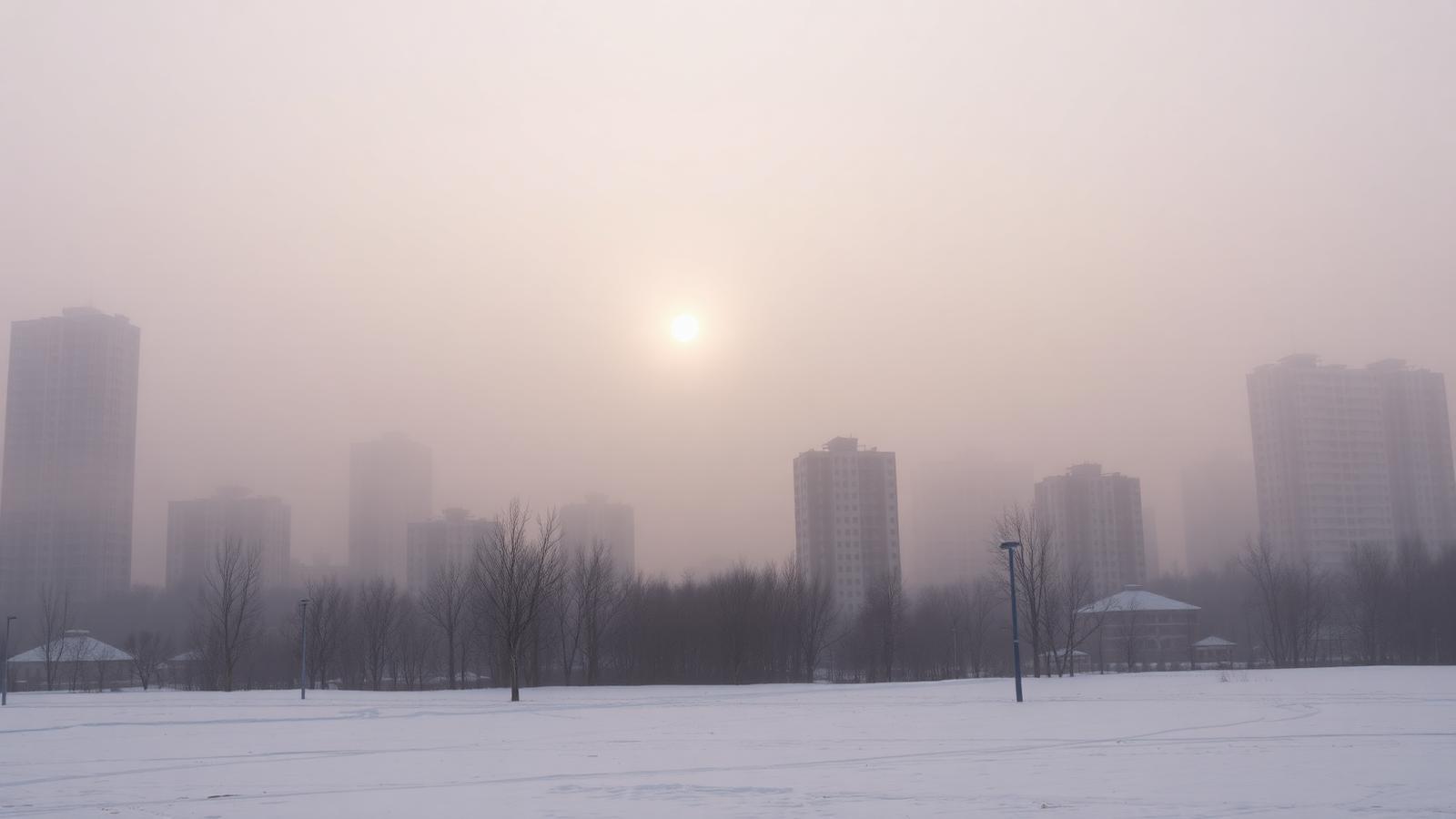
For a few weeks each winter Tashkent turns up on global lists of the world's most polluted cities, and the mountains vanish behind a grey lid. It is real, it is seasonal, and it is entirely avoidable if you know when and how to travel.
Visit Tashkent in April and the air is clean enough to see the Chatkal range from a rooftop. Visit in January and you may not see the far end of your own street. Uzbekistan's capital has a severe winter air-pollution season, and because it appears on international live-ranking sites it periodically goes viral as 'the most polluted city in the world today'. That headline is a snapshot, not a permanent state — but the underlying problem is genuine, and travellers with asthma, small children or heart conditions should plan around it.
What actually happens to the air
The pollutant that matters is PM2.5 — particles smaller than 2.5 micrometres that pass deep into the lungs. In Tashkent's cold months, daily averages routinely climb into the unhealthy range and on bad days far beyond it, while summer readings are often unremarkable. The seasonality is the whole story.
Temperature inversion
Tashkent sits in a basin below the Tian Shan foothills. On calm winter nights a layer of warm air settles above the cold surface air and acts as a lid, trapping everything emitted underneath it. Without wind or rain the pollution simply accumulates for days.
Heating and power
Winter gas shortages push households, greenhouses and small businesses onto coal, wood and whatever else burns. Older thermal power plants run at maximum. This is the single largest seasonal addition to the load.
Traffic and construction
Car ownership has grown much faster than road capacity, and the city is in a permanent state of building. Diesel exhaust, tyre and brake dust and construction sites all contribute year-round; the inversion just stops it dispersing.
Dust from the dried Aral basin
Salt-and-dust storms lifted off the exposed Aral seabed hundreds of kilometres away reach central Uzbekistan several times a year, mostly in spring. These are a separate spike from the winter smog and can raise coarse particulate levels sharply for a day or two.
When it is bad, by month
- December to February: the peak. Expect frequent unhealthy days and occasional very unhealthy ones, worst on windless mornings.
- November and March: transitional, with bad spells during cold snaps.
- April to June: generally the cleanest air of the year, with occasional dust events.
- July and August: hot and hazy, ozone rather than smoke, and heat is the bigger health concern.
- September and October: clean and stable — with spring, the best time to visit for both weather and air.
How to check it before and during your trip
Use a live AQI app or map and look at the PM2.5 number rather than the headline colour alone. Readings in Tashkent come from a mix of government and independent low-cost sensors, so cross-check two sources. Air is typically worst between roughly 7 and 10 in the morning and again after dark, and noticeably better in the middle of a sunny afternoon or after rain or strong wind.
The mountains are the honest air-quality sensor. If you can see snow on the Chatkal from the city, it is a good day.
Practical advice for winter visitors
- Bring FFP2/N95 masks if you are sensitive — cloth and surgical masks do nothing for PM2.5.
- Book a hotel with sealed windows and ask whether rooms have air purifiers; the larger international hotels usually do.
- Shift outdoor sightseeing to early afternoon and keep mornings for museums, the metro art tour or bathhouses.
- Escape upward: Chimgan, Amirsoy and Charvak are above the inversion layer and often sunny and clear while the city sits under grey.
- Samarkand, Bukhara and especially Khiva and Nukus have far less winter smog — a winter itinerary weighted away from Tashkent works well.
What the country is doing about it
There is an official air-monitoring network, a rapid expansion of solar and wind generation to displace gas and coal burning, zero import duty on electric cars, and steadily tighter rules on the worst industrial emitters. Tashkent's electric bus and taxi fleets are visibly growing. None of it fixes a winter inversion in one season, but the trend line is genuinely downward.
Should this change your trip?
For a healthy adult on a one-week trip, no — go, and use the timing tips above. For anyone with asthma, COPD, a heart condition, a pregnancy or young children, avoid December to February in Tashkent specifically, or keep the capital to a single night in transit and spend the rest of the trip further west. Spring and autumn remain the best windows for Uzbekistan on every measure, air included.