The Earthquake That Rebuilt Tashkent: 1966 and the City It Created (2026 Guide)
· 9 min read · History
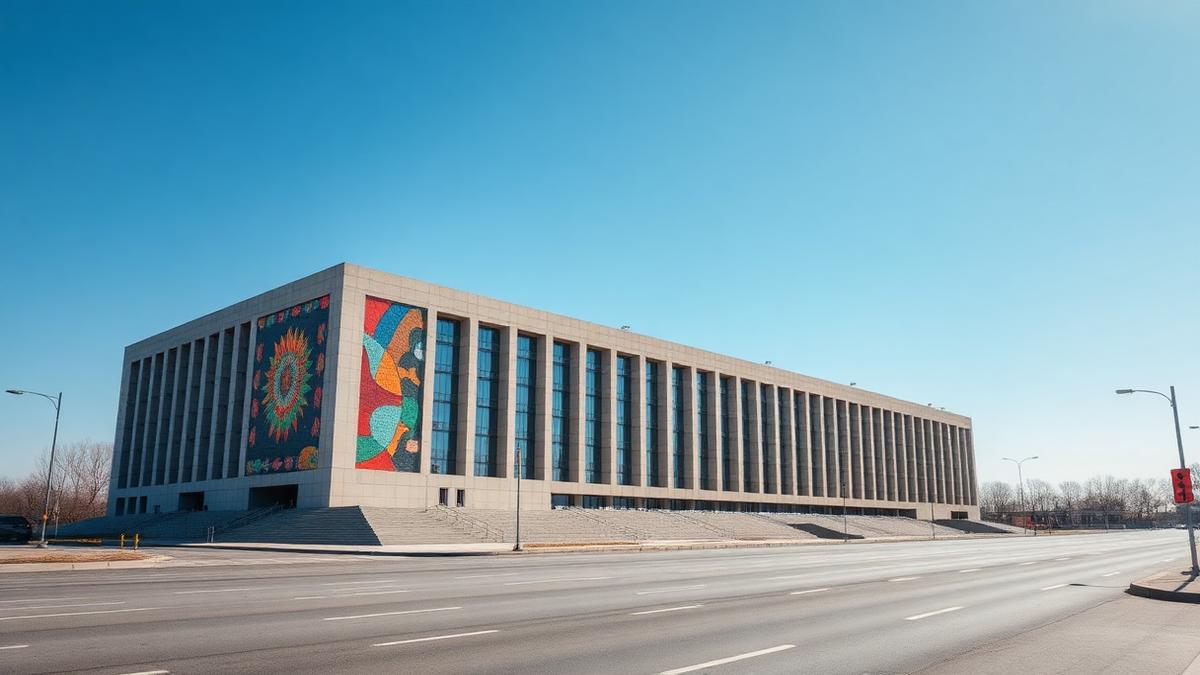
Tourists arrive in Tashkent expecting domes and leave confused by wide empty boulevards and concrete apartment blocks. The explanation is a single morning in April 1966 — and a rebuilding effort that pulled in workers from every Soviet republic.
Almost every visitor to Uzbekistan has the same reaction to the capital: where is the old city? Tashkent is over two thousand years old and was one of the great Silk Road stops, yet the centre is mostly wide roads, parks and mid-century concrete. The reason is not neglect. It is that the old centre came down in about twelve seconds on the morning of 26 April 1966.
What happened in 1966
- The earthquake struck early on 26 April 1966, with an epicentre directly beneath the city at shallow depth.
- Magnitude readings are usually given around 5.1–5.2 — modest on paper, devastating in practice because it was shallow and directly under a city of mud-brick housing.
- The official death toll was low for a disaster of this visibility, but destruction was enormous: a large part of the historic mud-brick centre was flattened.
- Estimates of those left homeless run into the hundreds of thousands — often quoted as around 300,000 people.
- Aftershocks continued for months, and many families lived in tents through the following period.
The all-Union rebuild
The Soviet response became a showcase project. Construction brigades, architects and materials were sent from Russia, Ukraine, Belarus, the Baltics, Georgia and the Central Asian republics. Whole districts were built by teams from a single city and named accordingly. Tashkent was rebuilt within years, not decades — and rebuilt as a modern, seismically engineered, deliberately spacious city: wide boulevards for evacuation, prefabricated panel housing to earthquake-resistant standards, huge parks and squares.
This is why Tashkent's texture is so different from Samarkand or Bukhara. It is also why the city holds one of the most remarkable collections of Soviet modernist architecture and monumental mosaic art anywhere — because it was all built at once, at the height of that style, with unusual budgets and unusual creative freedom for Central Asian motifs.
Samarkand shows you what Uzbekistan was. Tashkent shows you what the twentieth century did to it.
Where to see the story on the ground
Monument of Courage (Mardlik / Мужество)
A black granite cube split by a jagged fault line, with a clock face frozen at 5:24 — the moment of the quake — and a bronze family group stepping out of the crack. Unveiled in 1976 for the tenth anniversary, it is the city's central memorial and completely free to visit. Best in early morning light.
The metro
Opened in 1977, the Tashkent Metro was the first in Central Asia and was engineered to survive a repeat of 1966 — it doubled as a civil-defence shelter. Its stations are decorated palaces of marble, ceramic and mosaic. Kosmonavtlar, Alisher Navoi, Pakhtakor and Mustaqillik Maydoni are the standouts. Photography has been permitted since 2018.
Soviet mosaics on housing blocks
The panel districts built after the quake carry huge decorative mosaics on their gable ends — cosmonauts, cotton harvests, folk motifs, science and space themes. The best concentration is in the Chilanzar and Yunusabad districts. Many are deteriorating or lost to renovation, which is why photographers have been documenting them urgently.
Modernist landmarks
- Hotel Uzbekistan — the great curved facade on Amir Timur Square, the most photographed modernist building in the country.
- State Museum of History of Uzbekistan — heavy geometric concrete, and a genuinely good collection inside.
- Palace of Peoples' Friendship — a vast 1980s concert hall built to commemorate the wartime adoption of evacuated children.
- Chorsu Bazaar's blue dome — 1980, a post-quake structure over a market that has stood on that spot for a thousand years.
- Tashkent TV Tower — 1985, still the best skyline viewpoint in the city.
A half-day self-guided route
Start at Mustaqillik Maydoni metro, walk to the Monument of Courage, continue along the canal to Amir Timur Square and Hotel Uzbekistan, ride the metro to Kosmonavtlar and Alisher Navoi for the station art, then take a taxi into Chilanzar for the mosaics and finish at Chorsu Bazaar for lunch under the dome. Four to five hours, almost entirely free, and it gives the capital a coherence most visitors never find.
Honest verdict
Tashkent is the most misunderstood city in Uzbekistan. Once you know about 1966, the boulevards, the concrete and the mosaics stop being an absence of history and become the history — a rare, intact, open-air museum of how a whole city was rebuilt in one generation.