Sarmish Gorge: The 10,000-Year-Old Rock Art Gallery Almost No Tourist Sees (2026 Guide)
· 8 min read · Adventure
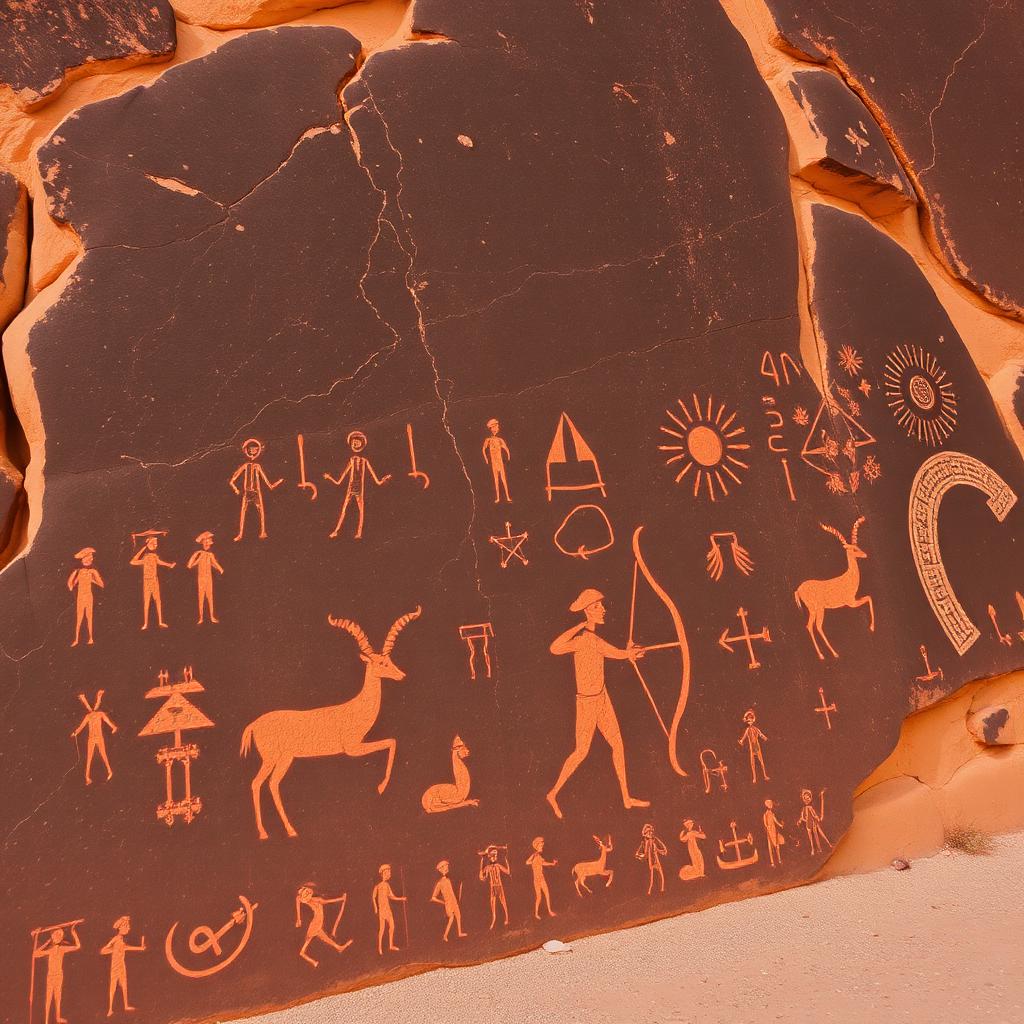
In a dry canyon 45 km north of Navoi, more than 4,000 images have been chipped into dark desert stone across 10,000 years — one of the densest petroglyph fields in the world. There are no ticket booths, no crowds, and no signposts. Here is exactly how to find it.
Sarmish Gorge (Sarmishsoy, Сармышсай) is a 2 km-long canyon in the Karatau ridge of the Nurata mountains, halfway between Navoi and the Nurata town. Along its walls archaeologists have catalogued more than 4,000 petroglyphs — rock engravings made by chipping through the dark 'desert varnish' patina to expose the lighter sandstone beneath. The oldest date to the Neolithic (around 8,000 BCE), the newest to the medieval period. Together they form one of the largest open-air rock-art galleries in Central Asia, comparable to Tamgaly in Kazakhstan or Saymaluu-Tash in Kyrgyzstan — but with a fraction of the visitors.
What you see on the rocks
- Ibex and mountain goats with impossibly long curved horns — the single most common motif, symbol of fertility and mountain spirits.
- Hunters with bows, spears and dogs, often shown driving herds off cliffs.
- Chariots with two-wheeled construction (Bronze Age, ~2000 BCE).
- Sun discs, spirals and star-shaped symbols — probably calendar or ritual markers.
- Human figures in ceremonial dress with animal masks, interpreted as shamans.
- Camels, horses and Bactrian camels appearing only in later layers — after 1000 BCE when they were domesticated in the region.
Why it matters
Sarmish is one of the few places on earth where you can trace 10,000 years of human belief in a single wall. The oldest images are pure hunter-magic. The Bronze Age layer adds chariots and metallurgy. The Iron Age adds horses. The medieval layer adds Arabic inscriptions and Islamic geometric patterns cut over older figures — a physical record of religion arriving in the mountains. UNESCO has had Sarmish on its tentative World Heritage list since 2008; a full nomination is expected before 2028.
How to get there in 2026
- From Navoi city: taxi 45 km north, 250,000 UZS return with 3 hours waiting. The road is paved to Sarmish village, gravel for the last 4 km.
- From Samarkand: 3-hour drive via Navoi, best done as a full-day tour ($90–$120 per car with English-speaking guide).
- From Tashkent: too far as a day trip — combine with a Nurata + Aydarkul yurt-camp overnight (2 days, from $180 per person).
- From Bukhara: 3h30 drive, feasible as a long day trip but pair it with lunch at a Nurata chaikhana.
- There is no public bus. Every visit requires a private car or organised tour.
Entrance, permits, and rules
- Entry: 30,000 UZS per person (paid to the local ranger at the mouth of the gorge; sometimes unmanned — leave the money in the box).
- Local Karakalpak-style Uzbek guide from Sarmish village: 100,000 UZS for the full 2 km walk, essential — most petroglyphs are otherwise easy to walk past.
- Do NOT touch, chalk, wet, or trace the petroglyphs — this is the fastest way to destroy them and there are 500,000 UZS on-the-spot fines.
- Drones are banned within the gorge itself (protected zone).
- No camping in the gorge; nearest legal camping is Aydarkul lake 60 km north.
Best photography light
The petroglyphs are cut into dark, near-black patina rock and are almost invisible in flat midday light. The magic hours are 07:00–09:00 and 17:30–19:00 (April–October) when low-angle sun rakes across the surface and the engravings appear as if backlit. Bring a polarising filter to cut the glare from the varnish. Zoom lens (70–200 mm) more useful than wide-angle — many of the best panels are 4–8 metres above the path.
Combine with these
- Nurata town and the Chashma sacred spring (30 km) — holy fish, ruins of Alexander the Great's fort.
- Aydarkul lake yurt camps (1 hour north) — sleep in a felt yurt, ride a camel at sunset.
- Sentyab village community homestays in the Nuratau mountains (2 hours east) — hiking, spring hills, walnut groves.
- Navoi city Bakhauddin Naqshband museum on the way back to Bukhara.
Verdict
For anyone remotely interested in archaeology, ancient religion, or simply seeing something in Uzbekistan that 99% of tourists miss, Sarmish Gorge is the single most rewarding half-day detour between Samarkand and Bukhara. Bring water, sunscreen, sturdy shoes, and a guide who can point out the ibex panel, the chariot panel, and the two shamans — the rest you can happily discover yourself.