Rabati Malik: The Lonely Silk Road Caravanserai Between Bukhara and Samarkand (2026 Guide)
· 8 min read · History
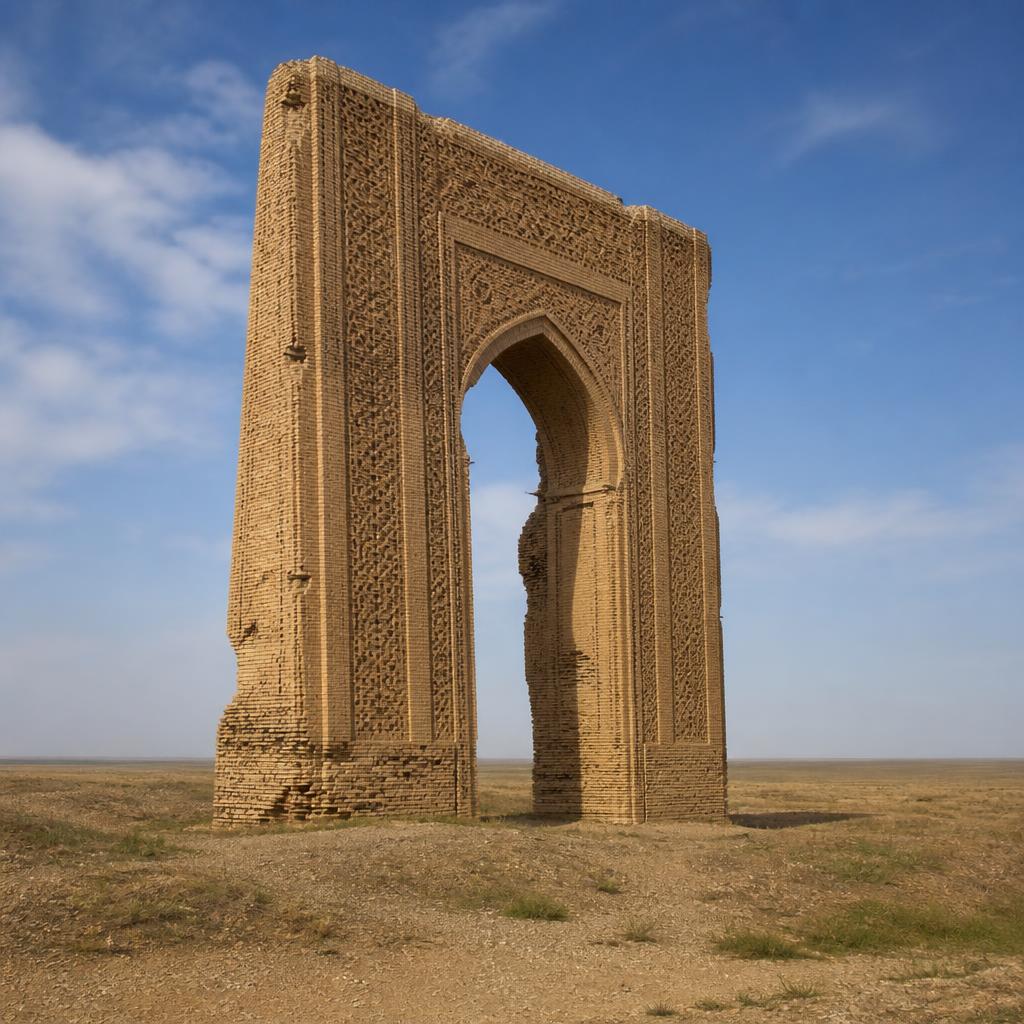
Between Bukhara and Samarkand, on a flat stretch of Kyzylkum steppe, one enormous 11th-century brick arch stands alone. It's the last piece of a royal caravanserai where Silk Road merchants slept 900 years ago. Almost every tour bus drives past it. Here's why you shouldn't.
Drive the M37 highway from Bukhara to Samarkand and about 100 km east of Bukhara, near the town of Navoi, you'll notice a single monumental portal standing in a field to the north. That is all that survives of Rabati Malik, once the grandest royal caravanserai on the western Silk Road. Most drivers don't stop. Those who do get 20 minutes of extraordinary 11th-century Karakhanid brickwork, no crowds, no ticket booth, and a real feel for what a Silk Road pit-stop actually was. This is the 2026 guide.
What Rabati Malik actually was
Built 1078–1079 by the Karakhanid ruler Shams al-Mulk Nasr, Rabati Malik ('Royal Caravanserai') was a fortified overnight stop for merchants, diplomats and royal messengers on the Bukhara–Samarkand highway — then already 1,200 years old. A square structure ~86×86 metres, surrounded by round towers, with rooms for 200 travellers, stables, a mosque, hammam and warehouses. In the 12th century a small city grew around it. Sacked by the Mongols in 1220, partially rebuilt, then slowly abandoned over the following centuries. Only the monumental south portal and outlines of walls remain today.
Why the surviving portal matters
It is one of the earliest surviving pieces of monumental brick architecture in Central Asia, predating even the Kalyan minaret in Bukhara by four decades. The geometric brickwork — bands of stylised Kufic inscriptions, weave patterns, subtle relief — is a masterclass in what Central Asian architects could do with plain baked brick before the great age of tile. Restored 1998–2003 with UNESCO funding, it now stands ~12 metres tall and 18 metres wide.
The Sardoba across the road
Directly opposite the portal, on the south side of the highway, is a 10-metre domed brick water cistern (sardoba) built in the same era to supply travellers. Underground water storage that stayed cool even in 45°C summer. You can climb inside — the acoustics are wild. Free, no fence.
How to visit in 2026
Coordinates
40°08′03″ N, 65°25′35″ E. Type 'Rabati Malik' or 'Robati Malik' into Google Maps, Maps.me or Yandex — all three place it correctly. It is 6 km east of Karmana (Kermine) and 12 km west of Navoi city.
By private transfer
Every Bukhara–Samarkand car transfer will happily stop for 20–30 minutes if you ask when booking. Most drivers don't offer, so specify. No extra fee.
By shared taxi or bus
Any Bukhara → Navoi or Navoi → Bukhara marshrutka passes 200 metres from the portal — ask to be dropped at 'Robati Malik'. Walk 3 minutes north across the highway. Wave down the next passing car to continue.
By Afrosiyob train
Not accessible from the high-speed train — Rabati Malik is 15 km from Navoi's train station and there is no public transport out. Only worth it if you have your own car for the day.
How much time you need
30 minutes covers the portal, the sardoba, and photos. Give it 60 if you want to walk the outline of the vanished walls (still visible as low ridges in the earth to the west) and sit inside the sardoba for a few minutes of shade.
Prices and etiquette
- Entry: free. There is no ticket booth, no guard, no gate.
- Facilities: none. No toilet, no shop, no water. Bring your own.
- Best time: early morning or late afternoon — no shade at all, midday summer is brutal.
- Respect: the walls are 950 years old. Do not climb the portal or scratch initials into the brick.
Combine with these on the same drive
- Gijduvan (35 km east of Bukhara): famous ceramic workshops (Narzullaev family) and the Ulugh Beg madrasah.
- Karmana Mausoleum of Mir Sayyid Bahrom (10 km east of Rabati Malik): tiny 10th-century tomb, one of Uzbekistan's oldest surviving Islamic buildings.
- Nurata (90 km north of Navoi): sacred spring, Alexander the Great's fortress, gateway to Aydarkul yurt camps.
Honest verdict
A 30-minute detour that costs nothing and turns 4 hours of highway boredom into the best 'wait, what is that?' moment on the Bukhara–Samarkand road. Nobody else will be there. Ask your driver. Bring water. Say thank you to the sardoba for keeping merchants alive for a thousand years.