New Tashkent: The $50 Billion City Being Built Next to the Old One (2026)
· 9 min read · Modern Uzbekistan
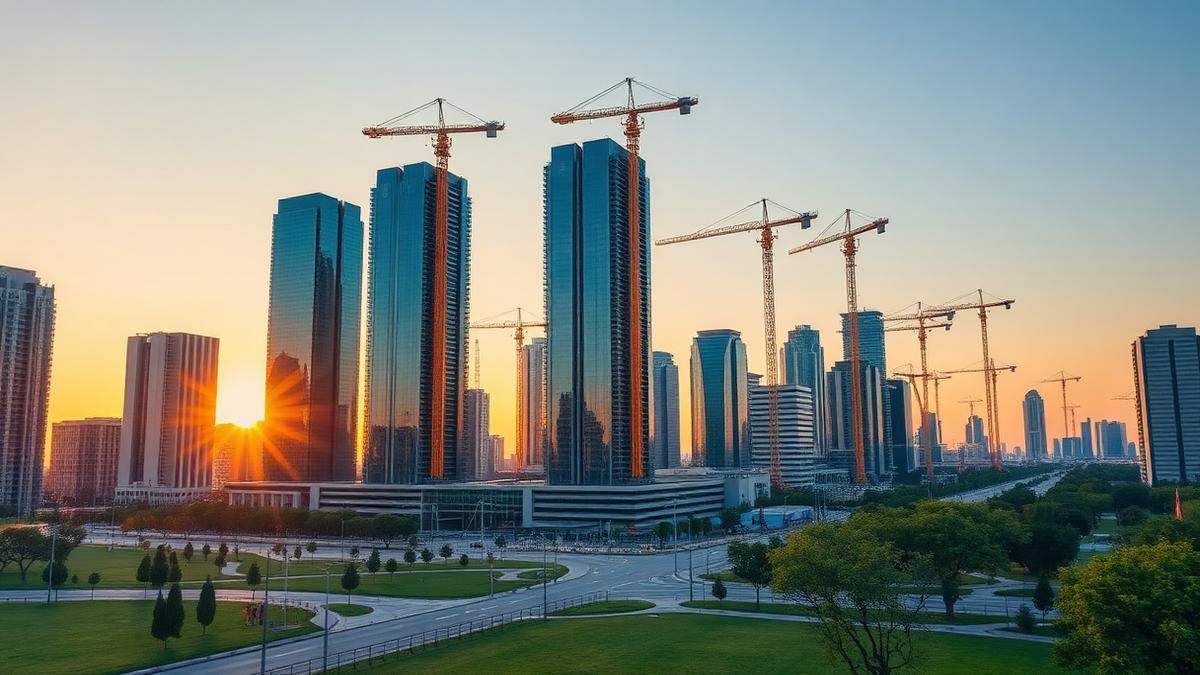
Twenty kilometres east of Chorsu Bazaar, on former farmland, Uzbekistan is pouring the foundations of a city designed for two and a half million people. Most travellers who come for madrasas have no idea it exists.
The image of Uzbekistan that travels the world is turquoise domes and 15th-century tilework. The image Uzbeks themselves talk about most in 2026 is cranes. Tashkent is in the middle of the largest construction wave in its history — a downtown skyscraper cluster already finished, and an entirely new satellite city rising on the eastern edge of the capital. If you want to understand where the country thinks it is going, this is the story to follow.
Two different projects people confuse
Tashkent City (built, open, walkable)
Tashkent City is the central business district built on cleared land near the old Alay Bazaar area — glass towers, the Hilton and Radisson, an enormous park, dancing fountains, a congress hall and the Tashkent City Mall. It opened progressively from 2019 and is fully functional today. Locals go there in the evening to walk; foreign visitors mostly stumble on it by accident. It is also controversial: the district was built on demolished mahalla neighbourhoods and the compensation process was heavily criticised.
New Tashkent / Yangi Toshkent (under construction)
New Tashkent is a far bigger idea: a planned city on roughly 20,000+ hectares east of the capital, announced in 2023, intended eventually to house over two million residents with its own business districts, universities, hospitals and transport spine. Investment figures quoted by officials run into the tens of billions of dollars over decades. In 2026 what exists on the ground is infrastructure — roads, engineering networks, the first residential blocks and public buildings — plus a lot of masterplan renders.
Why Uzbekistan is doing this
- Population pressure: Uzbekistan passed 37 million people and is the most populous country in Central Asia, with a very young median age.
- Tashkent's existing housing stock is largely Soviet-era panel blocks nearing the end of their design life.
- The 1966 earthquake shaped modern Tashkent as a low-rise, wide-boulevard city — dense vertical growth is a deliberate break with that.
- The government wants foreign direct investment and a visible 'we are open' skyline, in the Gulf and Kazakh model.
- Regional competition: Astana and Baku both built statement districts; Tashkent is answering.
The criticism, honestly
This is not a universally loved project. Urbanists inside Uzbekistan argue that a car-oriented new city on farmland is the wrong answer for a water-scarce country, that the demolition of mahallas destroys the social fabric that makes Tashkent liveable, and that the capital's real problems — air quality, water, public transport, tree cover — are not solved by more towers. Tashkent's winter air pollution regularly ranks among the worst in the world. Those debates are loud on local social media and worth knowing about before you form an opinion.
Tashkent is arguing with itself in concrete: keep the courtyard city, or build the skyline.
Can you visit it as a traveller?
- Tashkent City Park — yes, freely. Best after sunset for the fountain show. Metro: Pakhtakor or Alisher Navoi, then a 10-minute walk.
- Tashkent City Mall — food court, cinema, reliable card payments, good rainy-day option.
- NEST One / Tashkent City towers — the district's high-rises; several rooftop bars and restaurants offer skyline views.
- New Tashkent — an active construction zone. There is no visitor centre and no reason to go unless you specifically want to see the scale of it from the highway toward Yangiobod.
- Best skyline viewpoint overall remains the Tashkent TV Tower observation deck.
What to actually look at if you are interested in this
Pair a walk through Tashkent City with an hour in the older parts of the city — Chorsu, the mahallas around Khast Imam, and the Soviet modernist buildings on Amir Timur Square. Seeing the three layers back to back (traditional courtyard city, Soviet seismic modernism, 2020s glass) is genuinely one of the more interesting urban experiences in Central Asia, and no tour company sells it.
Honest verdict
New Tashkent is not a tourist attraction and will not be for years. Tashkent City is, quietly, one of the most revealing places in the country — a free evening walk that tells you more about Uzbekistan in 2026 than most museums. Go, look, and then ask a local what they think of it. You will get a strong opinion.