Muynak Ship Graveyard: Walking on the Bed of a Dead Sea (2026 Aral Sea Guide)
· 11 min read · Dark Tourism
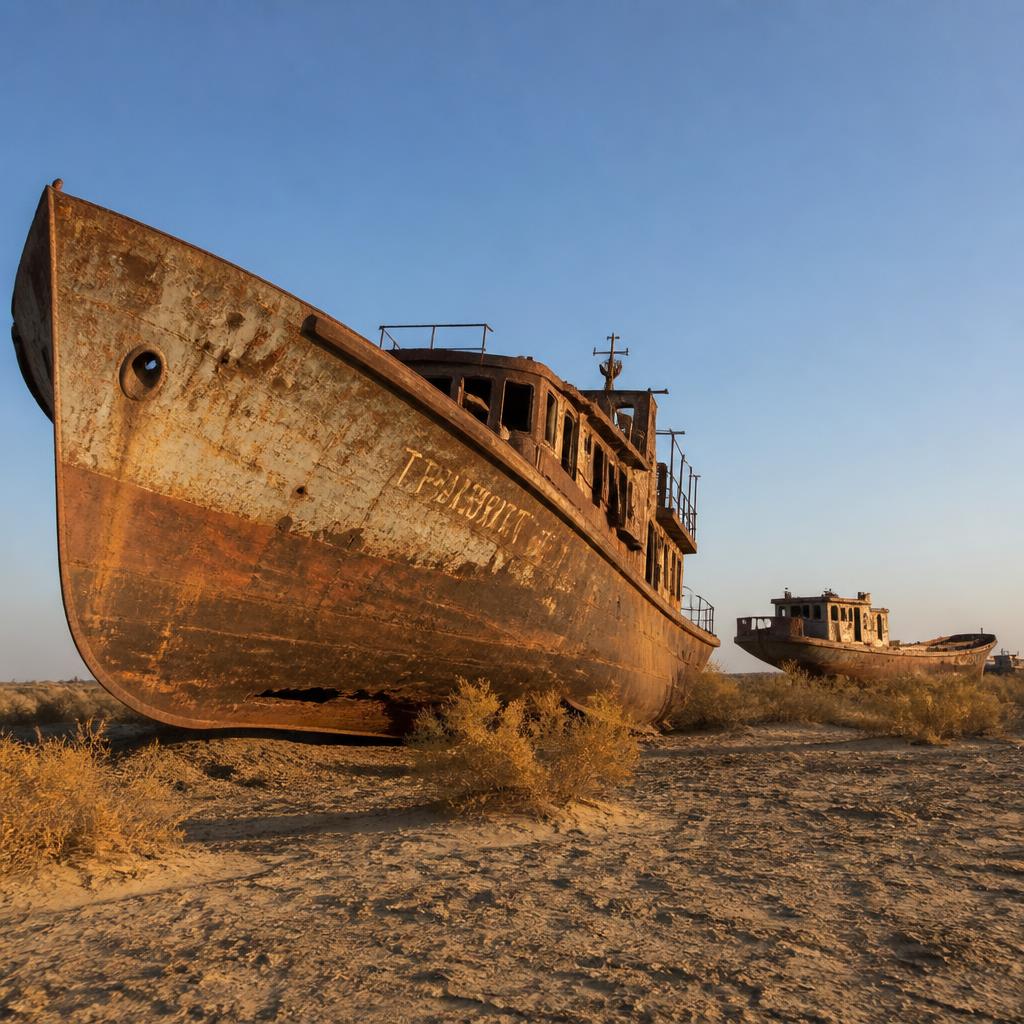
Fifty years ago Muynak was a fishing port on the world's fourth-largest lake. Today the water is 150 km away and a dozen rusting Soviet trawlers sit on a desert of salt. This is the honest 2026 guide.
There is no other place on earth quite like Muynak. Half a century ago the streets here smelled of fish and diesel, 40,000 people worked the docks of the Aral Sea, and the town canned enough sardines to feed a Soviet republic. Today the sea is gone — pushed back 150 kilometres by cotton irrigation upstream — and where trawlers once anchored, camels graze between rusting hulls sinking into salt. This is the 2026 guide to visiting the world's most photographed ecological disaster.
What actually happened to the Aral Sea
In 1960 the Aral Sea covered 68,000 km² — larger than Ireland. Soviet planners diverted its two feeder rivers, the Amu Darya and Syr Darya, to irrigate cotton fields across Uzbekistan and Turkmenistan. Within 40 years the sea lost 90% of its water. What remains is split into a small northern lobe (in Kazakhstan, partially recovering) and a shrinking southern lobe. The exposed seabed — now called the Aralkum desert — is 60,000 km² of salt and pesticide dust, blown as toxic storms across Central Asia. It is often called the worst man-made environmental catastrophe of the 20th century.
The ship graveyard — what you actually see
About a dozen boats are still parked on the former shoreline just outside Muynak, next to a small memorial. Most are trawlers and barges from the 1970s and 80s, hulls painted in Cyrillic, propellers stuck in the sand. A wooden staircase climbs to a viewing platform above the ships. Beyond them the Aralkum stretches to the horizon — flat, white, silent. Bring a wide-angle lens; drone flights are technically legal here but ask locally first.
How to get to Muynak in 2026
- Fly Tashkent → Nukus (Uzbekistan Airways, 1h50, from $60 one-way).
- From Nukus: shared taxi 80,000 UZS per seat, 3 hours; private car 700,000–900,000 UZS round trip with waiting time.
- Organised tour from Nukus: $60–90 per person, includes ship graveyard + Aralkum drive-out + lunch.
- By bus: daily marshrutka from Nukus bus station at 8:00, 60,000 UZS, 4 hours (slow but cheap).
2026 costs
- Ship graveyard entry: free.
- Muynak Museum of the Aral Sea (in the town centre): 20,000 UZS (~$1.60).
- Yurt camp on the seabed (Aralkum, 2 nights inc. meals + transfers): $150–220 per person.
- Photographer/guide with 4x4 to reach the current shoreline: $180–250 per group.
Best time to visit
April, May, September, October. Summer highs hit 45°C on the salt flats with zero shade. Winter drops to −20°C. Sunrise and sunset are the money hours — the low light turns the rust orange and the salt pink.
Where to sleep
- Bes Qala Yurt Camp (on the Aralkum, 40 min from Muynak) — $60/night with meals, no wifi, unforgettable stars.
- Muynak Guesthouse — family-run, $18/night, hot showers.
- Nukus Hotel Jipek Joli — 4-star base to day-trip from, $55/night.
Combine with these
- Savitsky Museum in Nukus — 90,000 pieces of banned Soviet avant-garde art, the second-best Russian art collection in the world after St Petersburg.
- Mizdakhan Necropolis (20 km from Nukus) — 2,000-year-old cemetery with a doomsday legend.
- Ayaz Kala fortresses — 4th-century BCE desert citadels on the way from Khiva.
Honest verdict
Muynak is not pretty. It is 6 hours of driving from Khiva for 20 rusting ships on cracked earth — and it is unforgettable. Standing on the deck of a trawler with no water in sight for 150 kilometres is the kind of experience that reframes what a lifetime of climate headlines actually mean. Do it once. Bring water. Bring warm layers even in summer. Tip your driver.