Muruntau: The Biggest Gold Pit on Earth Is in the Uzbek Desert — and Almost No One Knows
· 9 min read · History
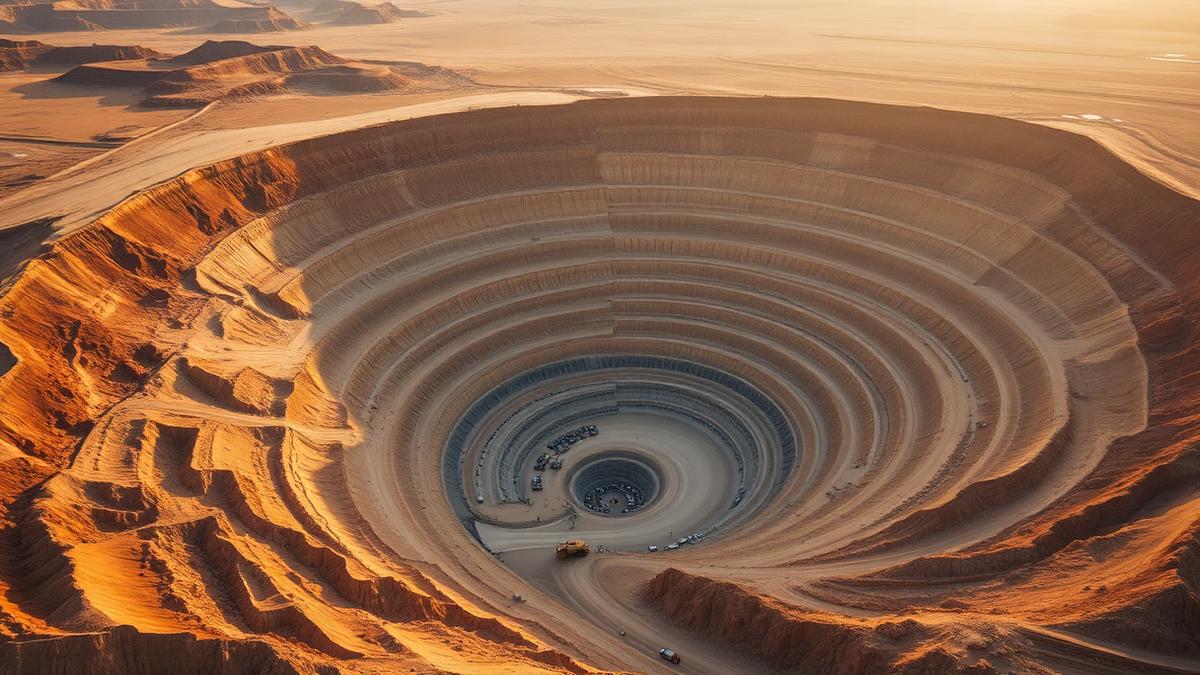
Four hours into the Kyzylkum desert there is a hole in the ground more than three kilometres long and over half a kilometre deep. It is the largest open-pit gold mine on the planet, it funds a serious share of the Uzbek state, and it is not on any tourist map.
Uzbekistan is marketed as domes, tiles and Silk Road romance. The economy underneath that is something else entirely: gas, cotton, and gold — a lot of gold. Uzbekistan is consistently among the world's top ten gold producers, and a very large share of it comes out of one pit in the middle of the Kyzylkum desert called Muruntau. It is, by common measure, the largest open-pit gold mine on earth. This is the story of it, and the honest answer to whether you can go.
How it was found
Soviet geologists prospecting the Kyzylkum in the 1950s and 1960s were looking for uranium as much as anything else. In the mid-1960s they confirmed a gold deposit at Muruntau on a scale nobody had expected in Central Asia. There is a well-worn local story that the site was flagged partly because of the arsenic-bearing minerals visible at the surface — the desert advertising what was underneath. Development began quickly, and with it a closed company town.
Zarafshan: the town gold built
To mine Muruntau, the USSR built Zarafshan from nothing in the desert in the 1960s and 1970s — apartment blocks, schools, a hospital, a water pipeline and an airstrip, for a workforce that had no other reason to be there. It remains a company town today, servicing the mine and the Navoi Mining and Metallurgical Combinat, one of the largest industrial enterprises in Central Asia.
The scale, in numbers you can picture
- The pit is measured in kilometres across, not metres — over three kilometres at its longest axis.
- Depth is in the range of half a kilometre and has kept increasing over decades of operation.
- Haul trucks working the benches look like specks from the rim; a full lap up the haul road takes a long time.
- Operations run continuously, and the deposit has been worked for over half a century with reserves still projected decades ahead.
- Gold and gas together underpin Uzbekistan's foreign currency reserves — which is why gold prices matter to the exchange rate you get at the bank.
Uzbekistan sells the Silk Road to visitors and gold to central banks. Only one of those pays for the roads.
Why it matters to a traveller
The exchange rate in your pocket
Gold exports are a major source of hard currency for the country. When gold prices move, Uzbekistan's reserves and currency policy move with them — which eventually shows up in the som rate you are quoted at a bank counter in Tashkent.
Gold in daily life
This is also part of why gold is so culturally present: gold jewellery as a wedding gift, gold-thread embroidery (zarduzi) in Bukhara, and the older generation's gold teeth. Gold is not an abstract commodity here; it is savings you can wear.
Can you visit?
Realistically, no. Muruntau is an active industrial site inside a restricted zone, and Zarafshan is a controlled company town — access is for employees, contractors and permitted business visitors. There is no tourist viewing platform, and turning up to photograph a strategic mine is a bad idea. Drone flights over industrial and border areas are prohibited.
What you can do instead
- Navoi region day trips: Sarmish Gorge petroglyphs and Nurata are in the same desert region and are fully open.
- Aydarkul and Kyzylkum yurt camps give you the desert landscape the mine sits in, with stargazing that is worth the trip alone.
- Bukhara's gold-embroidery workshops (zarduzi) show the cultural side of gold up close.
- Tashkent's State Museum of History covers the mineral and industrial story of the country.
Honest verdict
Muruntau is the best example of a truth about Uzbekistan that tourism marketing skips: this is a serious resource economy wearing a Silk Road costume. You cannot see the pit, but understanding it explains the new towers in Tashkent, the pace of restoration in Samarkand, and the gold in a grandmother's smile at a bazaar in Bukhara.