Moynaq Ship Graveyard 2026: Standing on the Bottom of the Aral Sea
· 11 min read · Off the Beaten Path
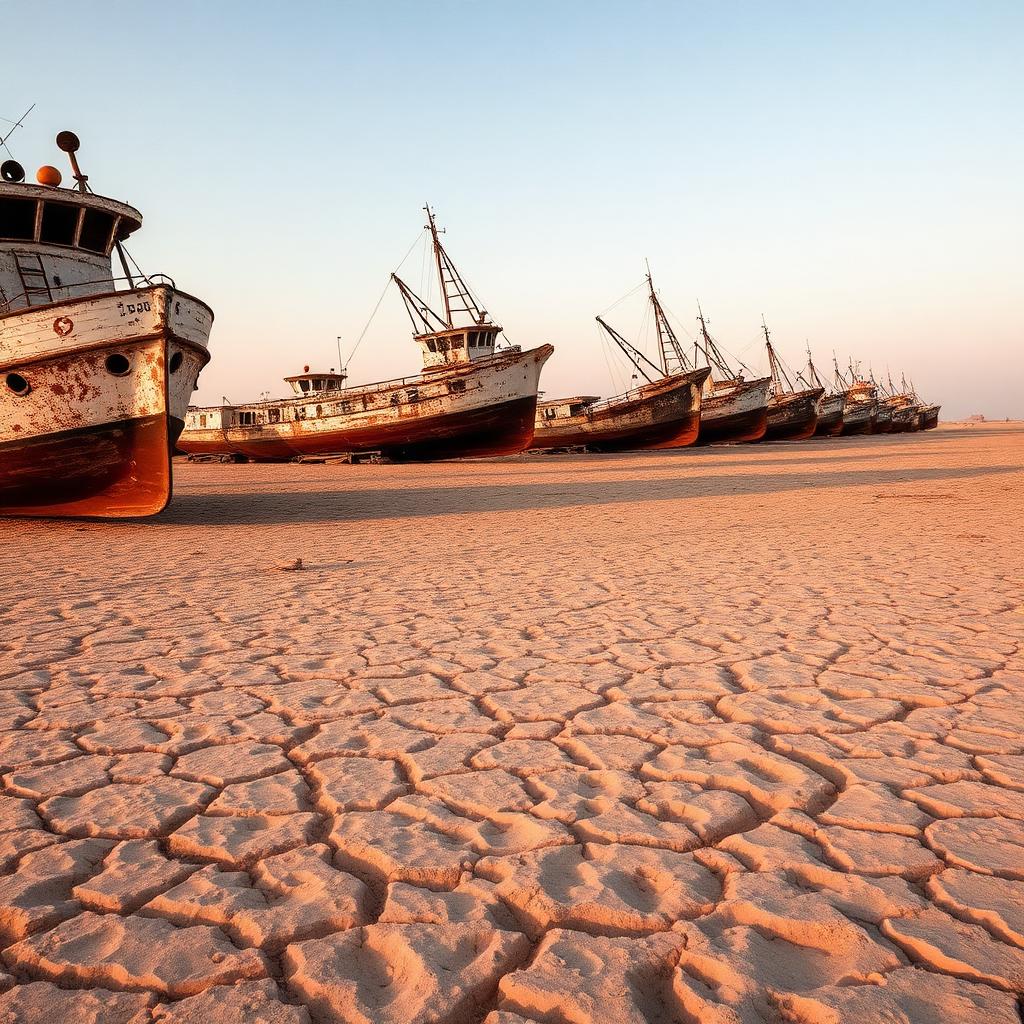
Fifty years ago Moynaq was a fishing port on the world's fourth-largest lake. Today the sea is 200 km away and eleven Soviet trawlers rust on a sand desert. Here is the honest 2026 guide to seeing one of the planet's worst man-made disasters up close.
The Aral Sea is not a lake that dried up naturally. In 1960 Soviet engineers began diverting the Amu Darya and Syr Darya rivers to irrigate cotton fields in Uzbekistan and Kazakhstan. Within 40 years the world's fourth-largest inland body of water lost 90% of its volume. The port town of Moynaq — once home to a fish cannery that shipped 21,000 tonnes a year to the entire Soviet Union — is now stranded 200 km from the shoreline. What remains is a sand desert with rusting ships, a small museum, and about 12,000 people breathing salt storms every summer. In 2026 it is one of the most visited off-beat destinations in Uzbekistan, and one of the most sobering places you can stand on Earth.
What you actually see at the ship graveyard
Eleven fishing trawlers and cargo barges are lined up on the cracked seabed below a low bluff, exactly where the water used to end. They have been repainted and stabilised since 2019 as part of a state-run open-air museum. Above them stands a concrete memorial with an anchor, plus the Aral Sea Museum housed in the old House of Culture — 100 photographs, fishing nets, ship models, and Soviet-era propaganda posters from the days when Moynaq exported caviar.
How to get to Moynaq in 2026
- Fly Tashkent → Nukus (2 hr, Uzbekistan Airways, from $55 one-way in 2026).
- Shared taxi Nukus → Moynaq: 4 hours, 80,000 UZS per seat from Nukus bus station, leaves when full.
- Private car with driver from Nukus: $70–$90 round trip, arrange through your Nukus hotel.
- Organised day tour from Nukus (English guide + Savitsky Museum in the morning + Moynaq in the afternoon): $110–$140 per person.
- Do not attempt to drive yourself unless you have GPS and a full tank — there are no petrol stations for the last 90 km.
Entry, opening hours and prices
- Ship graveyard: free, open 24/7 (best light at sunrise and sunset).
- Aral Sea Museum: 20,000 UZS ($1.60), open 9:00–18:00 daily.
- Local guide at the ships (Russian or basic English): 100,000 UZS for 1 hour.
- Drone permit: apply 5 days in advance through the Karakalpakstan Ministry of Tourism (free but required — see our 2026 drone rules guide).
The Aralkum desert tour — reaching the current shoreline
Serious travellers push on another 200 km north-west into the Aralkum — the youngest desert on earth, born from the seabed. Overnight 4x4 tours from Moynaq run July to October: sunset on the actual remaining South Aral, wild camping under some of the darkest skies in Central Asia, sunrise over the Ustyurt cliffs. Expect $180–$250 per person for a two-day trip with a 4x4, driver-guide, tent, food and water. Book with Ayimtour or Bes Qala Nukus — the only two operators we can currently vouch for.
Where to stay in Moynaq
- Yurt Camp Bes Qala: 8 traditional yurts on the bluff, dinner and breakfast included, $45/person (2026).
- Guesthouse Oybek: 6 rooms, hot water, air-con, $25/night, run by a former fisherman who lived through the collapse.
- Most visitors day-trip from Nukus and skip overnighting — you miss the sunset if you do.
Best time to visit
April, May, September and October — daytime highs 20–28 °C, minimal wind. Avoid July and August (45 °C, salt-and-dust storms that can turn the sky yellow for hours) and January (−20 °C nights, ships buried in snow). Winter light between the ships is spectacular for photography but dangerous without a heated vehicle.
What to bring
- Face mask or bandana — the ground is 40% salt and every gust of wind kicks it into your lungs.
- Sunglasses and a wide hat — no shade for 3 km around the ships.
- 3 litres of water per person minimum, even in October.
- Cash — no ATMs in Moynaq, cards not accepted anywhere.
- Warm layer for after sunset even in summer — the desert cools fast.
Combine with these on the same trip
- Savitsky Museum in Nukus (the 'Louvre of the Steppe' — world's second-largest collection of Russian avant-garde art).
- Mizdakhan necropolis (see our separate guide — 2,000-year-old cemetery outside Nukus).
- Chilpyk Zoroastrian Tower of Silence (see our separate guide — 45 min from Nukus).
- Ancient Khorezm desert fortresses: Ayaz Kala, Toprak Kala, Kyzyl Kala — 2 hours south-east of Nukus.
Is Moynaq worth the detour?
Honest answer: yes, but only if you already care about environmental history, Soviet legacy or photography. It is a 12-hour round trip from Nukus for a 90-minute walk among rusting hulls. What makes it worth the effort is not the ships themselves — it is the moment you look out from the memorial platform toward a flat white horizon and understand that everything from your feet to that horizon used to be a sea deep enough to sink one of those trawlers. Almost nowhere else on earth lets you stand inside a disaster of that scale and simply look at it.