Mizdakhan Necropolis: The 2,000-Year-Old Cemetery Where Locals Believe the World Will End (2026 Guide)
· 10 min read · Hidden Gems
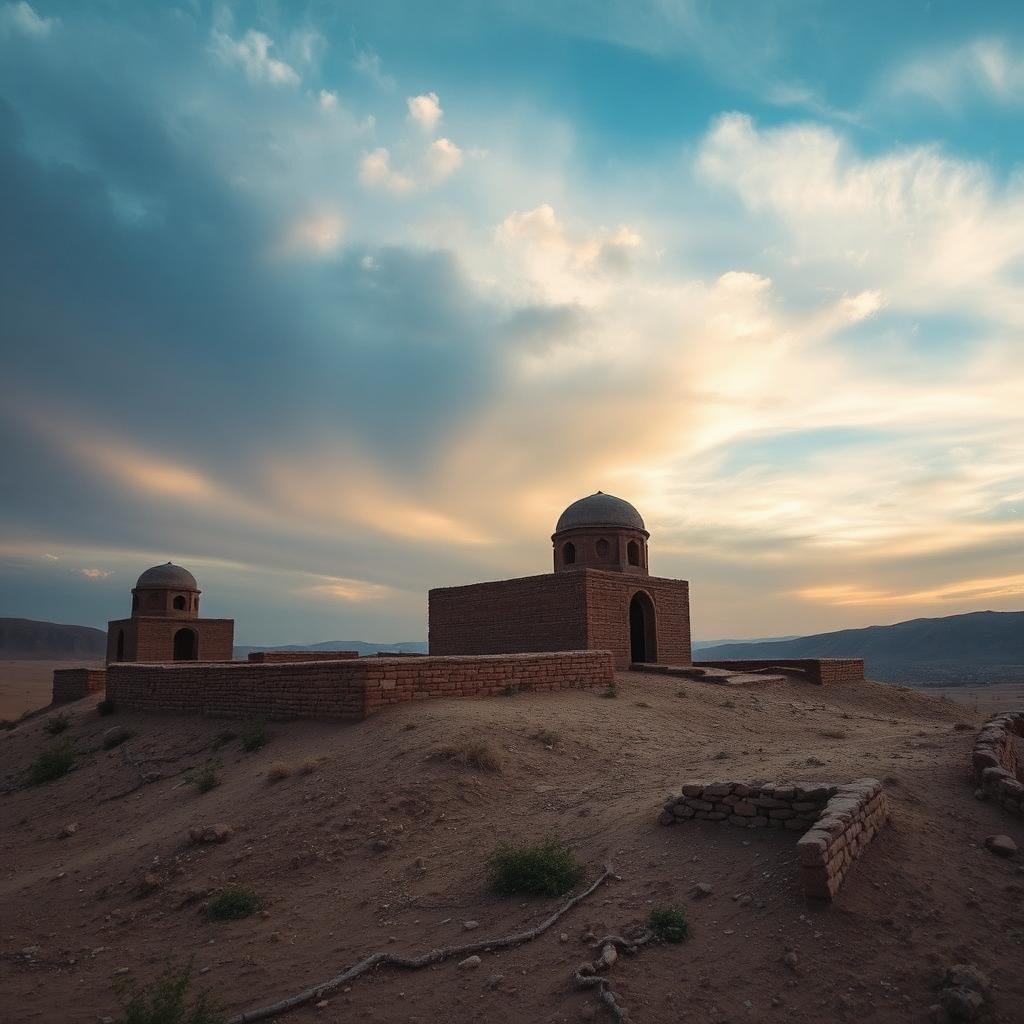
On a hill outside Nukus, three brick mausoleums stand among 100,000 graves stretching to the horizon. A single brick falls from one of them every year — and locals say when the last brick falls, the world ends. Here's the 2026 guide.
Twenty kilometers west of Nukus, near the Turkmen border, three small hills rise out of the Karakalpak steppe. One is Mizdakhan necropolis — possibly the oldest continuously used cemetery in Central Asia, with burials from the 4th century BCE to today. The second is Gyaur Kala (the 'Infidel Fortress'), a Zoroastrian-era citadel. The third holds the ruins of a medieval city destroyed by Genghis Khan. Almost no Uzbekistan itinerary includes it. It should. This is the 2026 guide.
Why Mizdakhan matters
Mizdakhan is one of the most sacred sites in Karakalpakstan and the third most important pilgrimage destination in Central Asia after Mecca and Mashhad according to local Islamic tradition. Three layers overlap on the same hill: a Zoroastrian sky-burial platform (around the 1st century CE), a medieval Muslim city destroyed in 1221 by Mongols, and a still-active cemetery where Karakalpaks have buried their dead for 1,600 years. UNESCO has it on the tentative list.
The doomsday clock — Nazlumkhan Sulu mausoleum
The most famous tomb is Mazlumkhan Sulu (also Nazlumkhan Sulu), a 14th-century semi-underground mausoleum dedicated to a legendary princess. Pilgrims walk down seven steps into the tomb chamber and stack small piles of bricks (haftak) at the entrance — seven bricks each, never more. Local legend: one brick from the mausoleum falls every year, and when the very last brick falls, the world ends. Custodians say there are roughly 7,000 bricks left. Whether you believe it or not, the ritual of stacking the seven small bricks at sunset is one of the more moving experiences in Uzbekistan.
Other monuments on the hill
Shamun Nabi mausoleum (14th century)
The 'tomb of the prophet Shamun' — a long, narrow domed structure said to hold the 25-meter grave of a giant Sufi saint. Locals enter to pray; visitors are welcome to look from the doorway.
Caliph Yereshep complex
Adjacent compound of small domed tombs of medieval Sufi sheikhs. The brickwork is some of the finest surviving Karakhanid-era masonry in Central Asia.
Jumart Kassab — 'the butcher who fed the poor'
Small modern shrine to a 19th-century local hero who slaughtered his own flocks to feed famine victims. Pilgrims tie strips of cloth to surrounding trees — the colors mean different prayers (white for healing, red for love, green for fertility).
Gyaur Kala — the Infidel Fortress
On the neighboring hill stand the eroded ramparts of Gyaur Kala, a 4th-century BCE Khorezmian fortress that survived through the Zoroastrian and early Islamic periods before being destroyed by the Mongols. Walls of compressed loess stand 8–10 meters high in places. You can walk the entire perimeter in 25 minutes. Sunrise here looks across the Amu Darya delta toward Turkmenistan.
How to get there in 2026
- From Nukus: taxi to the town of Khodjeyli (20 km, 30 minutes, 50,000 UZS) then 5 km on dirt road to the necropolis (negotiate the driver to wait, total round trip with 2 hours waiting around 200,000 UZS / $17).
- Yandex Go from Nukus: not always available for the return trip — bring a phone with the driver's number.
- Marshrutka 35 from Nukus central bazaar to Khodjeyli: 8,000 UZS, then walk or hire local taxi 30,000 UZS to the hill.
- Day tour from Nukus combining Mizdakhan + Ayaz Kala + Mizdakhan museum: $40–60 per person.
2026 tickets and hours
- Site entrance: 20,000 UZS ($1.70). Pay at the small ticket hut.
- Open: sunrise to sunset, 7 days a week.
- Photo permit: included.
- Local Karakalpak guide (Russian/Karakalpak only): 100,000–150,000 UZS for 90 minutes — arrange at the ticket hut.
- There is no café and no toilet — bring water and use facilities in Khodjeyli before coming.
Etiquette for pilgrims and visitors
- This is a working cemetery and active pilgrimage site. Speak quietly; walk slowly.
- If pilgrims are praying inside a mausoleum, wait outside until they finish.
- Women: headscarf inside tomb chambers (not required outside).
- Photography is fine outside, restricted inside tombs — ask first.
- The seven-brick stacking ritual is welcomed for visitors who want to participate — a custodian will explain.
- Do not climb on Gyaur Kala walls — they are crumbling and falls have happened.
Best time of day and year
Sunrise (5:30 in summer, 7:30 in winter) and the last hour before sunset are magical — the brick mausoleums glow orange and the cemetery shadows stretch across the steppe. Avoid midday June–August; this is one of the hottest places in Uzbekistan and there is zero shade. Spring (April–May) and autumn (September–October) are perfect. Fridays the site sees the most pilgrims, which can be an experience in itself if you want to witness living tradition.
Combine with these nearby
- Savitsky Museum, Nukus — world's second-largest collection of Soviet avant-garde art (same day).
- Moynaq ship cemetery — 4-hour drive from Nukus, the dried Aral Sea.
- Ayaz Kala desert fortresses — 2.5 hours east of Nukus toward Khiva.
- Chilpyk Dakhma (Zoroastrian tower of silence) — 45 minutes south of Nukus.
Honest verdict
Mizdakhan is one of Central Asia's most layered and least visited heritage sites. You walk on Zoroastrian, medieval Muslim, and modern Karakalpak history within 200 meters. The doomsday legend is a memorable hook for a blog post, but the real value is silence — you are usually the only foreigner on the hill, and locals will quietly invite you to share their prayer. If you are flying into Nukus for the Savitsky Museum or the Aral Sea, half a day at Mizdakhan is non-negotiable.