Camel Trekking the Kyzylkum (2026): What a Desert Night in Uzbekistan Is Really Like
· 10 min read · Nature
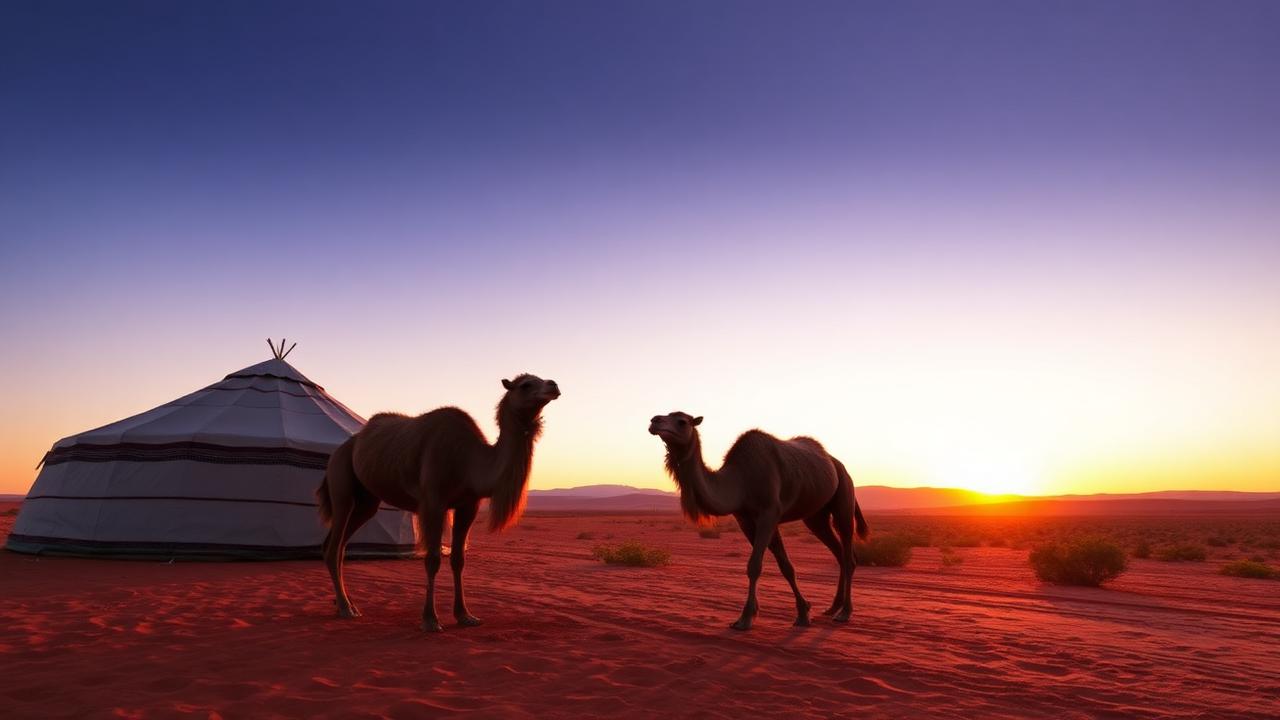
The brochures promise a Silk Road caravan. What you get is forty minutes on a very tall animal, a felt yurt, a fire, and one of the darkest skies in Central Asia. Managed expectations make it excellent.
Between Samarkand, Bukhara and the Aydarkul shoreline lies the southern edge of the Kyzylkum — the Red Sand desert that fills much of central Uzbekistan. A yurt camp night here is now on almost every organised itinerary in the country, which means it is both easy to book and easy to be disappointed by if you arrive expecting a multi-day caravan. This is what it actually consists of in 2026.
Where the camps are
The main cluster sits near Yangigazgan and Dungalak, on the road between Nurata and Aydarkul lake, roughly a three-hour drive from Samarkand and four from Bukhara. Camps are permanent installations of felt-covered yurts around a central dining yurt, not nomadic encampments — Uzbekistan's nomadic Kazakh herding tradition in this area is real, but the tourism version is a fixed site with a generator.
What a standard overnight includes
- A bed in a shared yurt, typically four to six mattresses on the floor with thick blankets.
- Dinner and breakfast, usually soup, bread, salad, plov or grilled meat, endless tea.
- A short camel ride, most often 30 to 60 minutes around the dunes near camp.
- A campfire with, at many camps, a live dutar or dombra player.
- A morning swim in Aydarkul lake, included by most operators as the next stop.
The camel ride, honestly
These are Bactrians — two humps, and you sit between them, which is considerably more secure than a dromedary saddle. The ride is led at walking pace by a handler; you are not steering. Forty minutes is roughly the point at which most first-timers have had enough, because the gait works muscles you were not consulting. Longer treks of two to four hours, or genuine multi-day routes with camping between camps, exist but must be arranged specifically in advance and cost considerably more.
Animal welfare questions worth asking
- How many rides does each camel do per day, and is there a rest rotation?
- Are the animals owned by the camp or by a local family who keeps them year-round?
- Is there shade and water at the tie-up point?
- A camp that answers these easily is usually the one worth booking.
Costs in 2026
A yurt camp overnight with dinner, breakfast and a short camel ride typically runs 35 to 60 US dollars per person when booked locally, and considerably more when packaged into a foreign tour. Transport is the variable that moves the total: a car with driver from Samarkand and back, with stops at Nurata and Aydarkul, is usually 80 to 130 dollars for the vehicle. Extended camel treks are quoted per day and start well above the overnight rate.
When to go — and when not to
- April to early June: wildflowers on the steppe, warm days, cold nights. The best window.
- September to October: stable, clear, comfortable. The other best window.
- July and August: daytime heat regularly above 40°C. The camps operate, but the ride happens at dawn or dusk and midday is survival, not sightseeing.
- November to March: genuinely cold, and many camps close or run minimal service. A yurt with a stove in winter is atmospheric, but confirm the camp is open before driving out.
What actually makes the night worth it
Not the camel. The sky. With no settlement of any size for tens of kilometres, the Kyzylkum delivers a Milky Way that most visitors have never seen at home, and the camps switch generators off late enough that you can walk twenty metres from the yurts into full darkness. Bring a head torch with a red mode, let your eyes adjust for twenty minutes, and skip the phone screen. For the darkest skies in the country, Karakalpakstan is better still: /blog/karakalpakstan-dark-sky-stargazing-guide-2026
What to pack
- A warm layer regardless of season — desert nights drop sharply even after 35°C days.
- Long trousers for the camel ride; the saddle blanket is coarse.
- Head torch, wet wipes and your own toilet paper. Facilities are shared and basic.
- Cash in som. Card terminals at camps are unreliable and some have none.
- Earplugs if you are in a shared yurt with strangers.
Kyzylkum yurt camp or Aydarkul lakeside?
They are usually the same trip, but if you must choose: the desert camp gives dunes, camels and darkness; Aydarkul gives a swimmable inland sea, fresh fish grilled on the shore and much better bird life. Most operators combine both in a single overnight and that combination is the right call. Read the lake side of it here: /blog/aydarkul-lake-nurata-yurt-camp-guide-2026
Booked with realistic expectations, one desert night is among the best-value experiences in Uzbekistan. Booked as a Lawrence of Arabia fantasy, it is forty minutes of discomfort followed by soup. The difference is entirely in what you were told before you left Samarkand.